
Table of Contents
Hemant is a classic Indian name with deep roots in Sanskrit tradition and seasonal symbolism. Derived from the ancient word for winter, this name carries the quiet beauty and contemplative nature of the cold season. Popular primarily among Hindu communities, Hemant represents one of the six traditional seasons in the Indian calendar system. Its timeless appeal continues across generations, connecting modern bearers to ancient cultural rhythms.
Meaning of Hemant
Hemant originates from the Sanskrit word ‘Hemanta’ (हेमन्त), which specifically refers to the winter season in traditional Indian classification. In the six-season (Shadritu) system of ancient India, Hemanta represents the period between mid-November and mid-January, characterized by cool weather, dew, and the onset of winter. The term combines ‘hema’ (meaning gold or frost) with seasonal connotations, literally translating to ‘the season of frost.’ This seasonal name appears in numerous classical Sanskrit texts including the Rigveda and various Puranas, where seasons are personified and celebrated. Unlike generic seasonal names, Hemant has precise calendrical significance in Indian tradition.
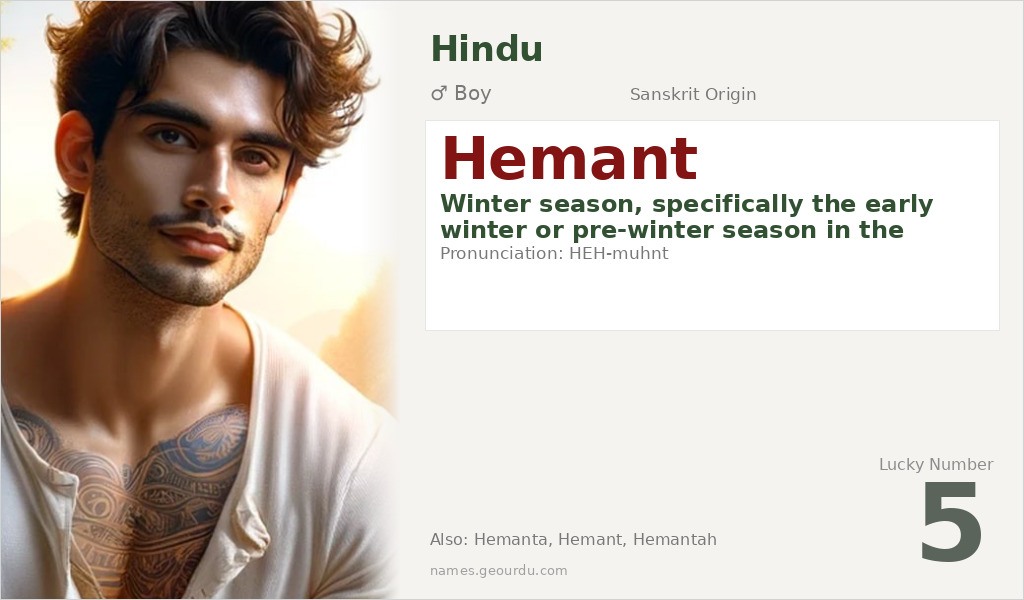
| 📛 Name | Hemant |
| 💎 Meaning | Winter season, specifically the early winter or pre-winter season in the Indian subcontinent |
| 👤 Gender | Boy |
| 🕌 Religion | Hindu |
| 🌍 Origin | Sanskrit |
| 🗣 Pronunciation | HEH-muhnt |
| ✍️ Urdu | ہیمنت |
| ✍️ Arabic | هيمانت |
| 🔢 Numerology | 5 |
| ✨ Spellings | Hemanta, Hemant, Hemantah, Hemantaa |
Origin & Cultural Significance
Hemant has its origins in ancient Sanskrit literature and Hindu calendrical systems dating back over 3,000 years. The name emerges from India’s sophisticated understanding of seasonal cycles, where six distinct seasons (ritus) were recognized and named. In Hindu tradition, seasons were not merely meteorological phenomena but had spiritual and agricultural significance, with Hemant representing a time of harvest festivals and preparation. The name became popular as a given name reflecting the time of birth or desired qualities associated with winter—calmness, maturity, and quiet strength. While primarily used in Hindu communities, the name has spread to various Indian linguistic regions while maintaining its Sanskrit roots.
Personality Traits
The winter season symbolism of Hemant suggests personality traits of resilience, introspection, and steady determination. Like the season it represents, individuals with this name often exhibit a calm exterior with depth beneath the surface. They may approach life with patience and strategic timing, understanding that different phases require different approaches. The seasonal connection also implies an appreciation for natural cycles, tradition, and the value of quiet periods for growth and reflection.
Similar Names
If you like Hemant, consider: Vasant (Spring), Sharad (Autumn), Grishma (Summer), Varsha (Monsoon), Shishir (Late Winter)
Famous People Named Hemant
- Hemant Kumar — Legendary Indian playback singer and music director from Bengal
- Hemant Karkare — Indian police officer and chief of Mumbai Anti-Terrorist Squad, martyred during 2008 Mumbai attacks
Frequently Asked Questions About Hemant
What does Hemant mean?
Hemant means 'winter season' in Sanskrit, specifically referring to the early winter period in the traditional Indian six-season calendar system.
Is Hemant a boy or girl name?
Hemant is traditionally a masculine name in Indian naming conventions, though names based on seasons can sometimes be used across genders in modern contexts.
What is the origin of Hemant?
Hemant originates from Sanskrit, the ancient language of India, and comes from Hindu calendrical traditions that recognize six distinct seasons (ritus).





