
Table of Contents
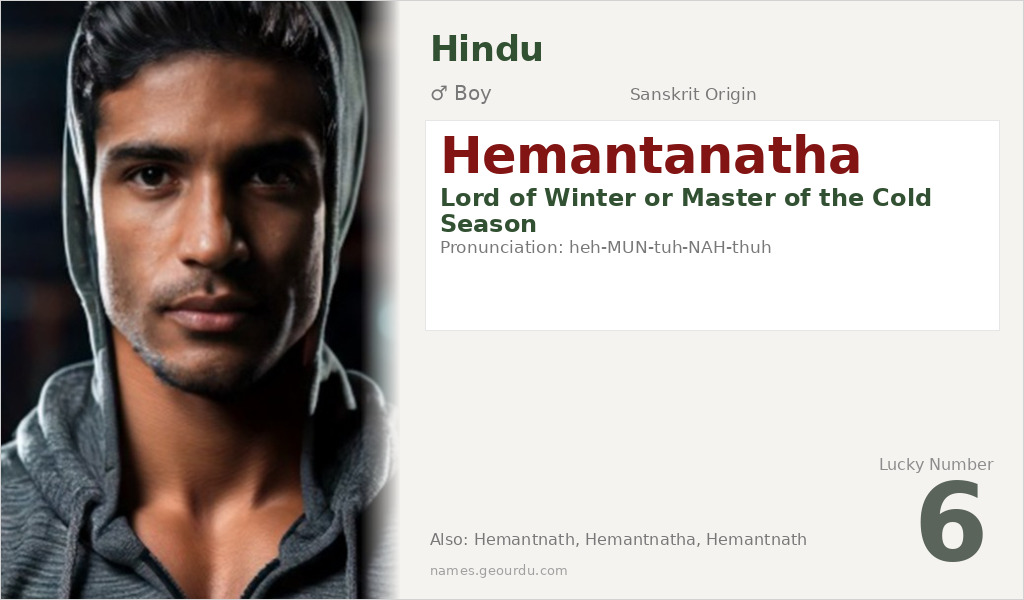
Hemantanatha is a distinctive Sanskrit name with deep roots in Hindu tradition. Meaning ‘Lord of Winter’ or ‘Master of the Cold Season’, this name carries seasonal significance and spiritual resonance. Often chosen for boys, it reflects qualities of leadership and natural authority. Discover the rich etymology, cultural context, and personality traits associated with this unique name.
Meaning of Hemantanatha
Hemantanatha derives from the Sanskrit words ‘Hemanta’ (हेमन्त), meaning ‘winter’ or ‘cold season’, and ‘Natha’ (नाथ), meaning ‘lord’, ‘master’, or ‘protector’. The compound thus translates precisely to ‘Lord of Winter’ or ‘Master of the Cold Season’. In Sanskrit linguistics, ‘Hemanta’ specifically refers to the early winter or dewy season in the traditional six-season Indian calendar. The suffix ‘Natha’ is commonly used in Hindu names to denote divinity, authority, or guardianship, appearing in names like Shivanatha (Lord Shiva) and Vishwanatha (Lord of the Universe). This name symbolizes rulership over the winter period, often associated with introspection and resilience.
| 📛 Name | Hemantanatha |
| 💎 Meaning | Lord of Winter or Master of the Cold Season |
| 👤 Gender | Boy |
| 🕌 Religion | Hindu |
| 🌍 Origin | Sanskrit |
| 🗣 Pronunciation | heh-MUN-tuh-NAH-thuh |
| ✍️ Urdu | ہیمنت ناتھ |
| ✍️ Arabic | هيمانتاناتها |
| 🔢 Numerology | 6 |
| ✨ Spellings | Hemantnath, Hemantnatha, Hemantnath |
Origin & Cultural Significance
Hemantanatha originates from classical Sanskrit, the ancient liturgical language of Hinduism. It emerges from Hindu cultural and religious traditions where names often honor natural elements and seasons. The name appears in regional Hindu contexts, particularly in areas with distinct seasonal cycles where winter deities or seasonal personifications are recognized. Unlike names from Abrahamic traditions, Hemantanatha reflects the Hindu practice of naming after natural phenomena with divine attributes. It remains primarily used in Hindu communities across India and the diaspora, maintaining its seasonal and spiritual connotations.
Personality Traits
Those named Hemantanatha are often associated with the serene and transformative qualities of winter. They may exhibit calm determination, inner strength, and a protective nature towards others. Like the season they’re named for, they might approach life with patience and resilience, capable of weathering challenges with grace. Their leadership style tends to be steady and reflective rather than impulsive.
Similar Names
If you like Hemantanatha, consider: Hemant, Nath, Devnath, Shivanatha, Vishwanatha, Girinatha, Rajnath
Famous People Named Hemantanatha
- Hemantanatha — A name found in Hindu religious contexts, sometimes associated with regional deities or spiritual figures in Indian tradition
- Hemant — Numerous notable individuals share the root name Hemant, including Hemant Kumar (renowned Indian singer and music director)
Frequently Asked Questions About Hemantanatha
What does Hemantanatha mean?
Hemantanatha means 'Lord of Winter' or 'Master of the Cold Season' in Sanskrit, combining 'Hemanta' (winter) and 'Natha' (lord/master).
Is Hemantanatha a boy or girl name?
Hemantanatha is traditionally a masculine name in Hindu culture, given to boys. The 'Natha' suffix is typically masculine in Sanskrit naming conventions.
What is the origin of Hemantanatha?
Hemantanatha originates from Sanskrit, the classical language of Hinduism. It is a compound name reflecting Hindu traditions of naming after natural elements with divine attributes.





