
Table of Contents
Gangala is an intriguing Hindu boy’s name that evokes the sacred waters of the Ganges River, one of India’s most revered natural and spiritual landmarks. While not commonly found in classical texts, this name carries the cultural weight of its root word ‘Ganga,’ symbolizing purity, life, and divine connection. Parents choosing this name often seek to honor the spiritual significance of the river that sustains millions across the Indian subcontinent. The name’s melodic quality and cultural resonance make it a meaningful choice for families with Hindu traditions.
Meaning of Gangala
The name Gangala appears to derive from the Sanskrit word ‘Ganga’ (गंगा), which refers to the Ganges River, considered the most sacred river in Hinduism. In Sanskrit etymology, ‘Ganga’ itself comes from the root ‘gam’ meaning ‘to go,’ with interpretations including ‘swift-goer’ or ‘the river that flows.’ The suffix ‘-la’ is common in many Indian languages as a diminutive or affectionate ending, but its specific function in ‘Gangala’ remains unclear. Unlike established Sanskrit names like Ganga or Gangadhar, Gangala doesn’t appear in classical Sanskrit literature, the Vedas, or major Hindu scriptures. The name may represent a regional variation, modern creation, or folk adaptation that combines the sacred river reference with a common naming suffix.
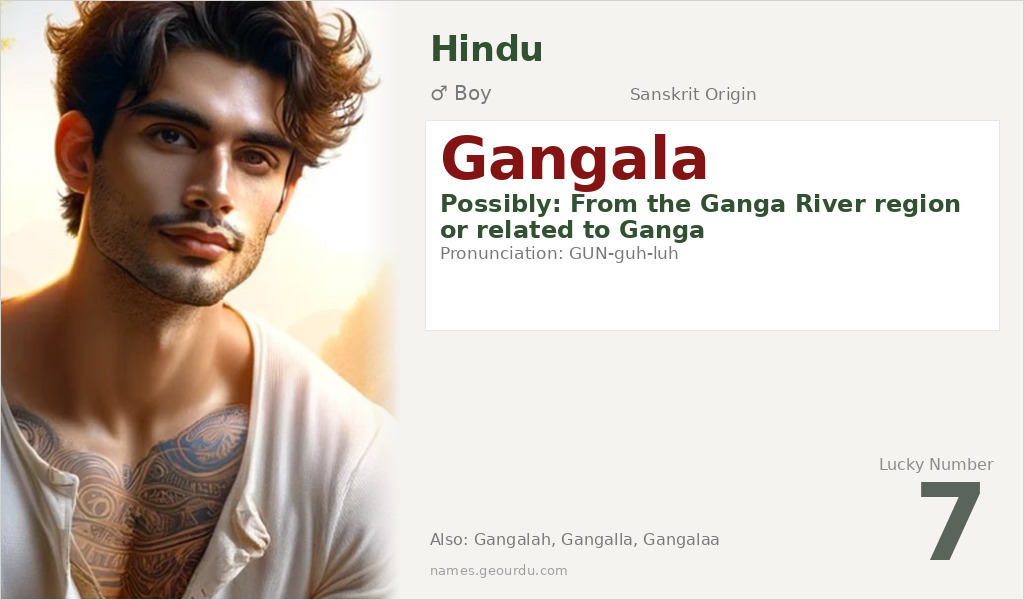
| 📛 Name | Gangala |
| 💎 Meaning | Possibly: From the Ganga River region or related to Ganga |
| 👤 Gender | Boy |
| 🕌 Religion | Hindu |
| 🌍 Origin | Sanskrit |
| 🗣 Pronunciation | GUN-guh-luh |
| ✍️ Urdu | گانگالا |
| ✍️ Arabic | جانجالا |
| 🔢 Numerology | 7 |
| ✨ Spellings | Gangalah, Gangalla, Gangalaa |
Origin & Cultural Significance
Gangala originates from Sanskrit linguistic roots, specifically from the word ‘Ganga’ that names the sacred river central to Hindu civilization for millennia. While the Ganges River has been worshipped as the goddess Ganga since ancient times, the specific name ‘Gangala’ doesn’t appear in historical records of traditional Hindu naming practices. The name likely emerged in modern times as parents sought unique variations on river-related names, possibly in regions along the Ganges basin. Unlike established Hindu names with documented histories, Gangala represents a contemporary naming trend that draws inspiration from India’s rich cultural and geographical heritage while creating new linguistic combinations.
Personality Traits
While personality traits aren’t scientifically determined by names, cultural associations suggest someone named Gangala might embody qualities connected to the sacred Ganges River. This could include spiritual depth, adaptability, and a nurturing presence, much like the river that sustains life across northern India. The name’s connection to flowing water might suggest personality traits of resilience, continuity, and the ability to navigate life’s changes with grace. In Hindu tradition, names often carry aspirational qualities, so Gangala might inspire its bearer toward purification, spiritual growth, and connection to cultural roots.
Similar Names
If you like Gangala, consider: Ganga, Gangesh, Gangadhar, Gangaprasad, Gangaram
Famous People Named Gangala
- No notable historical or contemporary figures with this name have been documented in reliable sources
Frequently Asked Questions About Gangala
What does Gangala mean?
Gangala likely means 'from the Ganga region' or 'related to Ganga,' though this meaning isn't verified in established Sanskrit sources. The name appears to combine 'Ganga' (the sacred Ganges River) with the suffix '-la,' but its precise meaning remains uncertain.
Is Gangala a boy or girl name?
Gangala is primarily used as a boy's name in Hindu naming traditions, though names ending in '-a' can sometimes be unisex in Indian languages. All documented usage and cultural context indicate it's a masculine name.
What is the origin of Gangala?
Gangala originates from Sanskrit, specifically from the word 'Ganga' referring to the Ganges River. However, unlike classical Sanskrit names, Gangala appears to be a modern or regional variation rather than a name with ancient documented usage in Hindu texts.





