
Table of Contents
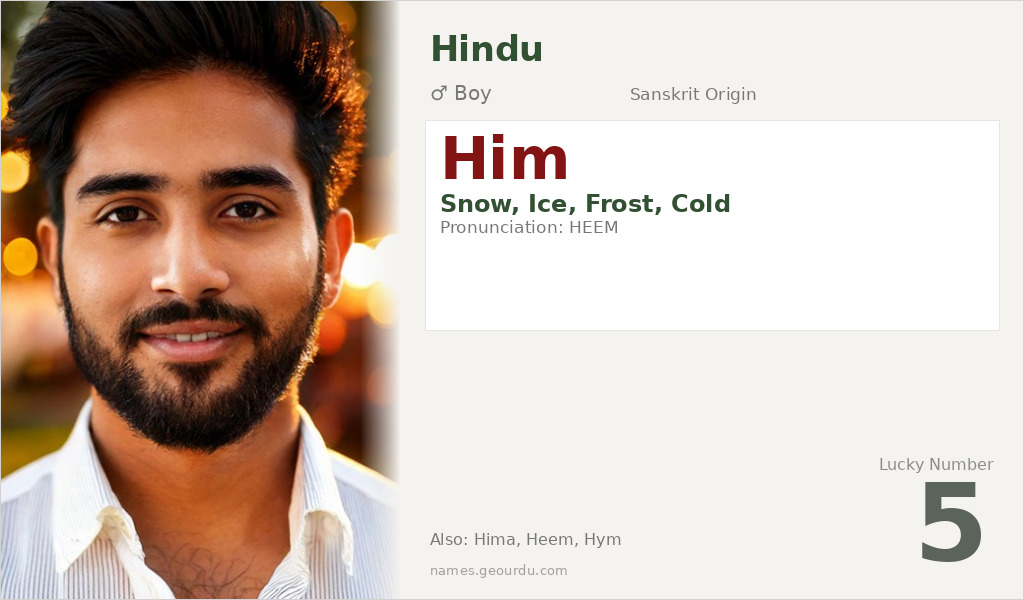
Him is a distinctive and meaningful name of Sanskrit origin, primarily used for boys in Hindu communities. Derived from the word for ‘snow’ or ‘ice’, it evokes imagery of purity, tranquility, and the majestic Himalayas. This name carries deep cultural and linguistic roots, making it a timeless choice for parents seeking a name with natural elegance. Explore the rich etymology and significance of Him in this detailed guide.
Meaning of Him
Him originates from the Sanskrit word ‘हिम’ (hima), which directly translates to ‘snow’, ‘ice’, ‘frost’, or ‘cold’. In Sanskrit, it is a common noun used in texts like the Vedas and epics, often symbolizing purity, clarity, and the pristine nature of winter landscapes. The name is phonetically simple yet profound, reflecting qualities of calmness and resilience. Linguistically, it is distinct from similar-sounding names in other languages, such as Arabic or Persian, where ‘Him’ does not carry the same meaning. Its usage as a proper name in Hindu culture emphasizes these natural elements, often associated with divine or serene attributes.
| 📛 Name | Him |
| 💎 Meaning | Snow, Ice, Frost, Cold |
| 👤 Gender | Boy |
| 🕌 Religion | Hindu |
| 🌍 Origin | Sanskrit |
| 🗣 Pronunciation | HEEM |
| ✍️ Urdu | ہم |
| ✍️ Arabic | هم |
| 🔢 Numerology | 5 |
| ✨ Spellings | Hima, Heem, Hym |
Origin & Cultural Significance
Him has its roots in ancient Sanskrit, the classical language of India, and is deeply embedded in Hindu culture and traditions. It appears in Hindu mythology and literature, such as references to the Himalayas (Himadri) and related terms. The name is predominantly used in India and among Hindu diaspora communities, reflecting a connection to nature and spiritual purity. While not as common as some other Sanskrit names, it holds niche popularity for its unique sound and meaningful connotations. Historically, it has been used in various regions of South Asia, maintaining its linguistic integrity over centuries.
Personality Traits
People named Him are often described as calm, composed, and intellectually sharp, mirroring the cool and clear qualities of snow. They may possess a serene and reflective personality, with a tendency towards thoughtfulness and purity in actions. In social settings, they might be perceived as reserved yet dependable, with an inner strength that withstands challenges. These traits align with the name’s etymological roots, suggesting a natural affinity for tranquility and clarity.
Similar Names
If you like Him, consider: Himal, Himanshu, Himadri, Himani, Himmat
Famous People Named Him
- Him Sagar — Indian classical vocalist of the Kirana gharana
- Himanshu — common variant, e.g., Himanshu Malik, Indian actor
Frequently Asked Questions About Him
What does Him mean?
Him means 'snow', 'ice', 'frost', or 'cold' in Sanskrit, the classical language of India.
Is Him a boy or girl name?
Him is traditionally a boy's name in Hindu culture, though names can vary by region and modern usage.
What is the origin of Him?
Him originates from Sanskrit, an ancient Indian language, and is associated with Hindu traditions and natural elements.





