
Table of Contents
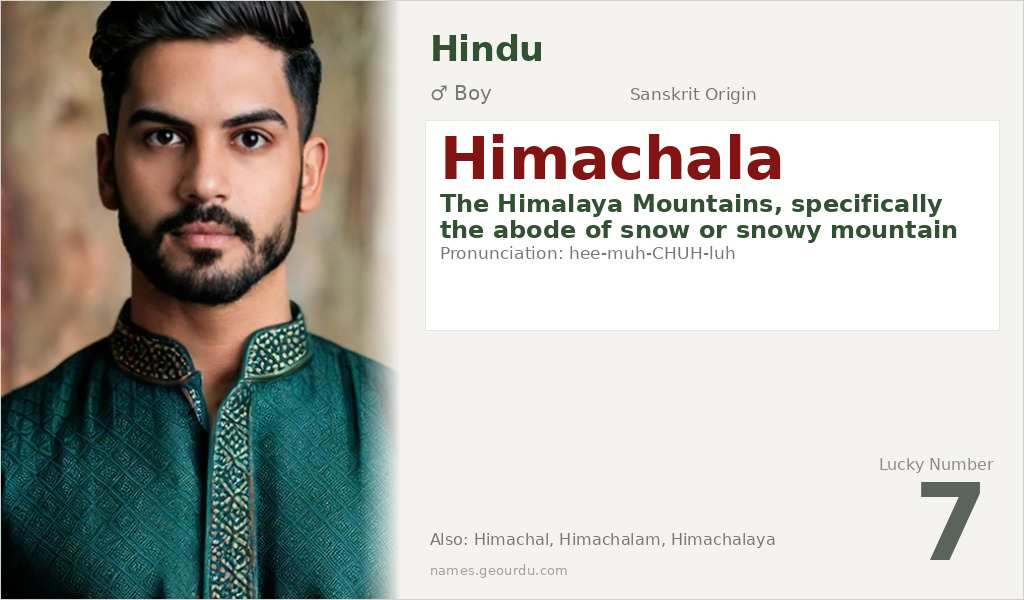
Himachala is a majestic Sanskrit name that literally translates to ‘the snowy mountains’ or ‘the Himalaya Mountains’. Steeped in Hindu mythology and ancient Indian literature, this name carries the grandeur and permanence of Earth’s highest mountain range. As a boy’s name, Himachala symbolizes strength, stability, and divine connection. Explore the rich etymology and cultural significance of this powerful name.
Meaning of Himachala
Himachala is a compound Sanskrit name with precise linguistic roots. The first component ‘hima’ (हिम) means ‘snow, frost, or winter’ and appears in numerous Sanskrit words related to cold or snowy conditions. The second component ‘achala’ (अचल) means ‘mountain, immovable, or firm,’ derived from ‘a-‘ (not) + ‘chala’ (moving). Together, they form ‘Himachala’—literally ‘snowy mountain’ or ‘abode of snow.’ In Hindu scriptures, Himachala is not just a geographical term but also personified as the king of mountains and father of Goddess Parvati. The name appears in texts like the Mahabharata, Puranas, and various stotras praising the Himalayas.
| 📛 Name | Himachala |
| 💎 Meaning | The Himalaya Mountains, specifically the abode of snow or snowy mountain range |
| 👤 Gender | Boy |
| 🕌 Religion | Hindu |
| 🌍 Origin | Sanskrit |
| 🗣 Pronunciation | hee-muh-CHUH-luh |
| ✍️ Urdu | ہماچل |
| ✍️ Arabic | هيماشالا |
| 🔢 Numerology | 7 |
| ✨ Spellings | Himachal, Himachalam, Himachalaya |
Origin & Cultural Significance
Himachala originates from classical Sanskrit, the ancient liturgical language of Hinduism. Its usage dates back to Vedic and post-Vedic literature where the Himalayas were revered as divine entities. In Hindu mythology, Himachala is personified as the father of Parvati (consort of Shiva) and is considered a sacred geographical region. The name reflects the deep cultural and spiritual significance of mountains in Indian traditions, symbolizing eternity, purity, and the abode of gods. While primarily used in Hindu contexts, the name’s geographical reference makes it recognizable across South Asian cultures familiar with Sanskrit terminology.
Personality Traits
Names often carry symbolic weight, and Himachala suggests qualities of steadfastness, resilience, and grandeur. Like the enduring Himalayas, someone named Himachala might be perceived as reliable, protective, and spiritually inclined. The name evokes images of natural majesty and permanence, potentially influencing personality traits toward calm strength and deep-rooted values. In cultural contexts, such names are believed to impart the characteristics of their meanings to the bearer.
Similar Names
If you like Himachala, consider: Himalaya, Himadri, Himanshu, Parvat, Girish
Famous People Named Himachala
- Himachala — A personification of the Himalayas in Hindu mythology, father of Goddess Parvati
- Himachala — Rarely used as a personal name, but appears in some Indian historical and literary contexts
Frequently Asked Questions About Himachala
What does Himachala mean?
Himachala means 'the Himalaya Mountains' or 'snowy mountains' in Sanskrit. It's derived from 'hima' (snow) and 'achala' (mountain).
Is Himachala a boy or girl name?
Himachala is traditionally a boy's name in Hindu naming conventions, though its mythological reference is gender-neutral as a geographical entity.
What is the origin of Himachala?
Himachala originates from Sanskrit, the ancient language of Hindu scriptures. It specifically references the Himalayan mountain range in both geographical and mythological contexts.





