
Table of Contents
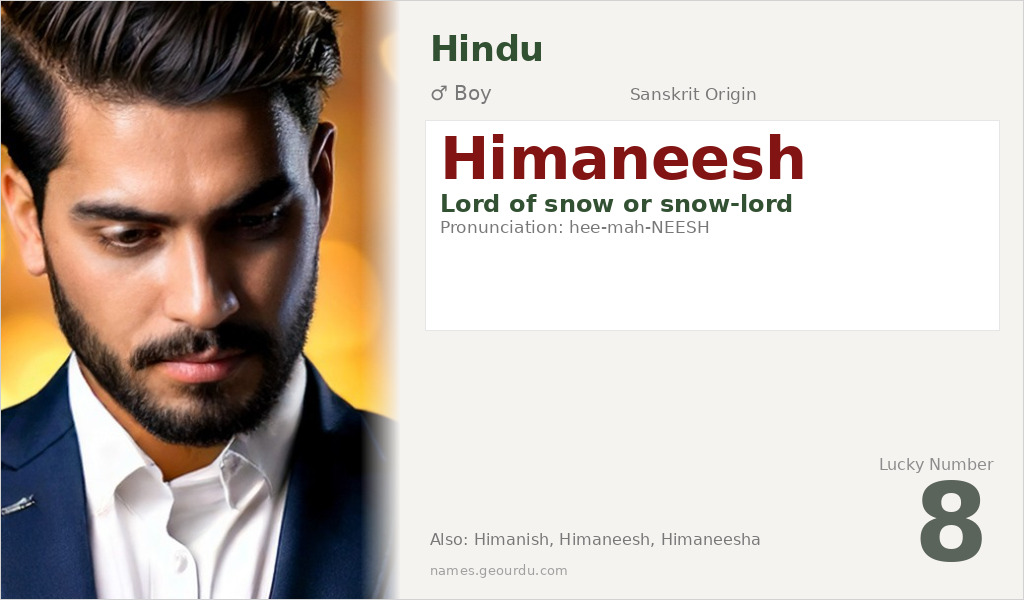
Himaneesh is a distinctive Sanskrit name that combines natural imagery with spiritual significance. Meaning ‘lord of snow’ or ‘snow-lord’, this name evokes the purity and majesty of snow-capped mountains. Primarily used in Hindu communities, Himaneesh carries deep cultural resonance while maintaining a modern, sophisticated sound. Discover the rich linguistic heritage and contemporary relevance of this meaningful name.
Meaning of Himaneesh
Himaneesh derives from classical Sanskrit, formed by combining ‘Hima’ (हिम), meaning ‘snow, frost, or winter’, with ‘Ish’ (ईश), meaning ‘lord, master, or ruler’. In Sanskrit compound formation, ‘Ish’ becomes ‘Eesh’ when attached to another word, creating the complete meaning ‘lord of snow’. This construction follows standard Sanskrit sandhi rules where vowel sounds merge. The name appears in Hindu texts and poetry as both a proper name and an epithet, particularly for Shiva who is associated with the snowy Himalayas. The snow element symbolizes purity, tranquility, and spiritual asceticism, while the lord element conveys authority and divine connection.
| 📛 Name | Himaneesh |
| 💎 Meaning | Lord of snow or snow-lord |
| 👤 Gender | Boy |
| 🕌 Religion | Hindu |
| 🌍 Origin | Sanskrit |
| 🗣 Pronunciation | hee-mah-NEESH |
| ✍️ Urdu | ہمانیش |
| ✍️ Arabic | هيمانيش |
| 🔢 Numerology | 8 |
| ✨ Spellings | Himanish, Himaneesh, Himaneesha |
Origin & Cultural Significance
Himaneesh originates from Sanskrit, the classical language of ancient India that has influenced numerous modern South Asian languages. As a compound name, it reflects the sophisticated word-formation traditions of Sanskrit literature and Hindu naming practices. The name is primarily used within Hindu communities across India and the diaspora, though its Sanskrit roots give it pan-Indian recognition. Historically, names incorporating natural elements like ‘hima’ (snow) were often given to denote purity or connection to specific deities or regions, particularly mountainous areas. While not among the most common Sanskrit names today, Himaneesh maintains cultural authenticity and appeals to parents seeking traditional yet distinctive names.
Personality Traits
The name Himaneesh suggests qualities of calm strength and spiritual depth. The snow imagery implies purity, clarity of thought, and resilience—able to withstand challenging conditions while maintaining essential character. The ‘lord’ component suggests natural leadership abilities, confidence, and a sense of responsibility. Together, these elements paint a picture of someone who is contemplative yet decisive, pure in intention yet strong in conviction, making it a name that carries both gentle and powerful connotations.
Similar Names
If you like Himaneesh, consider: Himanshu, Himadri, Himavat, Neelkanth, Parvateshwar
Famous People Named Himaneesh
- Himaneesh Dubey — Indian classical vocalist and composer specializing in Hindustani music
- Himaneesh Singh — Contemporary Indian artist known for mythological and spiritual themes
Frequently Asked Questions About Himaneesh
What does Himaneesh mean?
Himaneesh means 'lord of snow' or 'snow-lord' in Sanskrit, derived from 'hima' (snow) and 'ish' (lord).
Is Himaneesh a boy or girl name?
Himaneesh is exclusively a boy's name in Hindu naming traditions, following Sanskrit grammatical gender rules where this formation is masculine.
What is the origin of Himaneesh?
Himaneesh originates from Sanskrit, the classical language of ancient India, and is primarily used in Hindu cultural contexts.





