
Table of Contents
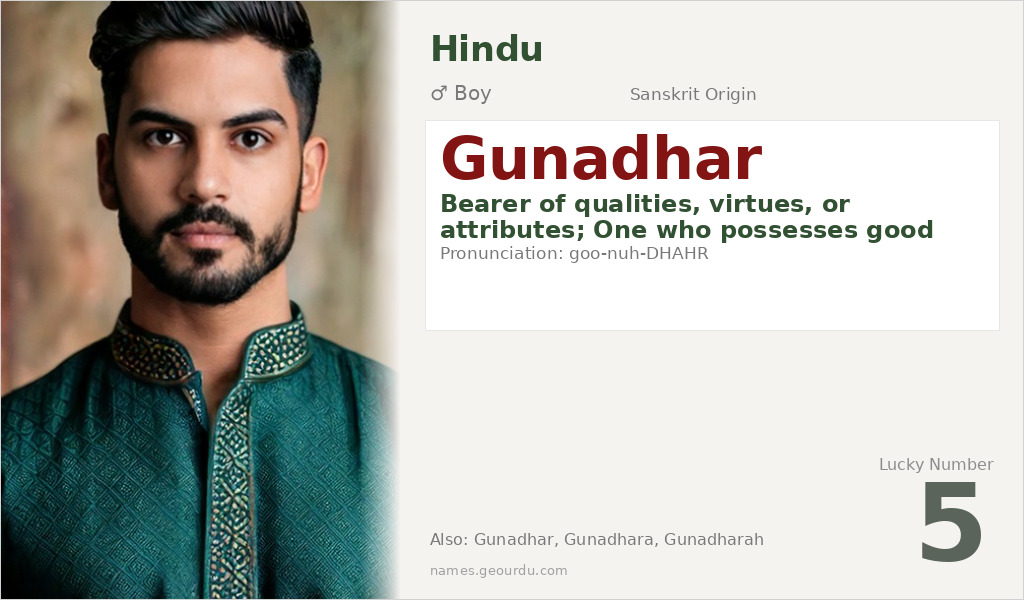
Gunadhar is a profound Sanskrit name that carries centuries of philosophical weight within Hindu tradition. Meaning ‘Bearer of Qualities’ or ‘Possessor of Virtues’, this name reflects the ancient Indian understanding of human character and spiritual development. Unlike modern names chosen primarily for sound, Gunadhar represents a conscious selection based on meaningful attributes parents hope their child will embody. Its usage spans from classical literature to contemporary India, maintaining its cultural resonance.
Meaning of Gunadhar
The name Gunadhar derives from classical Sanskrit, combining ‘Guna’ (गुण) and ‘Dhar’ (धर). ‘Guna’ is a foundational concept in Hindu philosophy, particularly in Samkhya and Yoga systems, where it refers to the three fundamental qualities of nature: Sattva (purity, harmony), Rajas (activity, passion), and Tamas (inertia, darkness). In broader usage, ‘Guna’ means any positive quality, virtue, or attribute. ‘Dhar’ comes from the Sanskrit root ‘dhṛ’ meaning ‘to hold, bear, support’. Thus, Gunadhar literally translates to ‘one who bears or possesses virtues’. The name appears in various Hindu texts and epics, often describing characters of noble qualities or as an epithet for deities who embody divine attributes.
| 📛 Name | Gunadhar |
| 💎 Meaning | Bearer of qualities, virtues, or attributes; One who possesses good qualities |
| 👤 Gender | Boy |
| 🕌 Religion | Hindu |
| 🌍 Origin | Sanskrit |
| 🗣 Pronunciation | goo-nuh-DHAHR |
| ✍️ Urdu | گنادھر |
| ✍️ Arabic | غونادهار |
| 🔢 Numerology | 5 |
| ✨ Spellings | Gunadhar, Gunadhara, Gunadharah |
Origin & Cultural Significance
Gunadhar originates from the Sanskrit language, which has been the liturgical and scholarly language of Hinduism for millennia. As a compound Sanskrit name, it follows traditional naming patterns where parents select meaningful elements to create names with specific aspirations for their children. The name is predominantly used within Hindu communities across India, particularly in regions with strong Sanskrit traditions like Maharashtra, Karnataka, and parts of North India. While not among the most common names today, it maintains presence in educated Hindu families who value traditional, meaningful names with philosophical depth. The name’s usage reflects the enduring influence of Sanskrit on Hindu naming conventions.
Personality Traits
According to Hindu naming traditions, names are believed to influence personality development. Gunadhar suggests someone who naturally embodies or strives to cultivate positive qualities. Such individuals are often thoughtful, principled, and inclined toward self-improvement. The name’s meaning implies a person who carries their virtues not as burdens but as integral aspects of their identity, potentially leading to balanced character development and respect within their community.
Similar Names
If you like Gunadhar, consider: Gunakar, Gunavanta, Gunendra, Dharam, Gunavardhana
Famous People Named Gunadhar
- Gunadhar — 19th century Indian mathematician and astronomer from Bengal who contributed to the development of calculus in India
- Gunadhar Das — Contemporary Indian classical musician specializing in Dhrupad singing
Frequently Asked Questions About Gunadhar
What does Gunadhar mean?
Gunadhar means 'Bearer of Qualities' or 'Possessor of Virtues' in Sanskrit. It combines 'Guna' (quality/virtue) and 'Dhar' (bearer/holder).
Is Gunadhar a boy or girl name?
Gunadhar is exclusively a masculine name in Hindu tradition. Sanskrit compound names ending in 'dhar' are typically masculine, and there are no recorded feminine variants in historical usage.
What is the origin of Gunadhar?
Gunadhar originates from classical Sanskrit, the ancient liturgical language of Hinduism. It follows traditional Sanskrit compound naming patterns and has been used in Hindu communities for centuries, particularly in India.





