
Table of Contents
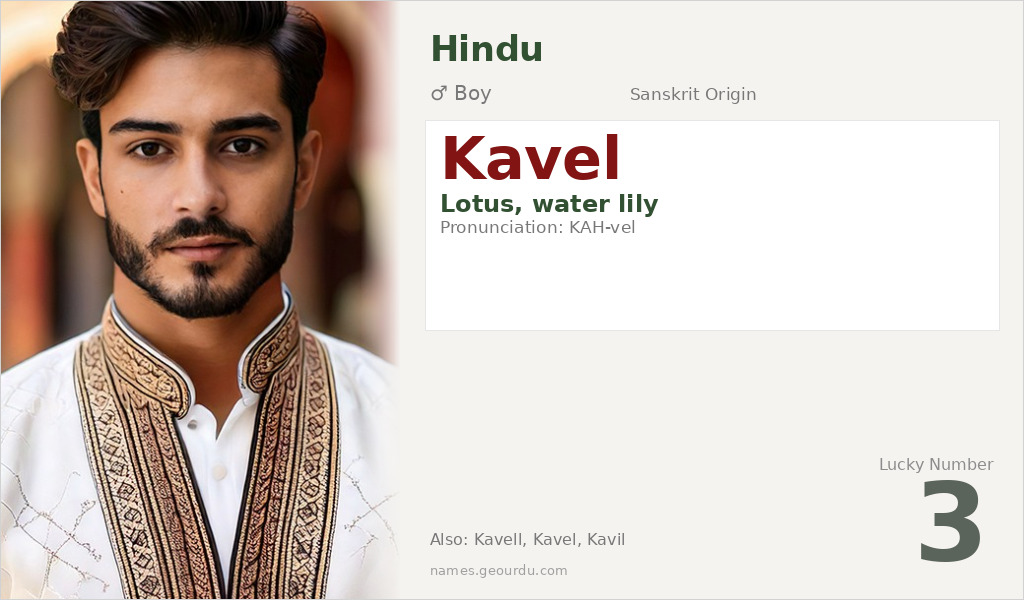
Kavel is a beautiful and meaningful name of Sanskrit origin, primarily used for boys in Hindu communities. Meaning ‘lotus’ or ‘water lily’, it carries deep spiritual and cultural symbolism. This name evokes images of purity, resilience, and divine connection, making it a popular choice for parents seeking a name with natural elegance. Explore the rich history and modern relevance of Kavel in this comprehensive guide.
Meaning of Kavel
Kavel derives from the Sanskrit word ‘Kavala’, which specifically refers to the lotus flower or water lily. In Sanskrit, the lotus (Kamal) is a powerful symbol of purity, beauty, and spiritual awakening, as it blooms pristine even in muddy waters. The name is rooted in ancient Indian texts and mythology, where lotuses are associated with gods like Vishnu, Brahma, and Lakshmi. Linguistically, it shares connections with other Sanskrit names like Kavya (poetic) and Kamal (lotus), emphasizing its literary and natural heritage. This meaning has remained consistent across centuries, reflecting the enduring appeal of botanical names in Indian culture.
| 📛 Name | Kavel |
| 💎 Meaning | Lotus, water lily |
| 👤 Gender | Boy |
| 🕌 Religion | Hindu |
| 🌍 Origin | Sanskrit |
| 🗣 Pronunciation | KAH-vel |
| ✍️ Urdu | کاول |
| ✍️ Arabic | كافيل |
| 🔢 Numerology | 3 |
| ✨ Spellings | Kavell, Kavel, Kavil, Kavela |
Origin & Cultural Significance
Kavel originates from Sanskrit, an ancient Indo-Aryan language foundational to Hindu scriptures, literature, and philosophy. It is predominantly used in Hindu naming traditions across India, especially in regions like Maharashtra, Gujarat, and North India, where Sanskrit names are prevalent. The name gained cultural significance through references in classical works and religious contexts, symbolizing divine qualities and natural beauty. While primarily Hindu, it may also appear in Jain and Buddhist communities due to shared linguistic roots. In modern times, Kavel remains a cherished choice, reflecting a connection to India’s rich spiritual and linguistic heritage.
Personality Traits
People named Kavel are often seen as serene, artistic, and introspective, mirroring the lotus’s symbolism of growth and tranquility. They may possess a strong sense of ethics and a knack for finding beauty in everyday life. Their calm and thoughtful nature helps them navigate challenges with grace, much like the lotus thriving in diverse environments.
Similar Names
If you like Kavel, consider: Kavya, Kavin, Kavish, Kavindra, Kamal
Famous People Named Kavel
- Kavel Rathee — Indian actor known for television roles in Hindi serials
- Kavel — Character in Indian literature and folklore, often symbolizing purity and beauty
Frequently Asked Questions About Kavel
What does Kavel mean?
Kavel means 'lotus' or 'water lily', derived from the Sanskrit word 'Kavala'. It symbolizes purity, beauty, and spiritual enlightenment in Hindu culture.
Is Kavel a boy or girl name?
Kavel is traditionally a boy's name in Hindu naming conventions, though its unisex potential exists in modern usage due to its botanical meaning.
What is the origin of Kavel?
Kavel originates from Sanskrit, an ancient Indian language, and is primarily associated with Hindu culture and traditions across South Asia.





