
Table of Contents
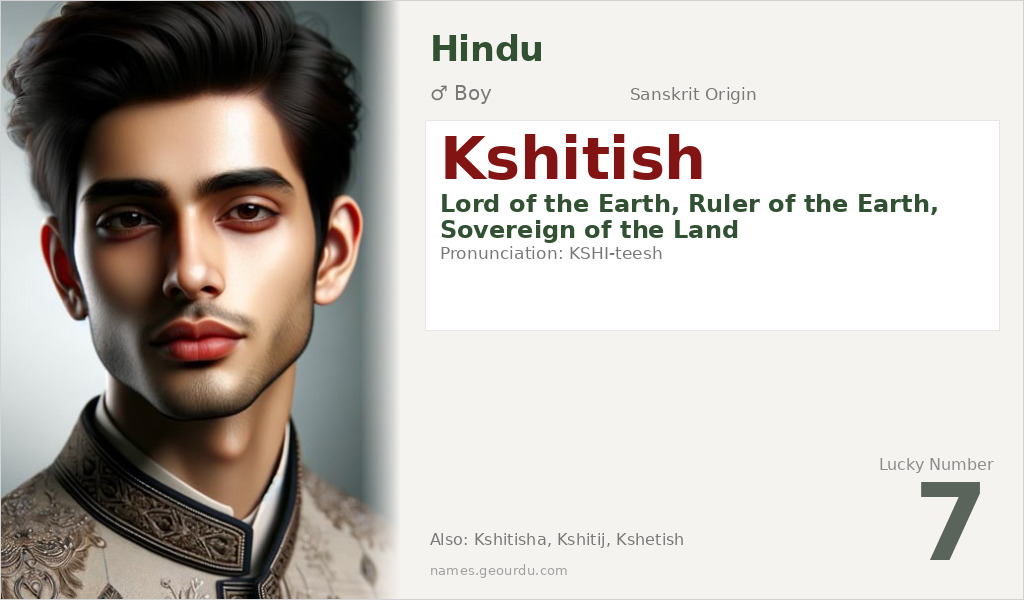
Kshitish is a distinguished Sanskrit name with deep roots in Hindu tradition and classical literature. Meaning ‘Lord of the Earth’ or ‘Ruler of the Land’, this name carries connotations of sovereignty, protection, and earthly dominion. Popular among Hindu families, particularly in India and Nepal, Kshitish represents both traditional values and aspirational qualities. Its linguistic elegance and meaningful etymology make it a compelling choice for parents seeking a name with cultural depth.
Meaning of Kshitish
Kshitish derives from the Sanskrit language, combining two meaningful elements: ‘kshiti’ (क्षिति) meaning ‘earth, land, or soil’ and ‘īśa’ (ईश) meaning ‘lord, master, or ruler’. This compound formation follows classical Sanskrit grammatical rules where the combination creates a masculine noun indicating dominion or mastery. The name appears in various Hindu texts and classical literature as an epithet for kings, rulers, and sometimes deities associated with earthly power. Unlike the incorrect ‘King of God’ interpretation, the accurate meaning emphasizes earthly sovereignty rather than divine kingship. The name’s etymology reflects the importance of land and territory in ancient Indian society, where rulers were seen as protectors and stewards of the earth.
| 📛 Name | Kshitish |
| 💎 Meaning | Lord of the Earth, Ruler of the Earth, Sovereign of the Land |
| 👤 Gender | Boy |
| 🕌 Religion | Hindu |
| 🌍 Origin | Sanskrit |
| 🗣 Pronunciation | KSHI-teesh |
| ✍️ Urdu | کشتیش |
| ✍️ Arabic | كشيتيش |
| 🔢 Numerology | 7 |
| ✨ Spellings | Kshitisha, Kshitij, Kshetish |
Origin & Cultural Significance
Kshitish originates from classical Sanskrit, the ancient liturgical language of Hinduism, Buddhism, and Jainism. As a compound Sanskrit name, it follows traditional naming patterns found in Hindu culture, where meaningful elements are combined to create names with specific connotations. The name reflects the cultural importance of land, territory, and sovereignty in ancient Indian society, where rulers were often described with earth-related epithets. While primarily used in Hindu communities, the name’s Sanskrit origin means it can be appreciated across various Indian religious traditions. Its usage spans regions where Sanskrit influence is strong, particularly in North India, Nepal, and among diaspora communities worldwide.
Personality Traits
Those named Kshitish often embody qualities associated with earthly dominion and leadership. They tend to be stable, reliable, and grounded individuals who value tradition and responsibility. With natural authority and protective instincts, they often find themselves in positions where they guide or care for others. Their connection to the earth element suggests practicality, resilience, and a nurturing disposition that makes them dependable in both personal and professional contexts.
Similar Names
If you like Kshitish, consider: Prithviraj, Bhoomipati, Dharani, Vasudha, Kshetrapal
Famous People Named Kshitish
- Kshitish Prasad Chattopadhyay — Indian anthropologist and sociologist
- Kshitish Roy — Bengali poet and writer
Frequently Asked Questions About Kshitish
What does Kshitish mean?
Kshitish means 'Lord of the Earth' or 'Ruler of the Land' in Sanskrit, derived from 'kshiti' (earth) and 'īśa' (lord).
Is Kshitish a boy or girl name?
Kshitish is exclusively a masculine name in Hindu naming tradition, with grammatical gender markers in Sanskrit indicating male usage.
What is the origin of Kshitish?
Kshitish originates from classical Sanskrit, the ancient language of Hindu scriptures, and is primarily used in Hindu communities across India and Nepal.





