
Table of Contents
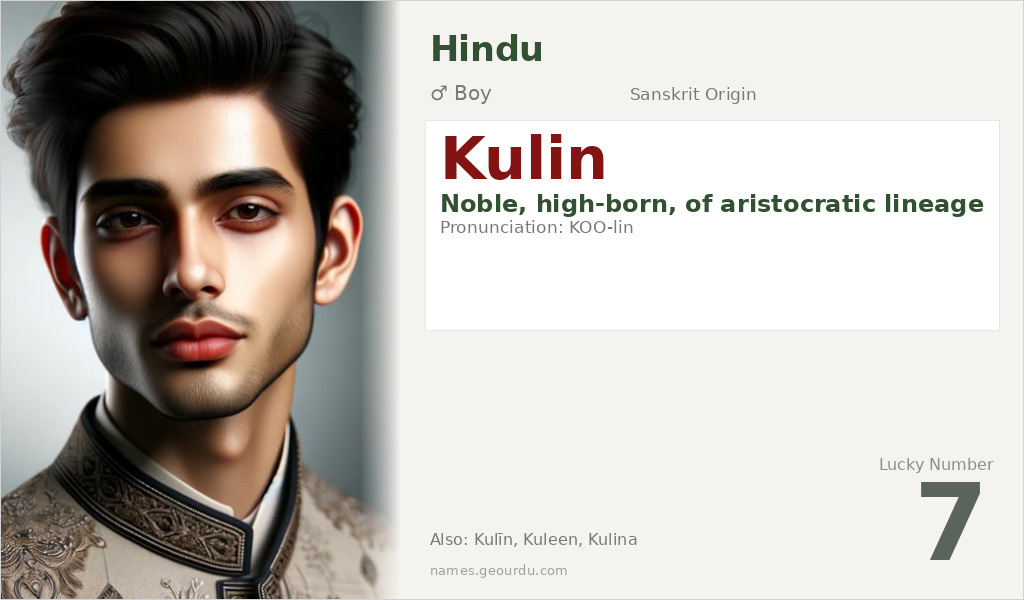
Kulin is a distinguished boy’s name with deep roots in Sanskrit tradition, carrying connotations of nobility and high social standing. This name has been cherished in Hindu communities for generations, symbolizing aristocratic lineage and virtuous character. Its elegant sound and meaningful heritage make it a timeless choice for parents seeking a name with cultural depth. Discover the rich etymology and modern relevance of the name Kulin.
Meaning of Kulin
The name Kulin originates from the Sanskrit term ‘Kulīna’, which is composed of ‘Kula’ (family, lineage) and the adjectival suffix ‘-īna’. This directly translates to ‘belonging to a good family’ or ‘noble’. In classical Indian context, ‘Kulīna’ referred to individuals from respected, often Brahmin or Kshatriya, families who maintained strict social and ritual purity. The concept was particularly significant in Bengal and other regions where the ‘Kulin’ system denoted the highest echelons of social hierarchy. Over centuries, the term evolved into a personal name, preserving its association with aristocracy and moral excellence.
| 📛 Name | Kulin |
| 💎 Meaning | Noble, high-born, of aristocratic lineage |
| 👤 Gender | Boy |
| 🕌 Religion | Hindu |
| 🌍 Origin | Sanskrit |
| 🗣 Pronunciation | KOO-lin |
| ✍️ Urdu | کلین |
| ✍️ Arabic | كولين |
| 🔢 Numerology | 7 |
| ✨ Spellings | Kulīn, Kuleen, Kulina |
Origin & Cultural Significance
Kulin has its origins in ancient Sanskrit literature and Hindu social structures, where it denoted individuals of esteemed lineage. Historically, the ‘Kulin’ system in Bengal (10th-19th centuries) classified Brahmin and Kayastha families based on genealogical purity, making the term culturally significant beyond just a personal name. While predominantly used in Hindu communities across India, especially in West Bengal, Assam, and Odisha, the name transcends strict religious boundaries and is appreciated for its linguistic heritage. Its usage as a given name became more widespread in the modern era, reflecting continued appreciation for traditional values and social identity.
Personality Traits
Those named Kulin are often associated with traits of refinement, intelligence, and a strong sense of duty. They may naturally gravitate toward roles that require leadership or preservation of traditions, exhibiting both wisdom and practicality. Their noble namesake can inspire a lifelong pursuit of excellence and ethical conduct in personal and professional spheres.
Similar Names
If you like Kulin, consider: Kuldeep, Kulveer, Kulbhushan, Kulwant, Kulpati
Famous People Named Kulin
- Kulin Chandra — 19th century Bengali social reformer and educator
- Kulin Dave — Contemporary Indian actor known for television roles
Frequently Asked Questions About Kulin
What does Kulin mean?
Kulin means 'noble' or 'high-born', derived from the Sanskrit word 'Kulīna', which denotes aristocratic lineage or belonging to a respected family.
Is Kulin a boy or girl name?
Kulin is traditionally a boy's name in Hindu and Indian cultural contexts, though names can evolve; it remains predominantly masculine.
What is the origin of Kulin?
Kulin originates from Sanskrit, an ancient Indo-Aryan language of India, with specific roots in Hindu social and cultural traditions.





