
Table of Contents
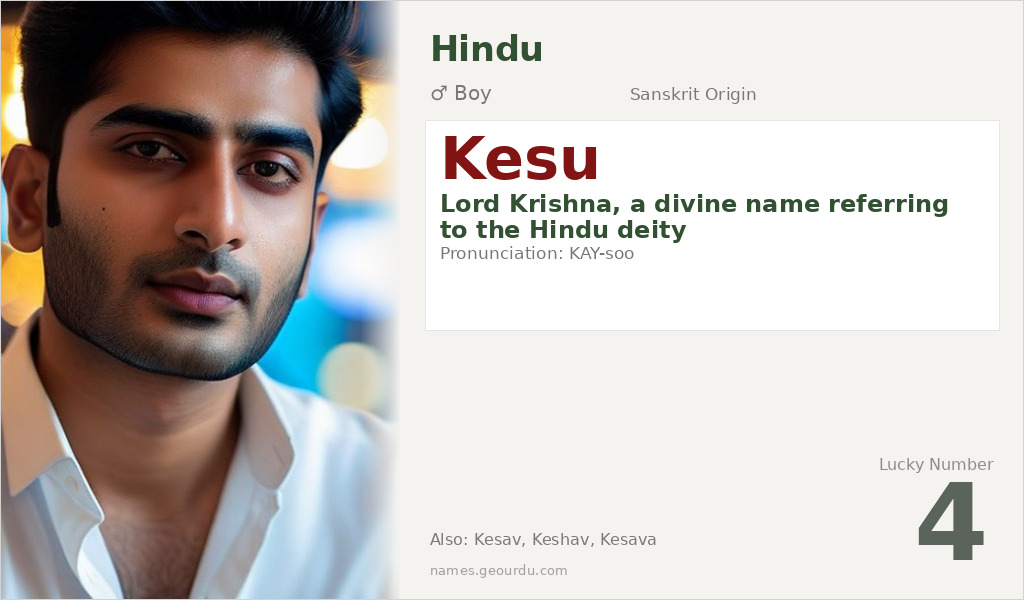
Kesu is a beautiful and meaningful Hindu boy name with deep spiritual roots in Indian tradition. Derived from the Sanskrit name Kesava, this name directly references Lord Krishna, one of Hinduism’s most beloved deities. Parents choosing this name often seek to imbue their child with the divine qualities associated with Krishna—compassion, wisdom, and protection. With its rich cultural heritage, Kesu remains a cherished choice in Hindu families across India and the diaspora.
Meaning of Kesu
Kesu originates from the Sanskrit name Kesava (केशव), which is one of the 108 names of Lord Krishna in Hindu scriptures. The etymology traces back to the Sanskrit word ‘kesa’ meaning ‘hair’, with Kesava traditionally interpreted as ‘the one with beautiful hair’ or ‘slayer of the Keshi demon’, referring to a mythological demon defeated by Krishna. In regional usage, particularly in Hindi and related dialects, Kesu evolved as a shortened, affectionate form of Kesava, maintaining the same divine reference. The name carries profound religious significance, directly connecting the bearer to Krishna’s divine attributes of protection, love, and cosmic order. Unlike many names that have secular origins, Kesu is inherently theological, rooted in Hindu devotional tradition and scripture.
| 📛 Name | Kesu |
| 💎 Meaning | Lord Krishna, a divine name referring to the Hindu deity |
| 👤 Gender | Boy |
| 🕌 Religion | Hindu |
| 🌍 Origin | Sanskrit |
| 🗣 Pronunciation | KAY-soo |
| ✍️ Urdu | کیسو |
| ✍️ Arabic | كيسو |
| 🔢 Numerology | 4 |
| ✨ Spellings | Kesav, Keshav, Kesava, Keshava |
Origin & Cultural Significance
Kesu has its origins in ancient Sanskrit literature and Hindu religious texts, where Kesava appears as a prominent name for Lord Krishna in scriptures like the Vishnu Sahasranama. The name spread through regional Indian languages, particularly in North India, where it became adapted as Kesu in colloquial usage. It remains most popular among Hindu communities in India, Nepal, and the global Indian diaspora, where traditional Sanskrit names are valued for their spiritual significance. The name’s usage reflects the enduring cultural practice of naming children after divine figures to invoke blessings and positive qualities. While primarily a Hindu name, its recognition extends to other communities familiar with Indian culture and mythology.
Personality Traits
Those named Kesu are often associated with qualities mirroring Lord Krishna’s divine attributes—charisma, wisdom, and a protective nature. They may exhibit natural leadership abilities combined with artistic or musical talents, reflecting Krishna’s role as a divine guide and flute player. The name suggests someone who balances spiritual depth with joyful engagement with the world, embodying the harmony and compassion central to Krishna’s teachings.
Similar Names
If you like Kesu, consider: Krishna, Govinda, Madhava, Hari, Vasudeva
Famous People Named Kesu
- Keshav Prasad Maurya — Indian politician and Deputy Chief Minister of Uttar Pradesh
- Keshav Maharaj — South African cricketer of Indian descent
Frequently Asked Questions About Kesu
What does Kesu mean?
Kesu means 'Lord Krishna'. It is a variant of the Sanskrit name Kesava, which is one of the many names of the Hindu deity Krishna, traditionally interpreted as 'having beautiful hair' or 'slayer of the Keshi demon'.
Is Kesu a boy or girl name?
Kesu is exclusively a boy name in Hindu naming tradition, as it refers to the male deity Lord Krishna. There are no recorded instances of it being used for girls in authentic cultural practice.
What is the origin of Kesu?
Kesu originates from Sanskrit, specifically as a regional variant of the name Kesava. It has roots in Hindu religious texts and is used primarily in Indian Hindu communities, with particular prevalence in Hindi-speaking regions.





