
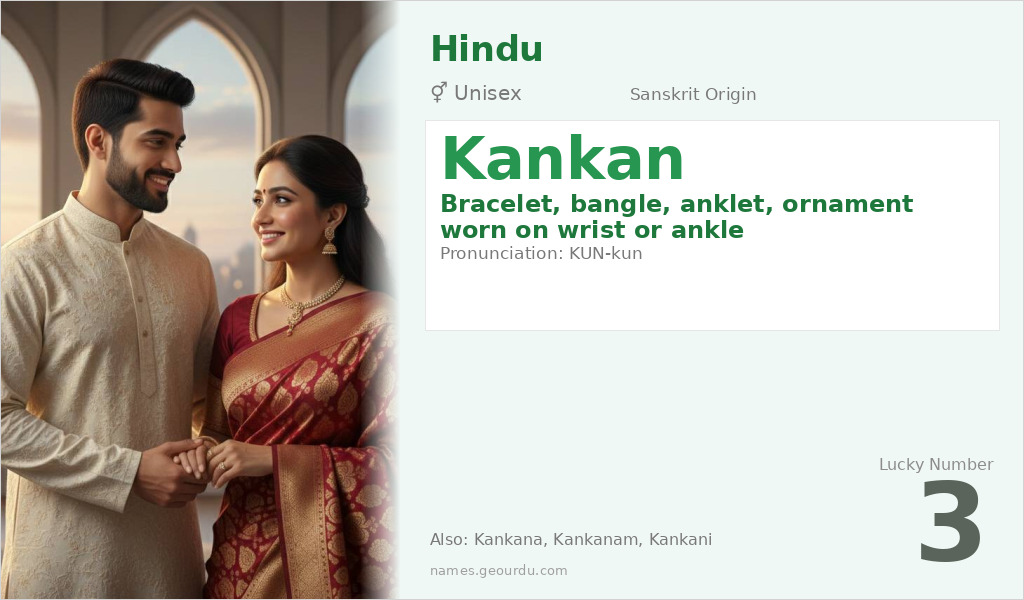
Table of Contents
Kankan is a beautiful name with deep roots in Sanskrit and Hindu culture, symbolizing ornaments like bracelets and bangles. Unlike many modern names, Kankan carries a tangible connection to traditional jewelry and marital symbolism in Indian traditions. This name has been used for centuries in literary works and continues to be appreciated for its melodic sound and meaningful heritage. Whether chosen for a boy or girl, Kankan evokes images of prosperity and cultural richness.
Meaning of Kankan
Kankan originates from the Sanskrit word कङ्कण (kaṅkaṇa), which specifically refers to a bracelet, bangle, or anklet—ornaments worn on the wrists or ankles. In ancient Sanskrit texts like the Mahabharata and Ramayana, kankans are mentioned as decorative items often associated with royalty, marriage ceremonies, and religious rituals. The term is linguistically related to other Sanskrit words for circular objects or adornments, emphasizing its connection to jewelry. Over time, Kankan has been adopted as a personal name in Hindu communities, symbolizing beauty, protection, and marital bliss. In modern Indian languages such as Hindi and Bengali, the word retains its original meaning, making Kankan a name that literally translates to ‘ornament’.
| 📛 Name | Kankan |
| 💎 Meaning | Bracelet, bangle, anklet, ornament worn on wrist or ankle |
| 👤 Gender | Unisex |
| 🕌 Religion | Hindu |
| 🌍 Origin | Sanskrit |
| 🗣 Pronunciation | KUN-kun |
| ✍️ Urdu | کنکن |
| ✍️ Arabic | كانكان |
| 🔢 Numerology | 3 |
| ✨ Spellings | Kankana, Kankanam, Kankani |
Origin & Cultural Significance
Kankan has its origins in classical Sanskrit, the ancient language of India, and is deeply embedded in Hindu culture and traditions. Historically, kankans were not just jewelry but held symbolic importance in weddings and religious ceremonies, often representing vows or marital status. The name appears in Hindu mythology and literature, where characters adorned with kankans are depicted as noble or divine. While primarily used in India and among Hindu communities, the name has also spread to neighboring regions like Sri Lanka and Nepal due to cultural exchanges. Today, Kankan is chosen by parents who value traditional Sanskrit names with clear, positive meanings related to adornment and prosperity.
Personality Traits
People named Kankan are often associated with creativity, charm, and a strong sense of aesthetics, reflecting the name’s meaning of ‘ornament’. They tend to be social and expressive, enjoying interactions that allow them to showcase their artistic or harmonious nature. While generally optimistic and friendly, they might occasionally be seen as focusing too much on appearances or ideals. Overall, the name suggests someone who adds beauty and positivity to their environment, much like the jewelry it represents.
Similar Names
If you like Kankan, consider: Kankana, Manik, Ratna, Hara, Mala
Famous People Named Kankan
- Kankanala Guravaiah — Indian freedom fighter and politician from Andhra Pradesh
- Kankanam Gamage — Sri Lankan actress known for Sinhala cinema
Frequently Asked Questions About Kankan
What does Kankan mean?
Kankan means 'bracelet', 'bangle', or 'anklet' in Sanskrit, referring to ornamental jewelry worn on the wrists or ankles.
Is Kankan a boy or girl name?
Kankan is a unisex name, used for both boys and girls in Hindu traditions, though it may be more common for girls in some regions.
What is the origin of Kankan?
Kankan originates from Sanskrit, an ancient Indian language, and is deeply rooted in Hindu culture, where it symbolizes adornment and prosperity.