
Table of Contents
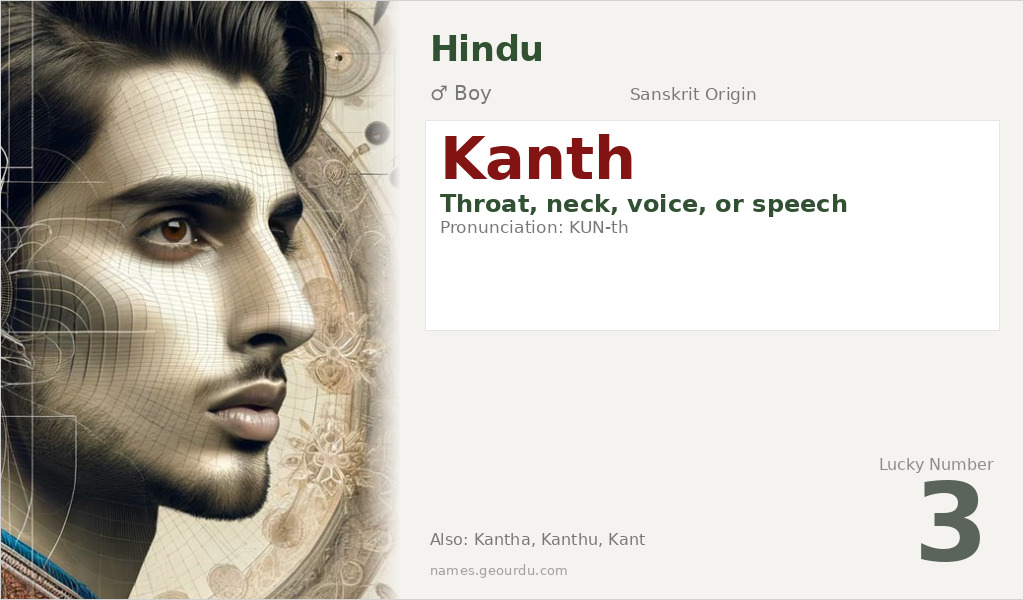
Kanth is a distinctive name with deep roots in Sanskrit and Hindu culture, symbolizing the throat, voice, or speech. Often chosen for boys, it carries mythological significance and appears in various regional languages across South Asia. This name evokes themes of expression and resilience, making it a meaningful choice for parents seeking a name with historical and linguistic depth. Explore the rich etymology and cultural context of Kanth in this detailed guide.
Meaning of Kanth
Kanth originates from the Sanskrit word कण्ठ (kaṇṭha), which directly translates to ‘throat, neck, voice, or speech.’ This etymology is well-documented in Sanskrit dictionaries and linguistic sources, highlighting its role in compound words and poetic expressions. In Hindu mythology, the throat is a symbolic body part, most notably associated with Lord Shiva as Neelakantha, referring to his blue throat after consuming poison. The name also appears in Pashto and other regional languages with similar meanings, emphasizing its cross-cultural linguistic presence. Understanding this root helps appreciate the name’s connection to communication and vitality in various cultural contexts.
| 📛 Name | Kanth |
| 💎 Meaning | Throat, neck, voice, or speech |
| 👤 Gender | Boy |
| 🕌 Religion | Hindu |
| 🌍 Origin | Sanskrit |
| 🗣 Pronunciation | KUN-th |
| ✍️ Urdu | کنٹھ |
| ✍️ Arabic | كانث |
| 🔢 Numerology | 3 |
| ✨ Spellings | Kantha, Kanthu, Kant, Kanthe |
Origin & Cultural Significance
Kanth has its primary origin in Sanskrit, an ancient Indo-Aryan language central to Hindu scriptures and literature. It is used as a given name in Hindu communities, particularly in India and Nepal, where it reflects mythological and linguistic heritage. The name also finds usage in Pashto and other regional languages of South Asia, indicating its spread through cultural and linguistic exchanges. Historically, names derived from body parts like ‘kanth’ are common in Sanskrit-based traditions, symbolizing attributes such as voice or strength. This cultural depth makes Kanth a name with enduring relevance in Hindu and broader South Asian naming practices.
Personality Traits
People named Kanth are often perceived as articulate and influential, with a natural ability to communicate effectively. The name’s meaning ties to the throat and voice, suggesting traits of leadership, persuasion, and emotional expression. They may exhibit resilience and a capacity to handle difficult situations, inspired by mythological associations like Shiva’s blue throat. Overall, Kanth embodies a personality that values expression and strength in both personal and social realms.
Similar Names
If you like Kanth, consider: Kantha, Kant, Kanthe, Kanthan, Kanthi
Famous People Named Kanth
- Kanth — A character in Hindu mythology and literature, often associated with throat-related epithets of deities
- Kanth — Historical or regional figures in South Asian cultures, though not widely documented in global fame
Frequently Asked Questions About Kanth
What does Kanth mean?
Kanth means 'throat, neck, voice, or speech' in Sanskrit, with verified usage in Hindu mythology and regional languages like Pashto.
Is Kanth a boy or girl name?
Kanth is primarily a boy's name in Hindu culture, though it can be used in unisex contexts in some regional variations.
What is the origin of Kanth?
Kanth originates from Sanskrit, with additional presence in Pashto and other South Asian languages, rooted in Hindu traditions and mythology.





