
Table of Contents
Kaali is a name rich with cultural and spiritual significance, deeply rooted in Hindu tradition. Derived from Sanskrit, it carries meanings of darkness and power while being most famously associated with the formidable goddess Kali. This name represents both a color descriptor and a divine embodiment of feminine energy. Understanding Kaali requires exploring its linguistic origins and religious context.
Meaning of Kaali
Kaali originates from the Sanskrit word ‘kālā’ (काला), which literally translates to ‘black’ or ‘dark’. This refers not only to physical darkness but also to the cosmic concept of time (kāla) and the primordial void. In Hindu mythology, Kaali is the name of the goddess Kali, the fierce aspect of Parvati who embodies time, change, destruction of evil, and maternal protection. The name appears in ancient Sanskrit texts including the Devi Mahatmya, where Kali emerges from Durga’s forehead to battle demons. Linguistically, it’s related to words like ‘kāla’ (time) and ‘kālī’ (the dark one), showing how color symbolism intertwines with cosmic concepts in Indian traditions.
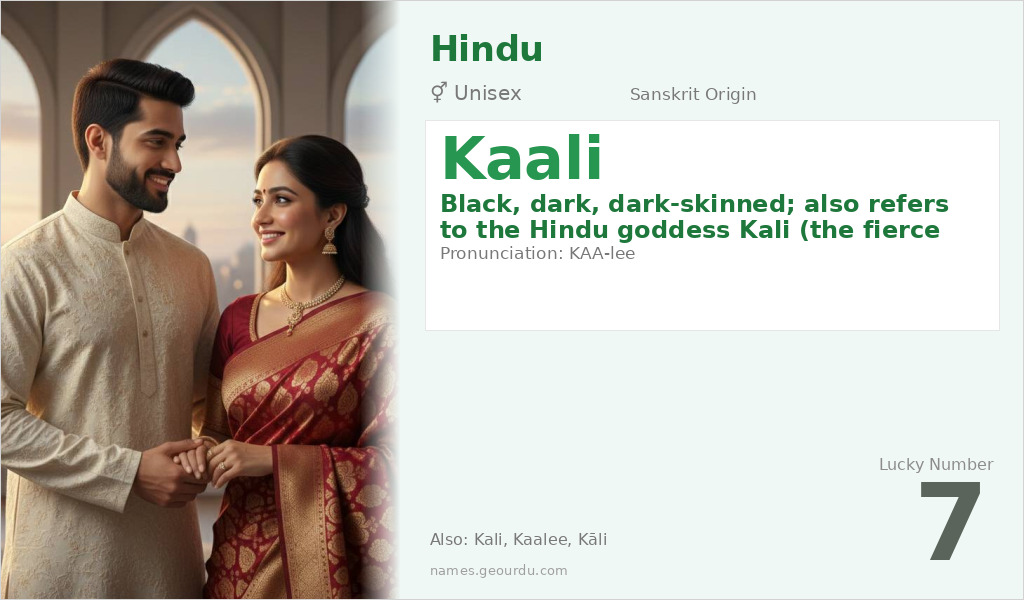
| 📛 Name | Kaali |
| 💎 Meaning | Black, dark, dark-skinned; also refers to the Hindu goddess Kali (the fierce form of Parvati) |
| 👤 Gender | Unisex |
| 🕌 Religion | Hindu |
| 🌍 Origin | Sanskrit |
| 🗣 Pronunciation | KAA-lee |
| ✍️ Urdu | کالی |
| ✍️ Arabic | كالي |
| 🔢 Numerology | 7 |
| ✨ Spellings | Kali, Kaalee, Kāli, কালী |
Origin & Cultural Significance
Kaali has its origins in ancient Sanskrit, the classical language of India dating back over 3,500 years. The name gained prominence through Hindu religious texts, particularly the Puranas and Tantric traditions where the goddess Kali is worshipped as a powerful deity. While primarily associated with Hinduism, the name appears across South Asian cultures including Bengali, Tamil, and Nepali communities. In Bengal especially, Kali worship is central to Shakta traditions, with temples dedicated to Kali throughout the region. The name’s usage as a personal name reflects devotion to the goddess, though it’s less common than other divine names in modern naming practices.
Personality Traits
Those named Kaali often embody characteristics associated with the goddess Kali—strength, transformation, and protective energy. They may display intense passion for their beliefs and a willingness to confront challenges directly. The name’s connection to darkness suggests depth, mystery, and intuition, while its divine association implies spiritual awareness and power. Such individuals might naturally assume leadership roles and inspire change in their communities.
Similar Names
If you like Kaali, consider: Kali, Kalika, Kalpana, Kalyani, Kamala
Famous People Named Kaali
- Kali (goddess) — Hindu goddess, the fierce form of Parvati worshipped throughout India
- Kali Prasad Barma — 19th century Indian social reformer and writer from Assam
Frequently Asked Questions About Kaali
What does Kaali mean?
Kaali means 'black' or 'dark' in Sanskrit, and is primarily known as the name of the Hindu goddess Kali, representing time, power, and destruction of evil.
Is Kaali a boy or girl name?
Kaali is primarily a feminine name as it refers to the goddess Kali, though it can be considered unisex in some regional contexts where it simply means 'dark-skinned'.
What is the origin of Kaali?
Kaali originates from Sanskrit, the ancient Indian language, and is deeply embedded in Hindu religious traditions, particularly associated with goddess worship.