Table of Contents
Karkotak is a powerful name steeped in Hindu mythology, derived from ancient Sanskrit texts where it refers to a significant Nāga (serpent deity) king. This name carries centuries of cultural and religious significance, appearing in epics like the Mahabharata. While uncommon in modern usage, it represents a connection to India’s rich mythological heritage and serpent worship traditions.
Meaning of Karkotak
Karkotak originates from the Sanskrit word कर्कोटक (Karkoṭaka), which specifically denotes a mythological serpent king in Hindu tradition. The name appears in numerous ancient texts including the Mahabharata, where Karkotaka plays a crucial role in the story of Nala and Damayanti. Linguistically, scholars suggest the name may derive from ‘karka’ meaning crab or hard shell, combined with elements indicating serpentine nature, though the exact etymology remains debated. Unlike generic snake names, Karkotak refers specifically to this legendary Nāga figure, making it a name with precise mythological reference rather than general serpent symbolism.
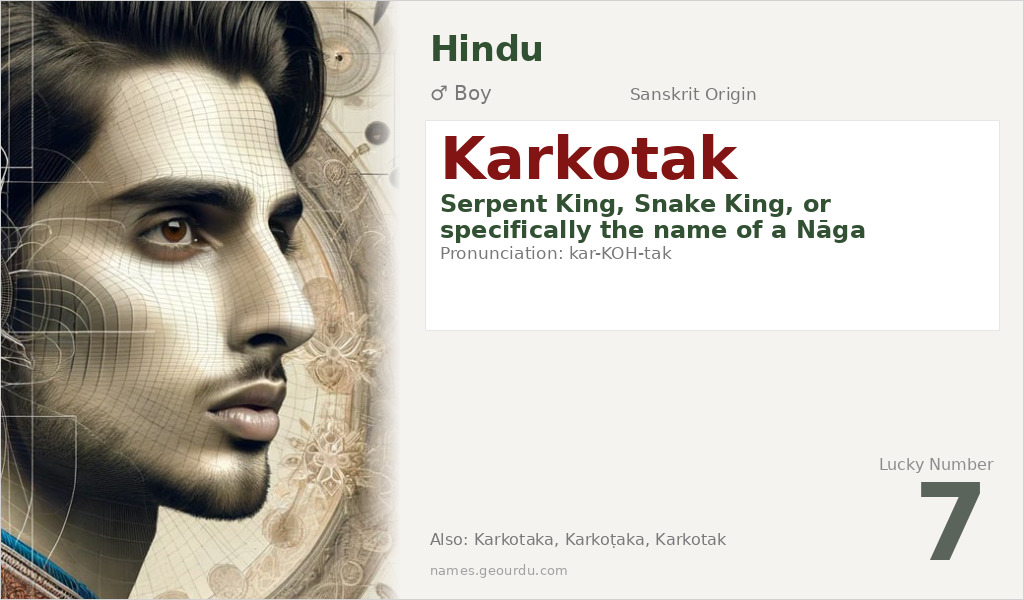
| 📛 Name | Karkotak |
| 💎 Meaning | Serpent King, Snake King, or specifically the name of a Nāga (serpent deity) in Hindu mythology |
| 👤 Gender | Boy |
| 🕌 Religion | Hindu |
| 🌍 Origin | Sanskrit |
| 🗣 Pronunciation | kar-KOH-tak |
| ✍️ Urdu | کارکوٹک |
| ✍️ Arabic | كاركوتاك |
| 🔢 Numerology | 7 |
| ✨ Spellings | Karkotaka, Karkoṭaka, Karkotak, Karkotakah |
Origin & Cultural Significance
The name Karkotak has its roots in ancient Hindu mythology and Sanskrit literature, dating back to at least the early centuries CE. It appears prominently in the Mahabharata’s Nala episode, where Karkotaka is the serpent king who bites Nala, transforming him and setting in motion key plot developments. In Hindu culture, Nāgas like Karkotak are revered as semi-divine beings associated with water, fertility, and protection. The name’s usage reflects India’s ancient serpent worship traditions and the integration of mythological figures into naming practices, though it remains relatively rare compared to other mythological names.
Personality Traits
Drawing from its mythological origins, the name Karkotak suggests personality traits of wisdom, transformation, and protective strength. Like the serpent king who could change forms and wield both venom and healing, individuals with this name might exhibit adaptability and depth. The association with Nāgas also implies connections to intuition, hidden knowledge, and the ability to navigate challenging situations with strategic thinking.
Similar Names
If you like Karkotak, consider: Vasuki, Shesha, Takshak, Ananta, Kaliya
Famous People Named Karkotak
- Karkotaka — Mythological Nāga king in Hindu scriptures who appears in the Mahabharata and various Puranas
- No contemporary famous people with this exact name found in verified records
Frequently Asked Questions About Karkotak
What does Karkotak mean?
Karkotak means 'Serpent King' or specifically refers to a mythological Nāga (serpent deity) king in Hindu tradition. The name comes from Sanskrit कर्कोटक (Karkoṭaka).
Is Karkotak a boy or girl name?
Karkotak is exclusively a boy's name in Hindu naming tradition, as it refers to a male mythological figure from Sanskrit literature.
What is the origin of Karkotak?
Karkotak originates from Sanskrit and Hindu mythology, specifically from ancient Indian texts like the Mahabharata where Karkotaka appears as a significant Nāga king.