
Table of Contents
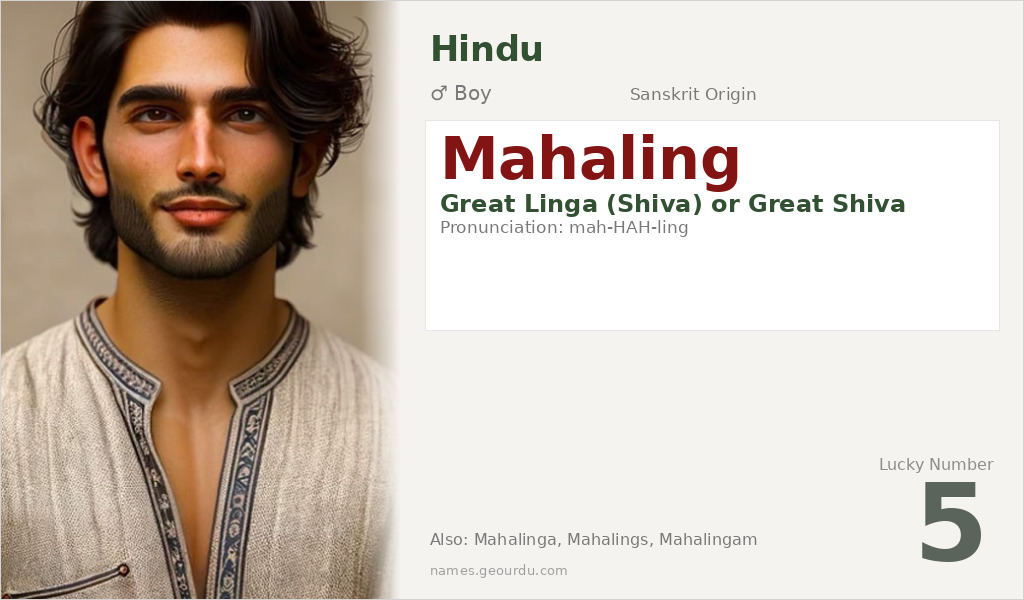
Mahaling is a powerful and spiritually significant name of Sanskrit origin, predominantly used for boys in Hindu communities. It directly translates to ‘Great Linga’ or ‘Great Shiva,’ reflecting a profound connection to the Hindu deity Shiva. This name carries centuries of religious and cultural heritage, often chosen for its divine connotations and auspicious meaning. Explore the rich etymology, history, and personality traits associated with Mahaling in this detailed guide.
Meaning of Mahaling
Mahaling derives from the Sanskrit words ‘Maha’ (महा), meaning ‘great’ or ‘supreme,’ and ‘Ling’ (लिङ्ग), referring to the ‘Linga’ as the symbolic representation of Shiva. In Hindu philosophy, the Linga embodies Shiva’s formless, omnipresent essence, making Mahaling a name that signifies ‘Great Shiva’ or the ‘Supreme Linga.’ This compound structure is common in Sanskrit names, emphasizing attributes of divinity and reverence. The name is exclusively tied to Shaivism, the tradition worshiping Shiva, and is found in religious texts, temple names, and regional variations across India. Its meaning is well-documented in Sanskrit lexicons and Hindu scriptures, with no significant alternate meanings in other languages like Arabic, Persian, or regional dialects, as it is specifically rooted in Hindu theology.
| 📛 Name | Mahaling |
| 💎 Meaning | Great Linga (Shiva) or Great Shiva |
| 👤 Gender | Boy |
| 🕌 Religion | Hindu |
| 🌍 Origin | Sanskrit |
| 🗣 Pronunciation | mah-HAH-ling |
| ✍️ Urdu | مہالنگ |
| ✍️ Arabic | مهالينغ |
| 🔢 Numerology | 5 |
| ✨ Spellings | Mahalinga, Mahalings, Mahalingam |
Origin & Cultural Significance
Originating from Sanskrit, an ancient Indo-Aryan language of India, Mahaling has been used for centuries within Hindu culture, particularly among followers of Shaivism. It appears in historical contexts such as temple names (e.g., Mahaling Temple in Tamil Nadu) and religious literature, highlighting its enduring spiritual significance. The name is most prevalent in India and among Hindu diaspora communities, with variations like Mahalinga in South India. Unlike names from Pashto, Balochi, or other regional languages, Mahaling does not have verified meanings in those traditions, as its etymology is firmly Sanskrit and Hindu. Its usage remains largely religious, symbolizing devotion to Shiva and often chosen for boys to invoke divine protection and strength.
Personality Traits
Inspired by its meaning ‘Great Shiva,’ individuals named Mahaling are often perceived as calm, resilient, and spiritually inclined. They may possess a strong sense of duty, leadership abilities, and a deep respect for tradition, mirroring Shiva’s roles as a destroyer of evil and a benevolent protector. This name is believed to imbue qualities of introspection and strength, making bearers thoughtful and determined in their pursuits.
Similar Names
If you like Mahaling, consider: Mahadev, Shankar, Lingaraj, Mahakal, Bholenath
Famous People Named Mahaling
- Mahaling Shivashankar — Indian classical musician and veena player
- Mahaling Temple — famous Shiva temple in Tiruvidaimarudur, Tamil Nadu, India
Frequently Asked Questions About Mahaling
What does Mahaling mean?
Mahaling means 'Great Linga' or 'Great Shiva' in Sanskrit, directly referring to the Hindu god Shiva through the symbolic Linga representation.
Is Mahaling a boy or girl name?
Mahaling is traditionally a boy name in Hindu culture, given its association with the masculine deity Shiva and common usage for males.
What is the origin of Mahaling?
Mahaling originates from Sanskrit, an ancient Indian language, and is deeply rooted in Hindu Shaivism, with no verified meanings in other languages like Arabic or Persian.





