
Table of Contents
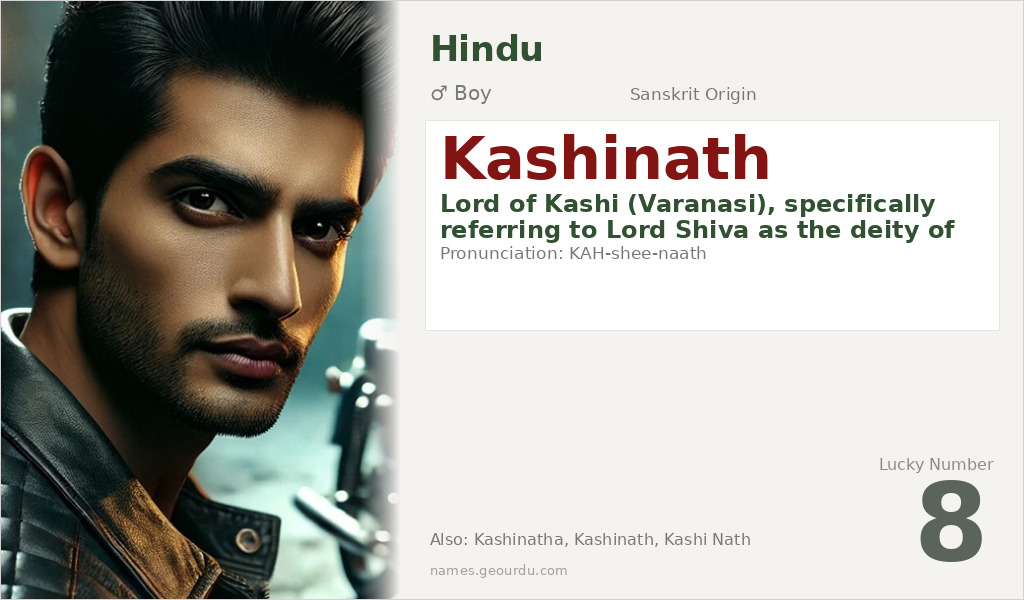
Kashinath is a profoundly spiritual Hindu name with roots in India’s most sacred geography. Meaning ‘Lord of Kashi,’ this name directly connects its bearer to Lord Shiva and the holy city of Varanasi. Used for centuries in Hindu families, Kashinath carries both religious devotion and cultural heritage. This name represents a deep connection to one of Hinduism’s most important pilgrimage sites.
Meaning of Kashinath
Kashinath derives from classical Sanskrit, combining ‘Kashi’ (काशी), the ancient name for Varanasi, with ‘nath’ (नाथ), meaning ‘lord’ or ‘protector.’ Kashi itself means ‘the luminous one’ or ‘city of light,’ referring to its spiritual significance as a center of learning and enlightenment. Thus, Kashinath literally translates to ‘Lord of the Luminous City,’ specifically denoting Shiva as the presiding deity of Varanasi. This name appears in numerous Hindu scriptures and pilgrimage traditions, particularly those associated with Shiva worship. The compound follows standard Sanskrit naming patterns where ‘nath’ serves as a theophoric element indicating divine lordship.
| 📛 Name | Kashinath |
| 💎 Meaning | Lord of Kashi (Varanasi), specifically referring to Lord Shiva as the deity of the sacred city of Kashi |
| 👤 Gender | Boy |
| 🕌 Religion | Hindu |
| 🌍 Origin | Sanskrit |
| 🗣 Pronunciation | KAH-shee-naath |
| ✍️ Urdu | کاشی ناتھ |
| ✍️ Arabic | كاشيناث |
| 🔢 Numerology | 8 |
| ✨ Spellings | Kashinatha, Kashinath, Kashi Nath, Kashinath |
Origin & Cultural Significance
The name Kashinath originates from Hindu religious tradition and Sanskrit literature, specifically from the Shaivism tradition that worships Shiva as the supreme deity. Kashi (modern Varanasi) has been considered Shiva’s earthly capital since ancient times, mentioned in texts like the Kashi Khanda of the Skanda Purana. As a given name, Kashinath became popular among Hindu families, particularly in regions with strong Shiva worship traditions like Maharashtra, Karnataka, and parts of North India. The name reflects the practice of naming children after divine attributes or sacred places, ensuring spiritual protection and connection. Historically, it has been used by various communities within Hinduism, transcending specific caste or regional boundaries.
Personality Traits
Those named Kashinath often embody qualities associated with their namesake deity—strength, wisdom, and spiritual depth. They tend to be traditional yet adaptable, with a natural authority that others respect. Their connection to such a historically significant name often gives them a sense of responsibility toward preserving cultural and religious values while navigating modern life.
Similar Names
If you like Kashinath, consider: Shivanath, Vishwanath, Gopinath, Jagannath, Dinanath
Famous People Named Kashinath
- Kashinath (Indian actor) — Renowned Kannada film actor known for his comedic roles in the 1980s and 1990s
- Kashinath Singh (Indian writer) — Award-winning Hindi writer and academic, recipient of the Sahitya Akademi Award
Frequently Asked Questions About Kashinath
What does Kashinath mean?
Kashinath means 'Lord of Kashi' in Sanskrit, specifically referring to Lord Shiva as the deity presiding over the sacred city of Kashi (Varanasi).
Is Kashinath a boy or girl name?
Kashinath is exclusively a masculine name in Hindu naming tradition, as it contains the element 'nath' (lord) which is typically masculine in Sanskrit compounds.
What is the origin of Kashinath?
Kashinath originates from Sanskrit and Hindu religious tradition, specifically from the Shaivism tradition that venerates Shiva. The name combines the sacred place name Kashi with the divine title Nath.





