
Table of Contents
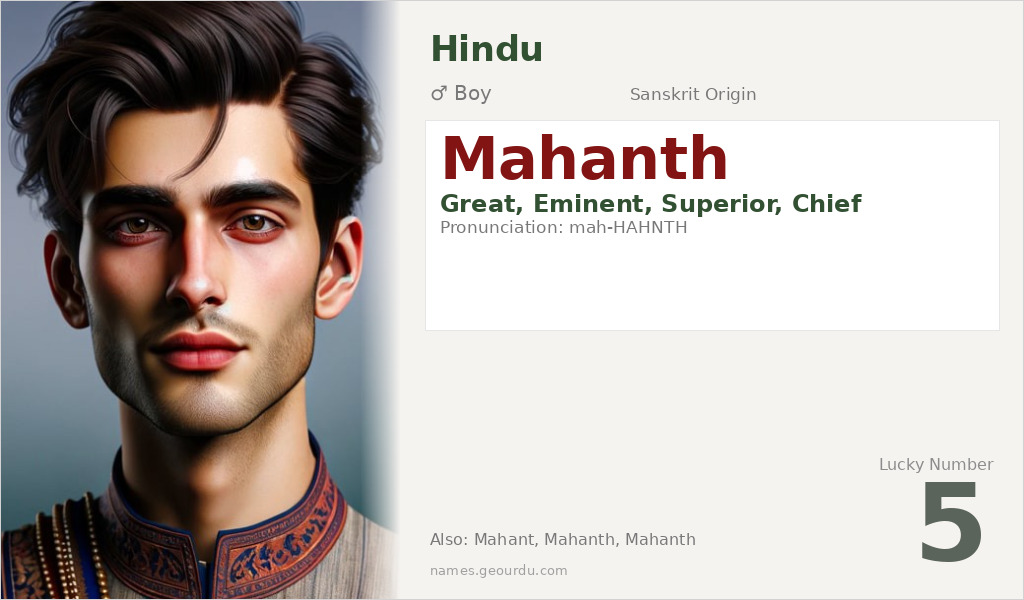
Mahanth is a powerful Sanskrit name for boys that carries centuries of spiritual and cultural significance. Meaning ‘Great, Eminent, or Superior,’ this name has been borne by religious leaders and respected figures throughout Indian history. With its roots in ancient Sanskrit literature, Mahanth evokes qualities of wisdom, authority, and moral excellence. Parents choosing this name often seek to instill leadership qualities and deep cultural connection in their child.
Meaning of Mahanth
Mahanth originates from the Sanskrit word ‘Mahant’ (महन्त्), which derives from the root ‘mahat’ meaning ‘great, large, important, or eminent.’ In Sanskrit grammar, ‘mahant’ functions as both an adjective describing something of superior quality and a noun referring to a person of high status. The term appears in classical Sanskrit texts like the Mahabharata and Puranas, often describing sages, kings, or divine beings. Linguistically, it’s related to other Sanskrit words like ‘mahatma’ (great soul) and ‘maharashtra’ (great nation), sharing the ‘maha-‘ prefix that denotes greatness or superiority. In practical usage, ‘Mahant’ became a title for the head of a monastery or religious institution in Hindu and Jain traditions.
| 📛 Name | Mahanth |
| 💎 Meaning | Great, Eminent, Superior, Chief |
| 👤 Gender | Boy |
| 🕌 Religion | Hindu |
| 🌍 Origin | Sanskrit |
| 🗣 Pronunciation | mah-HAHNTH |
| ✍️ Urdu | مہانت |
| ✍️ Arabic | مهانت |
| 🔢 Numerology | 5 |
| ✨ Spellings | Mahant, Mahanth, Mahanth, Mahaant |
Origin & Cultural Significance
Mahanth has its origins in ancient Sanskrit, the classical language of India that dates back over 3,500 years. The name emerged from religious and cultural contexts where titles denoted spiritual authority and social standing. Historically, ‘Mahant’ was used as an honorific for abbots of mathas (monasteries) and heads of religious orders, particularly in Shaivism and Vaishnavism traditions. During medieval India, the title became institutionalized in various Hindu monastic organizations across regions. Today, while still used as a religious title, Mahanth has evolved into a given name that preserves this heritage of leadership and respectability within Hindu families, particularly in North India.
Personality Traits
Those named Mahanth often naturally embody the qualities their name suggests—leadership, wisdom, and moral authority. They tend to approach life with seriousness of purpose and deep consideration for tradition and values. While they may appear reserved initially, they reveal strong convictions and reliable character over time. The name’s historical association with religious leadership suggests someone who might excel in guiding roles, whether in family, community, or professional settings.
Similar Names
If you like Mahanth, consider: Mahavir, Mahadev, Mahindra, Mahipal, Maharaj
Famous People Named Mahanth
- Mahant Avaidyanath — Indian Hindu religious leader and politician, former MP from Gorakhpur
- Mahant Swami Maharaj — Current spiritual leader of BAPS Swaminarayan Sanstha
Frequently Asked Questions About Mahanth
What does Mahanth mean?
Mahanth means 'Great, Eminent, Superior, or Chief' in Sanskrit. It originates from the Sanskrit root 'mahat' meaning 'great' and has been used historically as a title for religious leaders and respected elders.
Is Mahanth a boy or girl name?
Mahanth is exclusively a boy's name in Hindu naming traditions. The Sanskrit grammatical structure and historical usage as a title for male religious leaders confirm its masculine gender association.
What is the origin of Mahanth?
Mahanth originates from Sanskrit, the ancient classical language of India. It evolved from the word 'Mahant' meaning 'great one' and has been used for centuries in Hindu and Jain religious contexts as a title for monastery heads and spiritual leaders.





