
Table of Contents
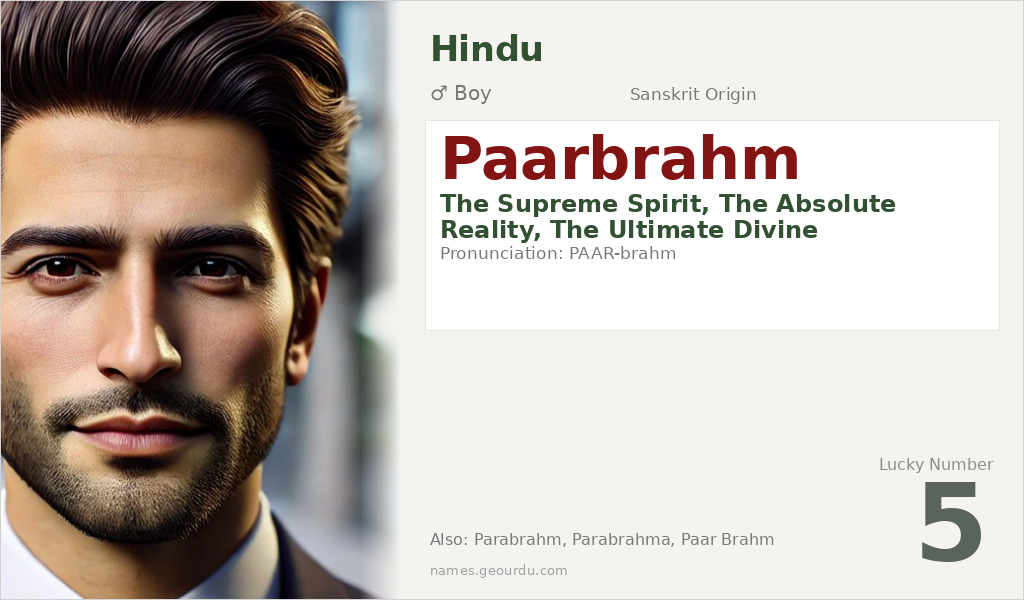
Paarbrahm is a deeply spiritual Hindu boy name with roots in ancient Sanskrit philosophy. Meaning ‘The Supreme Spirit’ or ‘The Absolute Reality’, this name carries profound theological significance in Hindu traditions. Unlike common personal names, Paarbrahm represents a core philosophical concept describing the ultimate, formless divine reality. Parents choosing this name often seek to imbue their child’s identity with spiritual depth and connection to Hindu philosophical traditions.
Meaning of Paarbrahm
Paarbrahm derives from two Sanskrit components: ‘Paar’ (पार) meaning ‘beyond, across, or the other shore’ and ‘Brahm’ (ब्रह्म) meaning ‘the ultimate reality, divine essence, or cosmic spirit’. Together, they form a compound term that literally translates to ‘beyond Brahm’ or ‘the supreme spirit’. In Hindu philosophical systems, particularly Advaita Vedanta and Bhakti traditions, Paarbrahm represents the highest, formless aspect of divinity that transcends all manifestations and limitations. The concept appears in foundational Hindu texts including the Upanishads, where it describes the absolute reality that is both immanent and transcendent. This name encapsulates one of Hinduism’s most profound spiritual concepts, making it a deeply meaningful choice for spiritually inclined families.
| 📛 Name | Paarbrahm |
| 💎 Meaning | The Supreme Spirit, The Absolute Reality, The Ultimate Divine |
| 👤 Gender | Boy |
| 🕌 Religion | Hindu |
| 🌍 Origin | Sanskrit |
| 🗣 Pronunciation | PAAR-brahm |
| ✍️ Urdu | پاربرہم |
| ✍️ Arabic | باربراهم |
| 🔢 Numerology | 5 |
| ✨ Spellings | Parabrahm, Parabrahma, Paar Brahm, Par Brahm |
Origin & Cultural Significance
Paarbrahm originates from ancient Sanskrit, the liturgical language of Hinduism, and emerges from India’s rich philosophical traditions. The term gained prominence through Hindu scriptures and philosophical discourses, particularly within Vedanta schools of thought that explore the nature of ultimate reality. While not commonly used as a personal name historically, it has been adopted by some Hindu families, especially those with strong philosophical or spiritual orientations. The name reflects Hinduism’s sophisticated theological concepts about the nature of divinity, distinguishing between the personal God (Saguna Brahman) and the formless absolute (Nirguna Brahman or Paarbrahm). Its usage as a personal name represents a modern adaptation of profound philosophical terminology into personal identity.
Personality Traits
Children named Paarbrahm often grow into individuals with a natural inclination toward spirituality and philosophical inquiry. The name’s profound meaning tends to influence personality development, fostering qualities of wisdom, introspection, and spiritual seeking. These individuals may exhibit leadership in spiritual or philosophical matters, demonstrating calmness and depth in their approach to life’s challenges. The name carries an expectation of high moral and ethical standards, reflecting the supreme spiritual ideal it represents.
Similar Names
If you like Paarbrahm, consider: Parameshwar, Parampurush, Paratpar, Akshar Purushottam, Nirankar
Famous People Named Paarbrahm
- No widely known contemporary figures with this name, as it is primarily a philosophical/theological term rather than a common personal name
Frequently Asked Questions About Paarbrahm
What does Paarbrahm mean?
Paarbrahm means 'The Supreme Spirit' or 'The Absolute Reality' in Sanskrit. It is a compound term combining 'Paar' (beyond) and 'Brahm' (divine essence), representing the highest formless aspect of divinity in Hindu philosophy.
Is Paarbrahm a boy or girl name?
Paarbrahm is exclusively a boy name in Hindu naming traditions. The name carries masculine grammatical gender in Sanskrit and is associated with philosophical concepts traditionally explored by male sages and scholars in historical contexts.
What is the origin of Paarbrahm?
Paarbrahm originates from Sanskrit, the ancient liturgical language of Hinduism. It emerges from Hindu philosophical traditions, particularly Vedanta, where it describes the ultimate, transcendent reality beyond all manifestations and forms.





