
Table of Contents
Mantha is a distinctive Sanskrit name with deep roots in Hindu mythology and Vedic tradition. Unlike common modern names, it carries the weight of ancient narratives about creation and transformation. This name connects its bearer to one of Hinduism’s most profound cosmological stories—the churning of the ocean of milk. Discover the rich meaning and cultural significance behind this unique appellation.
Meaning of Mantha
Mantha originates from the Sanskrit word ‘mantha’ (मन्थ), which literally translates to ‘churning stick’ or ‘stirring rod’. This refers specifically to the instrument used in the Samudra Manthan (churning of the cosmic ocean) described in Hindu scriptures like the Puranas and Mahabharata. The name derives from the Sanskrit verbal root ‘manth’ (मन्थ्), meaning ‘to stir, agitate, or churn’. In mythological context, the mantha was the rod placed on Mount Mandara, around which the serpent Vasuki was coiled to churn the ocean and obtain amrita (nectar of immortality). This makes the name symbolically rich, representing the tool of divine creation and transformation.
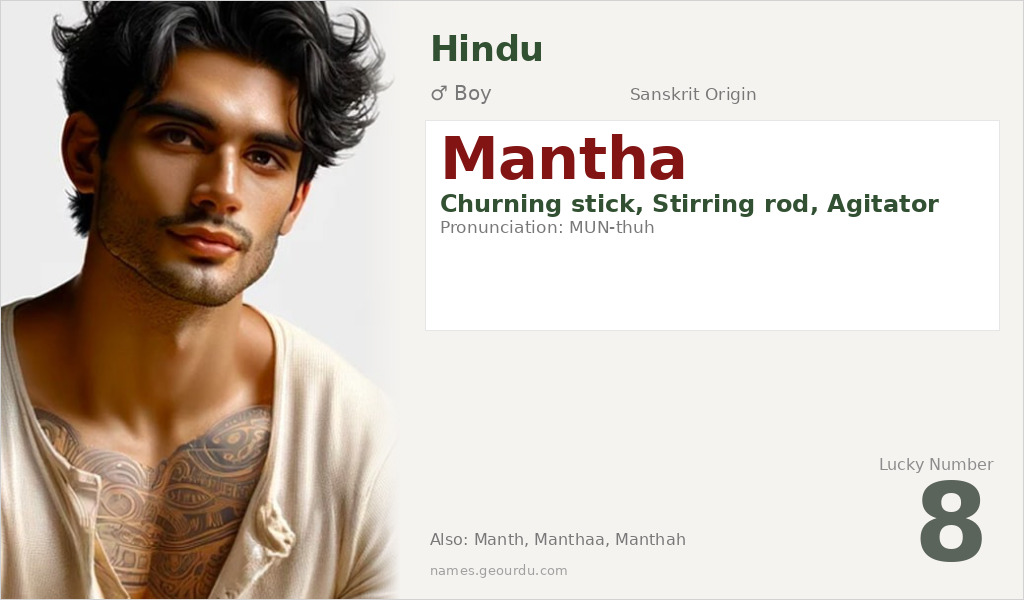
| 📛 Name | Mantha |
| 💎 Meaning | Churning stick, Stirring rod, Agitator |
| 👤 Gender | Boy |
| 🕌 Religion | Hindu |
| 🌍 Origin | Sanskrit |
| 🗣 Pronunciation | MUN-thuh |
| ✍️ Urdu | منٹھا |
| ✍️ Arabic | مانثا |
| 🔢 Numerology | 8 |
| ✨ Spellings | Manth, Manthaa, Manthah |
Origin & Cultural Significance
Mantha has exclusively Sanskrit origins and is deeply embedded in Hindu religious and cultural traditions. It appears in ancient Indian texts dating back over two millennia, particularly in narratives about the Samudra Manthan. While not commonly used as a personal name in modern times, it appears in classical literature and religious discourse. The name’s cultural significance comes from its association with one of Hinduism’s central creation myths, where gods and demons collaborated using the mantha to obtain immortality. This gives the name philosophical depth, symbolizing the instrument that facilitates cosmic balance and transformation.
Personality Traits
Those named Mantha often embody qualities of transformation and purposeful action. Like the churning stick that facilitates change, they may be natural catalysts in their communities—stirring innovation, resolving conflicts, or initiating progress. Their personality often combines determination with creativity, approaching challenges as opportunities for positive disruption. They tend to value depth over superficiality, seeking meaningful connections and endeavors that create lasting impact.
Similar Names
If you like Mantha, consider: Manthan, Manthara, Manthana, Manthani, Manthita
Famous People Named Mantha
- Mantha S. — Indian classical dancer and choreographer specializing in Bharatanatyam
- Mantha R. — Scholar of Sanskrit literature and Vedic studies
Frequently Asked Questions About Mantha
What does Mantha mean?
Mantha means 'churning stick' or 'stirring rod' in Sanskrit. It specifically refers to the instrument used in the Hindu mythological story of Samudra Manthan (churning of the ocean of milk).
Is Mantha a boy or girl name?
Mantha is traditionally a masculine name in Hindu naming conventions, though its usage is rare in modern times. It derives from Sanskrit grammatical gender rules where 'mantha' is masculine.
What is the origin of Mantha?
Mantha originates from Sanskrit, the ancient Indo-Aryan language of India. It appears in Hindu scriptures like the Puranas and Mahabharata, specifically in the context of the Samudra Manthan creation myth.





