
Table of Contents
Padmalochan is a beautiful Sanskrit name that carries profound spiritual and aesthetic symbolism. Meaning ‘lotus-eyed,’ this name evokes images of purity, beauty, and divine perception. Primarily used in Hindu communities, particularly in India and Nepal, it represents an appreciation for both physical beauty and spiritual insight. The name connects its bearer to rich cultural traditions where the lotus symbolizes enlightenment and transcendence.
Meaning of Padmalochan
Padmalochan derives from classical Sanskrit, combining ‘padma’ (lotus) and ‘lochan’ (eye or eyed). The lotus in Hindu and Buddhist traditions represents purity, spiritual growth, and divine beauty—it rises pristine from muddy waters, symbolizing enlightenment emerging from worldly existence. ‘Lochan’ comes from the root ‘lok’ meaning to see or perceive, suggesting not just physical eyes but spiritual vision. Thus, Padmalochan describes someone whose eyes resemble lotus petals—large, beautiful, and spiritually perceptive. This type of compound name is common in Sanskrit literature, often used to describe divine beings or exceptional individuals. The name appears in Hindu texts and poetry as an epithet for deities and enlightened beings with particularly beautiful or insightful eyes.
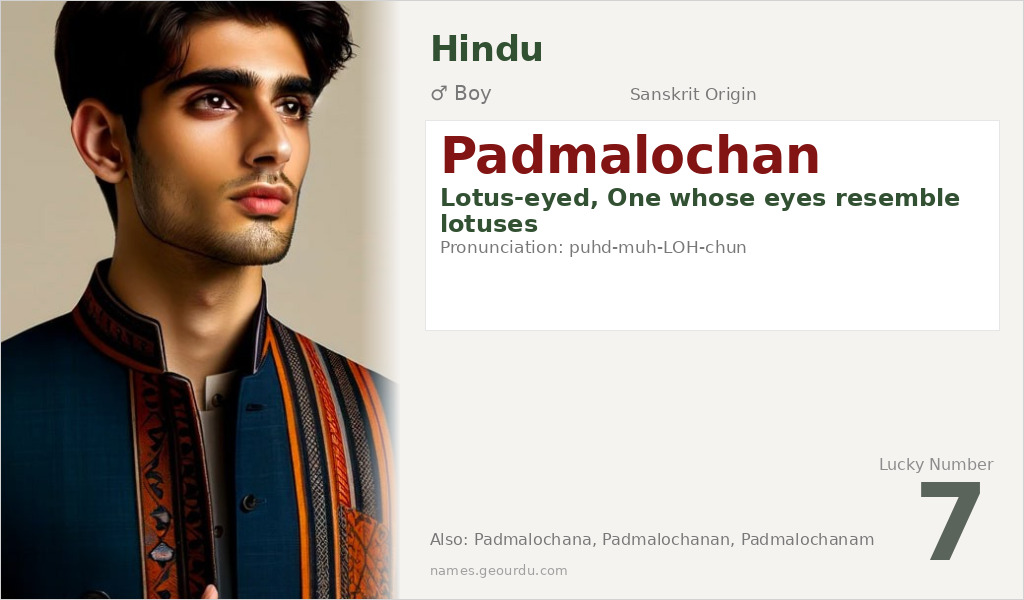
| 📛 Name | Padmalochan |
| 💎 Meaning | Lotus-eyed, One whose eyes resemble lotuses |
| 👤 Gender | Boy |
| 🕌 Religion | Hindu |
| 🌍 Origin | Sanskrit |
| 🗣 Pronunciation | puhd-muh-LOH-chun |
| ✍️ Urdu | پدملوچن |
| ✍️ Arabic | بادمالوتشان |
| 🔢 Numerology | 7 |
| ✨ Spellings | Padmalochana, Padmalochanan, Padmalochanam |
Origin & Cultural Significance
Padmalochan originates from Sanskrit, the ancient liturgical language of Hinduism, Buddhism, and Jainism. As a compound Sanskrit name, it follows traditional naming patterns where physical or divine attributes are described through metaphorical combinations. The name is particularly prevalent in Hindu communities across India, especially in regions with strong Sanskrit traditions like Bengal, Odisha, and South India. While primarily a given name today, it historically served as both a personal name and an epithet in religious texts describing deities or spiritually advanced individuals. The lotus symbolism connects the name to Vishnu, Lakshmi, Brahma, and other deities often depicted with lotus associations, though Padmalochan itself isn’t exclusive to any particular deity.
Personality Traits
Those named Padmalochan are often associated with qualities of perception, aesthetic appreciation, and spiritual depth. The lotus symbolism suggests an individual who maintains inner purity and grace despite external challenges, much like the lotus flower blooming in muddy waters. They may possess an eye for beauty in both art and human character, with a contemplative nature that seeks deeper meaning beyond surface appearances. The name implies someone who sees the world with both practical clarity and spiritual insight.
Similar Names
If you like Padmalochan, consider: Padmanabha (Lotus-naveled, Vishnu), Kamalnayan (Lotus-eyed in Hindi), Padmaja (Lotus-born), Neelkanth (Blue-throated, Shiva), Chandralochan (Moon-eyed)
Famous People Named Padmalochan
- Padmalochan Das — 19th century Bengali saint and devotional poet
- Padmalochan Panda — Contemporary Odia writer and literary critic
Frequently Asked Questions About Padmalochan
What does Padmalochan mean?
Padmalochan means 'lotus-eyed' in Sanskrit, describing someone with eyes resembling lotus flowers—beautiful, pure, and spiritually perceptive.
Is Padmalochan a boy or girl name?
Padmalochan is traditionally a masculine name in Hindu naming traditions, though Sanskrit compound names can sometimes be adapted across genders in modern usage.
What is the origin of Padmalochan?
Padmalochan originates from Sanskrit, the ancient language of Hindu scriptures, combining 'padma' (lotus) and 'lochan' (eye) to create a descriptive compound name.





