
Table of Contents
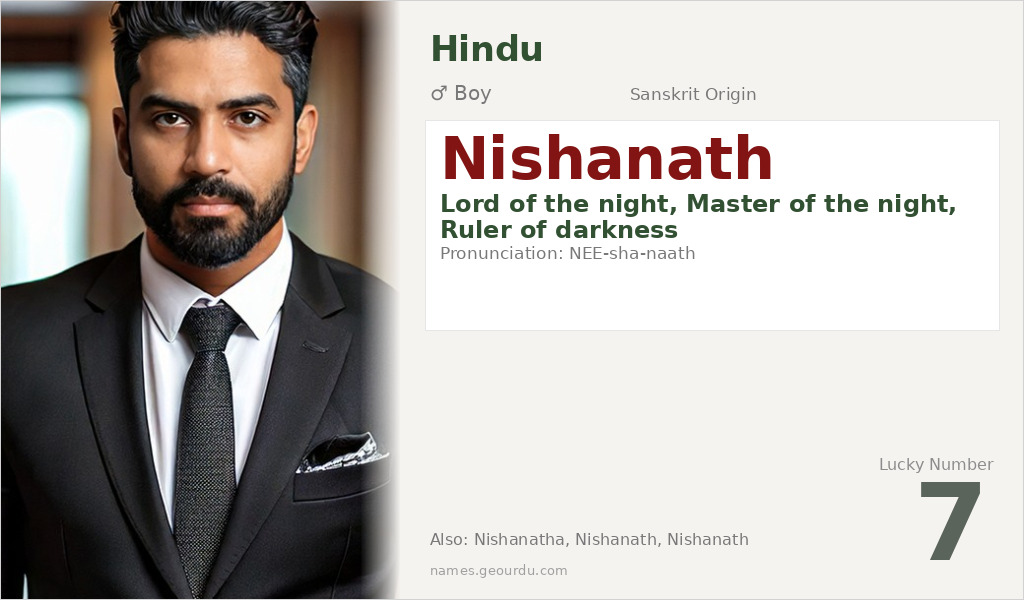
Nishanath is a profound Sanskrit name that carries the poetic weight of nighttime majesty. Meaning ‘Lord of the Night’, this name evokes images of lunar radiance and celestial rulership. Popular in Hindu communities, Nishanath combines spiritual depth with classical linguistic heritage. Discover the rich etymology and cultural significance behind this distinctive name.
Meaning of Nishanath
Nishanath derives from classical Sanskrit, combining ‘Nisha’ (निशा), meaning ‘night’, with ‘Nath’ (नाथ), meaning ‘lord’ or ‘master’. This creates the literal translation ‘Lord of the Night’, a title often associated with lunar deities and celestial rulers in Hindu mythology. The ‘Nath’ suffix appears in numerous Indian names denoting divinity, protection, or mastery. While frequently connected to moon symbolism due to its nighttime association, the name specifically refers to sovereignty over darkness rather than the moon itself. This distinction is important for understanding its precise etymological meaning within Sanskrit compound naming traditions.
| 📛 Name | Nishanath |
| 💎 Meaning | Lord of the night, Master of the night, Ruler of darkness |
| 👤 Gender | Boy |
| 🕌 Religion | Hindu |
| 🌍 Origin | Sanskrit |
| 🗣 Pronunciation | NEE-sha-naath |
| ✍️ Urdu | نشاناتھ |
| ✍️ Arabic | نيشاناث |
| 🔢 Numerology | 7 |
| ✨ Spellings | Nishanatha, Nishanath, Nishanath |
Origin & Cultural Significance
Nishanath originates from Sanskrit, the ancient liturgical language of Hinduism that has influenced naming traditions across South Asia for millennia. As a compound name, it follows classical Sanskrit morphological patterns where descriptive elements combine with honorific suffixes. The name appears in historical records and religious contexts, particularly in regions with strong Sanskrit scholarly traditions like Odisha, Bengal, and Maharashtra. While primarily used in Hindu communities, the name’s linguistic roots connect it to broader Indo-European language family through Sanskrit’s historical development. Its usage reflects the enduring appeal of nature-based divinity in Indian naming conventions.
Personality Traits
Those named Nishanath often embody the serene qualities associated with nighttime—calmness, introspection, and wisdom. They may display natural leadership abilities tempered with philosophical depth and spiritual sensitivity. The name’s celestial connections suggest individuals who are comfortable with complexity, possess strong intuition, and approach life with thoughtful consideration rather than impulsivity.
Similar Names
If you like Nishanath, consider: Chandranath, Suryanath, Divyanath, Jagannath, Shivanath
Famous People Named Nishanath
- Nishanath Naik — 19th century Indian social reformer from Odisha
- Nishanath Shukla — Contemporary Indian classical musician specializing in Dhrupad
Frequently Asked Questions About Nishanath
What does Nishanath mean?
Nishanath means 'Lord of the Night' in Sanskrit, derived from 'Nisha' (night) and 'Nath' (lord/master).
Is Nishanath a boy or girl name?
Nishanath is exclusively a masculine name in Hindu naming traditions, following Sanskrit grammatical gender rules where '-nath' endings are typically masculine.
What is the origin of Nishanath?
Nishanath originates from Sanskrit, the classical language of ancient India, and is primarily used in Hindu cultural and religious contexts.





