
Table of Contents
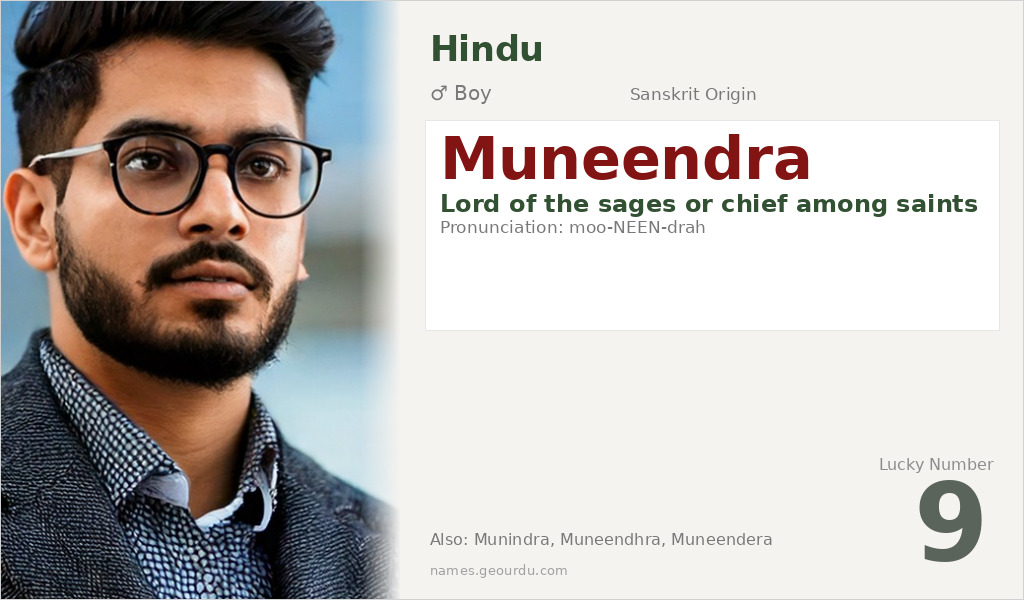
Muneendra is a distinguished Sanskrit name that carries profound spiritual significance in Hindu culture. Meaning ‘lord of the sages’ or ‘chief among saints’, this name embodies wisdom, leadership, and spiritual authority. Traditionally given to boys, it reflects parents’ aspirations for their child to develop deep wisdom and moral character. The name’s classical roots connect it to India’s rich philosophical and religious heritage.
Meaning of Muneendra
Muneendra derives from the Sanskrit language, where it is a compound of two significant elements: ‘Muni’ and ‘Indra’. ‘Muni’ refers to a sage, ascetic, or silent contemplative—someone who has attained spiritual insight through meditation and discipline. ‘Indra’ is the king of the gods in Hindu mythology, representing sovereignty, power, and leadership. When combined, Muneendra literally means ‘lord of sages’ or ‘chief among saints’, suggesting someone who excels in spiritual wisdom and guidance. This name appears in various Hindu texts and classical literature, often describing enlightened beings or spiritual masters. The compound structure follows traditional Sanskrit naming conventions where two meaningful elements combine to create a name with layered significance.
| 📛 Name | Muneendra |
| 💎 Meaning | Lord of the sages or chief among saints |
| 👤 Gender | Boy |
| 🕌 Religion | Hindu |
| 🌍 Origin | Sanskrit |
| 🗣 Pronunciation | moo-NEEN-drah |
| ✍️ Urdu | منیندر |
| ✍️ Arabic | مونيندرا |
| 🔢 Numerology | 9 |
| ✨ Spellings | Munindra, Muneendhra, Muneendera |
Origin & Cultural Significance
Muneendra originates from classical Sanskrit, the ancient liturgical language of Hinduism, Buddhism, and Jainism. As a Sanskrit compound name, it follows the tradition of creating meaningful names through word combinations, a practice dating back to Vedic times. The name is particularly associated with Hindu culture, where names containing ‘Indra’ reference the king of gods, while ‘Muni’ elements connect to India’s rich ascetic traditions. While primarily used in India and among Hindu communities worldwide, the name’s Sanskrit roots give it pan-Indian recognition across various linguistic regions. Historical records show the name appearing in religious texts and among spiritual teachers, maintaining its association with wisdom and leadership through centuries.
Personality Traits
Those named Muneendra are often expected to embody the qualities suggested by their name’s meaning—wisdom, spiritual depth, and natural authority. They may display a thoughtful, contemplative nature combined with leadership capabilities. The name’s association with sages and lords suggests someone who balances introspection with decisive action, potentially excelling in fields requiring both insight and responsibility. Family and cultural expectations might encourage them to develop strong moral character and intellectual pursuits.
Similar Names
If you like Muneendra, consider: Munish, Indrajit, Munivara, Muniswara, Indraneel
Famous People Named Muneendra
- Munindra Misra — Indian spiritual teacher and author known for his commentaries on Hindu scriptures
- Munindra Gupta — 16th century Bengali Vaishnava saint and disciple of Chaitanya Mahaprabhu
Frequently Asked Questions About Muneendra
What does Muneendra mean?
Muneendra means 'lord of the sages' or 'chief among saints' in Sanskrit, combining 'Muni' (sage) and 'Indra' (lord).
Is Muneendra a boy or girl name?
Muneendra is exclusively a boy's name in Hindu naming tradition, following the masculine grammatical structure of Sanskrit compounds.
What is the origin of Muneendra?
Muneendra originates from Sanskrit, the classical language of ancient India, and is primarily associated with Hindu culture and spirituality.





