
Table of Contents
Mandakranta is a beautiful Sanskrit term that transcends typical personal naming conventions. While occasionally used as a name, it is most renowned in classical Indian literature as a specific poetic metre that creates flowing, melodic verses. This name carries the essence of artistic expression and rhythmic grace, rooted in India’s rich literary heritage. Discover the fascinating story behind this unique term that bridges language, poetry, and cultural tradition.
Meaning of Mandakranta
Mandakranta derives from two Sanskrit components: ‘manda’ meaning slow, gentle, or soft, and ‘kranta’ meaning stepped, paced, or measured. Together, they create the meaning ‘slow-paced’ or ‘gently stepping,’ perfectly describing the rhythmic quality of this poetic form. In Sanskrit prosody, Mandakranta is a specific metre consisting of 17 syllables per quarter (pada), with a particular pattern of long and short syllables that creates a flowing, graceful rhythm. This metre is classified under the broader category of ‘Vritta’ (metres) in classical Indian poetics. The name’s literal meaning reflects the measured, deliberate pace of verses composed in this form, making it particularly suitable for lyrical and descriptive poetry.
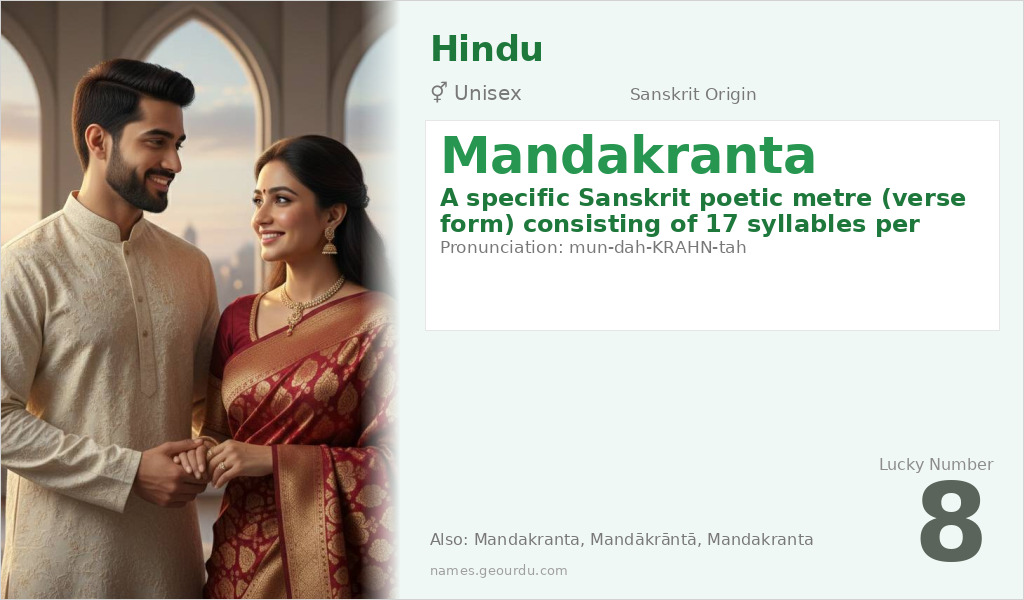
| 📛 Name | Mandakranta |
| 💎 Meaning | A specific Sanskrit poetic metre (verse form) consisting of 17 syllables per quarter, characterized by a slow, graceful rhythm |
| 👤 Gender | Unisex |
| 🕌 Religion | Hindu |
| 🌍 Origin | Sanskrit |
| 🗣 Pronunciation | mun-dah-KRAHN-tah |
| ✍️ Urdu | منڈاکرانتا |
| ✍️ Arabic | منداكرانثا |
| 🔢 Numerology | 8 |
| ✨ Spellings | Mandakranta, Mandākrāntā, Mandakranta |
Origin & Cultural Significance
Mandakranta originates from classical Sanskrit literature, specifically from the field of prosody (chandas-shastra) that systematically studies poetic metres. It gained prominence during the Gupta period (4th-6th centuries CE) when Sanskrit literature flourished. The most famous use of Mandakranta metre is in Kalidasa’s ‘Meghaduta’ (The Cloud Messenger), where its slow, melodic rhythm enhances the romantic and descriptive nature of the poem. While primarily a technical term in poetics, it has occasionally been adopted as a personal name in Hindu communities, reflecting the cultural value placed on literary and artistic traditions. The name’s usage as a personal name is rare but represents a connection to India’s classical heritage.
Personality Traits
As a name derived from a poetic metre, Mandakranta suggests personality traits aligned with artistic sensitivity and measured grace. Individuals with this name might naturally embody rhythm, balance, and aesthetic appreciation. The ‘slow-paced’ etymology implies thoughtfulness, deliberation, and the ability to appreciate life’s nuances. Such personalities often excel in creative fields, bringing harmony and elegance to their endeavors while maintaining a composed, reflective approach to challenges.
Similar Names
If you like Mandakranta, consider: Chandas, Vritta, Shloka, Gayatri, Anushtup
Famous People Named Mandakranta
- None documented as a personal name — Mandakranta is primarily known as a poetic metre used by classical Sanskrit poets like Kalidasa in 'Meghaduta'
Frequently Asked Questions About Mandakranta
What does Mandakranta mean?
Mandakranta means 'slow-paced' or 'gently stepping' in Sanskrit, referring specifically to a poetic metre of 17 syllables per quarter used in classical Indian literature.
Is Mandakranta a boy or girl name?
Mandakranta is technically unisex in Sanskrit tradition, though it is rarely used as a personal name. It primarily functions as a term for a poetic metre rather than a common given name.
What is the origin of Mandakranta?
Mandakranta originates from classical Sanskrit literature and prosody (the study of poetic metres), with its most famous use in Kalidasa's 5th-century poem 'Meghaduta'.