
Table of Contents
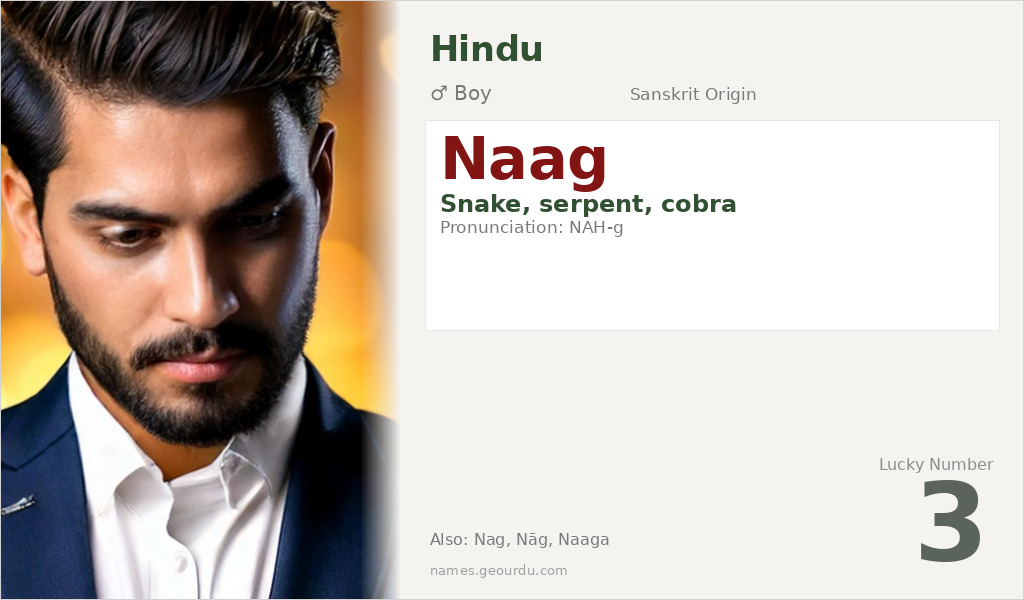
Naag is a distinctive Sanskrit name meaning ‘snake’ or ‘serpent,’ carrying rich mythological significance in Hindu tradition. Unlike ordinary snake references, Naag specifically denotes divine or semi-divine serpent beings from ancient Indian lore. This name connects the bearer to powerful symbols of protection, transformation, and hidden wisdom. Parents choosing Naag often seek to honor these mystical qualities and cultural heritage.
Meaning of Naag
Naag derives directly from Sanskrit ‘nāga’ (नाग), meaning snake or serpent. The term has deep roots in Proto-Indo-European language, related to words for crawling or creeping motion. In Hindu and Buddhist traditions, Nāgas are not ordinary snakes but semi-divine beings with both human and serpent characteristics, often serving as protectors of treasures, water sources, and sacred knowledge. The name appears across South Asian languages with remarkable consistency – as ‘nāg’ in Hindi, ‘nāg’ in Bengali, and ‘nāga’ in Marathi and Nepali. This linguistic stability across millennia underscores the cultural importance of the concept.
| 📛 Name | Naag |
| 💎 Meaning | Snake, serpent, cobra |
| 👤 Gender | Boy |
| 🕌 Religion | Hindu |
| 🌍 Origin | Sanskrit |
| 🗣 Pronunciation | NAH-g |
| ✍️ Urdu | ناگ |
| ✍️ Arabic | ناغ |
| 🔢 Numerology | 3 |
| ✨ Spellings | Nag, Nāg, Naaga |
Origin & Cultural Significance
Naag originates from ancient Sanskrit texts and Hindu mythology, where Nāgas occupy a significant place as divine or semi-divine serpent beings. These creatures appear in epics like the Mahabharata and Ramayana, often as powerful kings or guardians. The name is particularly associated with Hindu tradition but also appears in Buddhist and Jain contexts across South and Southeast Asia. Culturally, Naag represents more than just a snake – it symbolizes protection (as temple guardians), transformation (shedding skin), and connection to the underworld and water elements. The name’s usage reflects reverence for these mythological beings rather than fear of ordinary snakes.
Personality Traits
Those named Naag are often associated with qualities of mystery, intuition, and protective instincts. Like the mythological Nāgas who guard treasures and sacred spaces, individuals with this name may demonstrate strong protective tendencies toward loved ones. Their personality might combine the serpent’s qualities of observation and patience with sudden, decisive action when needed. The name suggests someone comfortable with transformation and possessing deep, often hidden wisdom.
Similar Names
If you like Naag, consider: Shesh, Vasuki, Takshak, Karkotak, Ananta
Famous People Named Naag
- Naag Munj — Character in Hindu mythology, a Nāga king
- Naag Panchami — Hindu festival celebrating snakes, not a person but culturally significant
Frequently Asked Questions About Naag
What does Naag mean?
Naag means 'snake' or 'serpent' in Sanskrit, specifically referring to divine or mythical serpent beings in Hindu and Buddhist traditions.
Is Naag a boy or girl name?
Naag is primarily a masculine name in Hindu tradition, though the concept of Nāgas includes both male and female beings in mythology.
What is the origin of Naag?
Naag originates from Sanskrit language and Hindu mythology, with roots in ancient Indian texts where Nāgas are semi-divine serpent beings associated with protection and wisdom.





