
Table of Contents
Naag is a powerful Sanskrit name steeped in Hindu mythology, representing divine serpent beings who guard treasures and sacred spaces. More than just ‘snake’, this name carries centuries of cultural and spiritual significance. Parents choosing Naag often seek to connect their child with ancient protective energies and wisdom traditions. The name resonates with mythological depth while remaining distinctive in modern naming contexts.
Meaning of Naag
Naag derives from the Sanskrit word ‘nāga’ (नाग), meaning ‘snake’ or ‘serpent’, but with specific mythological connotations. In Hindu and Buddhist traditions, Nāgas are semi-divine beings often depicted as half-human, half-serpent deities associated with water, fertility, and protection. The etymology traces back to Proto-Indo-European *sneg- (‘to crawl, creep’), showing the ancient roots of this concept across Indo-European languages. Unlike ordinary snakes, Nāgas in mythology are intelligent beings who guard treasures, sacred texts, and bodies of water, making the name Naag signify protection, wisdom, and mystical power rather than just a reptile.
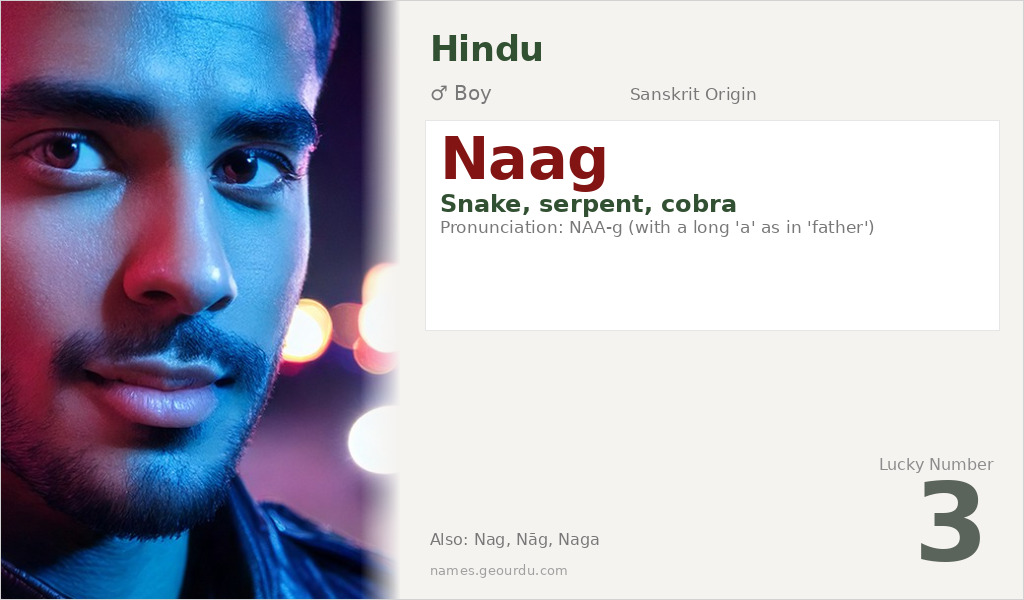
| 📛 Name | Naag |
| 💎 Meaning | Snake, serpent, cobra |
| 👤 Gender | Boy |
| 🕌 Religion | Hindu |
| 🌍 Origin | Sanskrit |
| 🗣 Pronunciation | NAA-g (with a long 'a' as in 'father') |
| ✍️ Urdu | ناگ |
| ✍️ Arabic | ناغ |
| 🔢 Numerology | 3 |
| ✨ Spellings | Nag, Nāg, Naga |
Origin & Cultural Significance
The name Naag originates from ancient Sanskrit texts and Hindu mythology, where Nāgas appear in epics like the Mahabharata and Ramayana. These serpent deities were worshipped across the Indian subcontinent and Southeast Asia, with temples dedicated to Nāga worship still existing today. The cultural significance extends beyond Hinduism to Buddhism and Jainism, where Nāgas are also revered as protective beings. In modern usage, the name maintains its mythological connections while serving as a distinctive choice that honors ancient traditions. Regional variations exist across South and Southeast Asia where Nāga mythology spread.
Personality Traits
Those named Naag are often perceived as having protective, intuitive natures with deep spiritual connections. Like the mythological Nāgas they’re named after, they may exhibit qualities of guardianship, wisdom preservation, and mystical insight. Their personality typically blends earthly practicality with spiritual depth, making them both grounded and perceptive. The name suggests someone who values tradition while possessing the adaptability symbolized by the serpent’s ability to shed its skin.
Similar Names
If you like Naag, consider: Shesh, Vasuki, Takshak, Ananta, Kaliya
Famous People Named Naag
- Nāgārjuna — 2nd century Indian Buddhist philosopher and founder of the Madhyamaka school
- Naga Chaitanya — Indian film actor in Telugu cinema, son of actor Nagarjuna
Frequently Asked Questions About Naag
What does Naag mean?
Naag means 'divine serpent' or 'snake deity' in Sanskrit. It refers specifically to the Nāgas of Hindu and Buddhist mythology — semi-divine beings who guard treasures, water, and sacred spaces.
Is Naag a boy or girl name?
Naag is traditionally a masculine name in Hindu naming traditions, though the concept of Nāgas in mythology includes both male and female serpent beings. In modern usage, it remains predominantly a boy's name.
What is the origin of Naag?
Naag originates from Sanskrit and Hindu mythology, with roots tracing back to Proto-Indo-European language. It's specifically associated with the Nāga serpent deities worshipped across South and Southeast Asia for millennia.





