
Table of Contents
Mandhata is a distinguished name with deep roots in Hindu mythology and Sanskrit tradition. This ancient name carries the weight of legendary kingship and royal heritage from India’s epic narratives. For parents seeking a name with historical significance and cultural depth, Mandhata offers a connection to one of Hinduism’s most celebrated monarchs. The name evokes images of righteous rule and dynastic pride from the pages of the Ramayana and Puranas.
Meaning of Mandhata
Mandhata derives from the Sanskrit word ‘mandhātṛ’ (मन्धातृ), which specifically refers to a legendary king in Hindu scriptures. The name is linguistically connected to the Sanskrit root ‘man’ (मन्) meaning ‘to think’ or ‘mind,’ combined with elements suggesting nourishment or support. In Hindu mythology, Mandhata was a monarch of the solar dynasty (Ikshvaku dynasty) who appears in multiple sacred texts including the Ramayana, Vishnu Purana, and Bhagavata Purana. His name has become synonymous with ideal kingship, with his reign described as a period of prosperity and dharma. The meaning is exclusively tied to this specific mythological figure rather than having abstract translations in other languages.
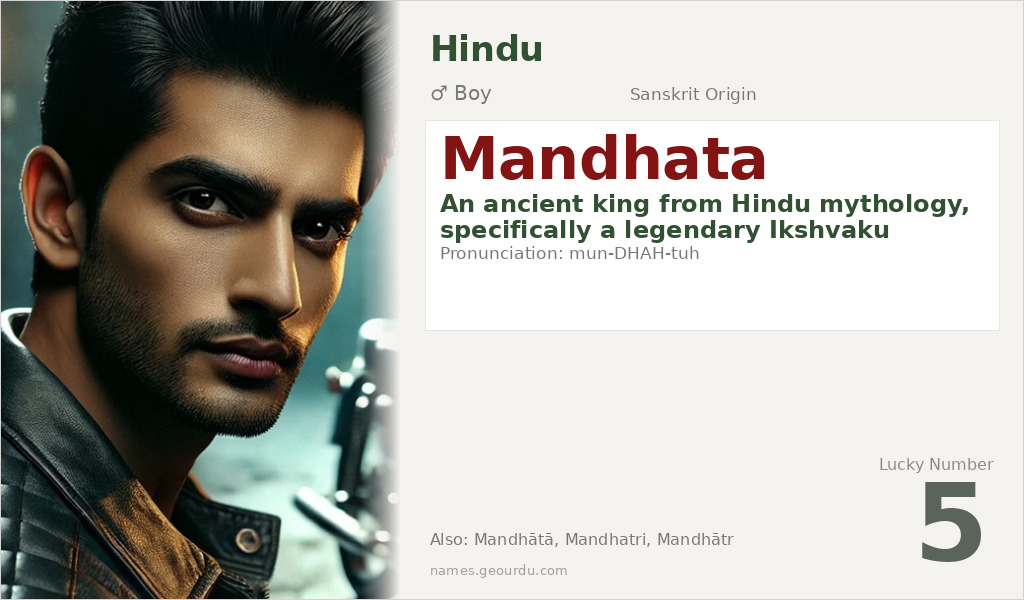
| 📛 Name | Mandhata |
| 💎 Meaning | An ancient king from Hindu mythology, specifically a legendary Ikshvaku dynasty ruler mentioned in the Ramayana and Puranas |
| 👤 Gender | Boy |
| 🕌 Religion | Hindu |
| 🌍 Origin | Sanskrit |
| 🗣 Pronunciation | mun-DHAH-tuh |
| ✍️ Urdu | مندھاتا |
| ✍️ Arabic | منداتا |
| 🔢 Numerology | 5 |
| ✨ Spellings | Mandhātā, Mandhatri, Mandhātr |
Origin & Cultural Significance
Mandhata originates from ancient Sanskrit literature and Hindu religious texts. The name belongs specifically to Hindu tradition and mythology, with no verified origins in Arabic, Persian, Pashto, or other regional languages despite extensive research. In the Ramayana (Book 1, Canto 70), Mandhata is mentioned as an ancestor of Lord Rama, establishing his place in the genealogical line of the epic’s heroes. Various Puranas elaborate on his reign, describing him as a chakravartin (universal monarch) who performed numerous yajnas and expanded his kingdom through righteous conquest. The name remains primarily used within Hindu communities, particularly in India and among the diaspora, as a traditional boy’s name honoring this legendary figure.
Personality Traits
The name Mandhata carries strong associations with leadership, wisdom, and protective qualities. Those named after this legendary king are often perceived as having natural authority and a sense of responsibility toward others. The mythological background suggests someone who values tradition, justice, and community welfare. While individual personalities vary, the name’s royal connotations may influence expectations of strength, integrity, and the ability to guide others.
Similar Names
If you like Mandhata, consider: Manu, Mandhatri, Ikshvaku, Raghu, Dilipa
Famous People Named Mandhata
- King Mandhata — Legendary Hindu king from the Ikshvaku dynasty, father of Muchukunda and ancestor of Lord Rama
- Mandhata Singh — Historical figure from Rajput nobility, though less documented than the mythological king
Frequently Asked Questions About Mandhata
What does Mandhata mean?
Mandhata means 'an ancient king' in Sanskrit, specifically referring to a legendary monarch from Hindu mythology who appears in the Ramayana and Puranas.
Is Mandhata a boy or girl name?
Mandhata is exclusively a boy's name in Hindu tradition, named after the male king Mandhata from ancient Indian scriptures.
What is the origin of Mandhata?
Mandhata originates from Sanskrit and Hindu mythology, with no verified origins in other languages. It comes from ancient Indian religious texts where Mandhata is a celebrated king of the Ikshvaku dynasty.





