
Table of Contents
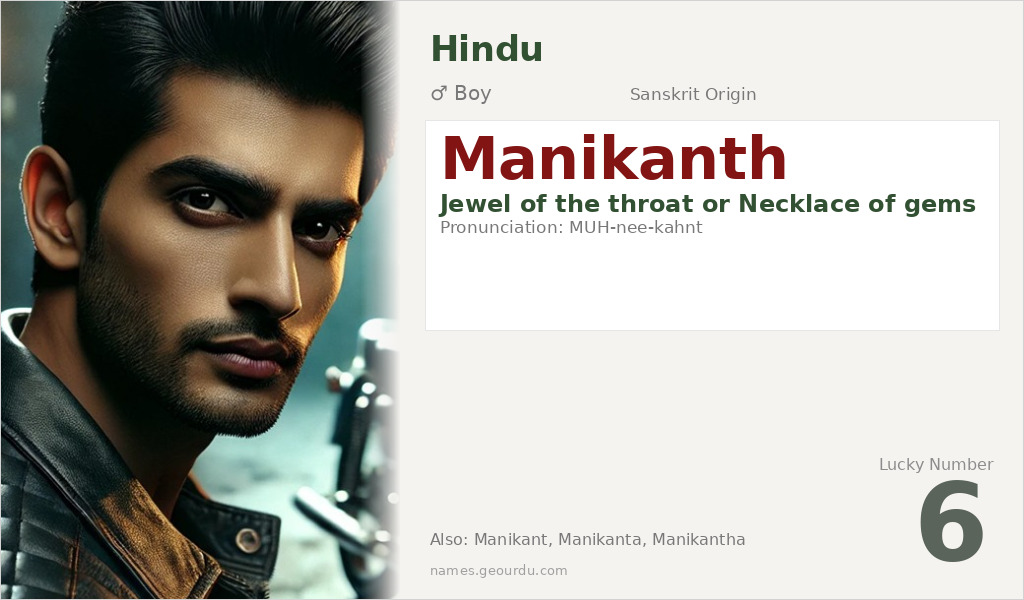
Manikanth is a beautiful and meaningful Sanskrit name that carries deep cultural significance in Hindu tradition. Literally translating to ‘jewel of the throat’ or ‘necklace of gems’, this name evokes images of preciousness and divine beauty. Often associated with Lord Shiva’s attributes, Manikanth represents something invaluable and protected. This name has been cherished for generations and continues to be a popular choice for boys in Hindu families.
Meaning of Manikanth
The name Manikanth has a clear and well-documented etymology from Sanskrit, an ancient Indo-European language that forms the basis of many Indian languages. It combines ‘Mani’ (मणि), meaning jewel, gem, or precious stone, with ‘Kanth’ (कण्ठ), meaning throat or neck. Together, they create the poetic meaning ‘jewel of the throat’, suggesting something both beautiful and essential. This compound structure is common in Sanskrit names, where two meaningful elements combine to create layered significance. The name metaphorically represents something of great value that is close to one’s core being, much like how a necklace rests near the throat. While sometimes confused with Neelakanth (blue-throated, another name for Shiva), Manikanth specifically emphasizes the jewel aspect rather than color.
| 📛 Name | Manikanth |
| 💎 Meaning | Jewel of the throat or Necklace of gems |
| 👤 Gender | Boy |
| 🕌 Religion | Hindu |
| 🌍 Origin | Sanskrit |
| 🗣 Pronunciation | MUH-nee-kahnt |
| ✍️ Urdu | منیکنت |
| ✍️ Arabic | مانيكانث |
| 🔢 Numerology | 6 |
| ✨ Spellings | Manikant, Manikanta, Manikantha |
Origin & Cultural Significance
Manikanth originates from classical Sanskrit, the sacred language of Hinduism that has influenced naming traditions across South Asia for millennia. As a compound Sanskrit name, it follows traditional patterns where meaningful elements combine to create names with spiritual and aesthetic significance. In Hindu culture, names containing ‘Mani’ (jewel) are particularly valued as they symbolize preciousness, purity, and divine qualities. The name appears in various regions of India, particularly in Hindu communities, and has been adapted into modern Indian languages while retaining its original meaning. While not as common as some other Sanskrit names, Manikanth maintains a presence in contemporary naming practices, especially among families seeking traditional names with clear etymological roots.
Personality Traits
Those named Manikanth are often perceived as individuals with a strong aesthetic sense and creative flair. They tend to value harmony in relationships and environments, making them diplomatic and peace-loving. Their nurturing nature often draws them toward caregiving roles, whether in family or professional settings. The name’s association with jewels suggests they may have a refined taste and appreciation for beauty in all its forms.
Similar Names
If you like Manikanth, consider: Neelakanth, Manik, Kanth, Ratnakar, Hemant, Manindra, Manish, Kanhaiya, Manohar, Manav
Famous People Named Manikanth
- Manikant Shah — Indian film director and screenwriter known for Marathi cinema
- Manikant Singh — Indian politician from Bihar
Frequently Asked Questions About Manikanth
What does Manikanth mean?
Manikanth means 'jewel of the throat' or 'necklace of gems' in Sanskrit, combining 'Mani' (jewel) and 'Kanth' (throat/neck).
Is Manikanth a boy or girl name?
Manikanth is exclusively a boy's name in Hindu naming tradition, though the similar name Manikanta can be used for both genders in some regions.
What is the origin of Manikanth?
Manikanth originates from Sanskrit, the classical language of ancient India, and is primarily used in Hindu communities across South Asia.





