
Table of Contents
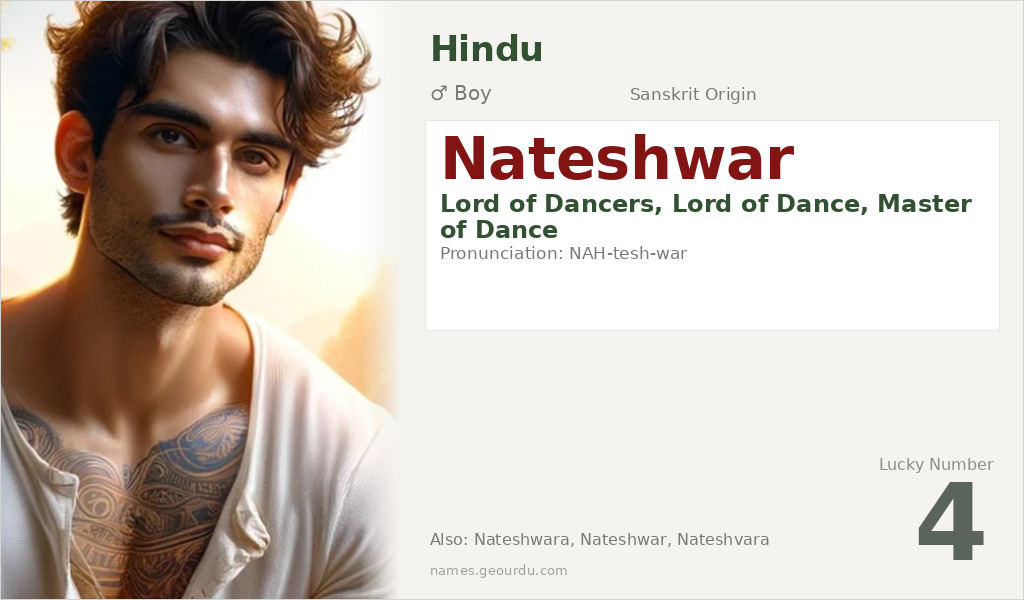
Nateshwar is a powerful Sanskrit name that carries deep spiritual significance in Hindu tradition. Meaning ‘Lord of Dancers’ or ‘Master of Dance’, this name directly references Lord Shiva in his cosmic dancing form as Nataraja. Parents choosing this name often seek to imbue their child with qualities of creativity, divine connection, and transformative energy. With roots in ancient Indian scriptures and temple worship, Nateshwar represents both artistic expression and spiritual mastery.
Meaning of Nateshwar
Nateshwar is a classical Sanskrit compound name with two distinct components that together create a profound meaning. The first part, ‘Nata’ (नट), comes from the Sanskrit root ‘nat’ meaning ‘to dance, to act, to perform’. This refers specifically to sacred dance and dramatic performance in Hindu tradition. The second component, ‘Ishwar’ (ईश्वर), means ‘lord, master, god, or supreme being’. When combined, Nateshwar literally translates to ‘Lord of Dancers’ or ‘Master of Dance’. In Hindu theology, this is one of the primary epithets for Shiva as Nataraja, the cosmic dancer whose rhythmic movements create, sustain, and dissolve the universe. The name appears in texts like the Natya Shastra and temple inscriptions across India, particularly in Tamil Nadu where the Chola bronzes of Nataraja are celebrated masterpieces.
| 📛 Name | Nateshwar |
| 💎 Meaning | Lord of Dancers, Lord of Dance, Master of Dance |
| 👤 Gender | Boy |
| 🕌 Religion | Hindu |
| 🌍 Origin | Sanskrit |
| 🗣 Pronunciation | NAH-tesh-war |
| ✍️ Urdu | نٹیشور |
| ✍️ Arabic | ناتيشوار |
| 🔢 Numerology | 4 |
| ✨ Spellings | Nateshwara, Nateshwar, Nateshvara, Nateshwar |
Origin & Cultural Significance
Nateshwar originates from classical Sanskrit, the liturgical language of Hinduism, and has been used for centuries in religious and cultural contexts across the Indian subcontinent. The name is deeply connected to Shaivism, the worship of Shiva, particularly in South India where the Nataraja form is most prominently venerated. Archaeological evidence shows Nateshwar temples dating back to the 9th century, including the significant Nateshwar Temple complex in Bangladesh. The name gained wider recognition through classical dance traditions, temple architecture, and Hindu philosophical texts that describe Shiva’s cosmic dance (Tandava). Unlike many modern Hindu names, Nateshwar maintains its original Sanskrit form without significant regional variations, though it’s more commonly used in communities with strong Shaivite traditions.
Personality Traits
Those named Nateshwar are often perceived as having a dynamic, creative personality with spiritual depth. The name suggests someone who moves through life with purpose and rhythm, capable of both disciplined action and artistic expression. Like Shiva’s dance that balances creation and destruction, individuals with this name may demonstrate the ability to navigate change and transformation gracefully. There’s an inherent leadership quality suggested by the ‘Ishwar’ component, indicating someone who can guide others through movement and example rather than force.
Similar Names
If you like Nateshwar, consider: Nataraja, Natesh, Ishwar, Shiva, Nataraj
Famous People Named Nateshwar
- Nateshwar Temple — 9th-11th century archaeological site in Bangladesh dedicated to Shiva as Nateshwar
- Various Hindu spiritual leaders and scholars who have taken Nateshwar as a religious name or title
Frequently Asked Questions About Nateshwar
What does Nateshwar mean?
Nateshwar means 'Lord of Dancers' or 'Master of Dance' in Sanskrit. It's a compound name from 'Nata' (dancer) and 'Ishwar' (lord), specifically referring to Shiva's cosmic dancing form as Nataraja in Hindu tradition.
Is Nateshwar a boy or girl name?
Nateshwar is exclusively a boy's name in Hindu tradition. It's a masculine name referring to Lord Shiva, and there's no feminine equivalent in common usage.
What is the origin of Nateshwar?
Nateshwar originates from classical Sanskrit, the ancient language of Hindu scriptures. It has been used for centuries in religious contexts across India, particularly in Shaivite traditions worshipping Shiva as Nataraja, the cosmic dancer.





