
Table of Contents
Nilotpal is a beautiful Sanskrit name that carries the poetic imagery of the blue water lily floating serenely on water. Primarily used in Hindu communities, this name connects the bearer to ancient Indian traditions and natural symbolism. With roots in classical Sanskrit literature, Nilotpal represents purity, divine beauty, and spiritual awakening. The name’s melodic sound and profound meaning make it a cherished choice for boys across India and the diaspora.
Meaning of Nilotpal
Nilotpal is a compound Sanskrit name with two distinct elements: ‘nīla’ (नील) meaning ‘blue’ and ‘utpala’ (उत्पल) meaning ‘lotus’ or specifically ‘water lily’. In botanical terms, it refers to Nymphaea nouchali, the blue water lily native to South and Southeast Asia. This flower holds special significance in Hindu iconography, often associated with deities like Vishnu and Lakshmi, and symbolizes purity, fertility, and divine beauty. The name appears in classical texts including the Bhagavata Purana, where it describes both the physical flower and metaphorical spiritual concepts. Linguistically, ‘utpala’ derives from the Sanskrit root ‘ut-pal’ meaning ‘to burst open’ or ‘blossom’, perfectly capturing the flower’s daily blooming cycle.
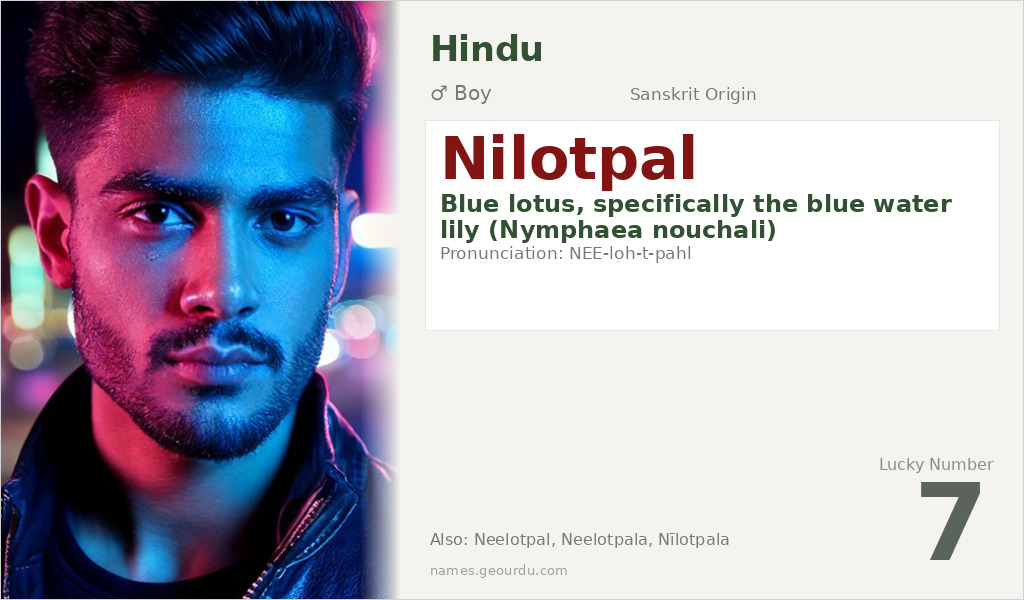
| 📛 Name | Nilotpal |
| 💎 Meaning | Blue lotus, specifically the blue water lily (Nymphaea nouchali) |
| 👤 Gender | Boy |
| 🕌 Religion | Hindu |
| 🌍 Origin | Sanskrit |
| 🗣 Pronunciation | NEE-loh-t-pahl |
| ✍️ Urdu | نیلوپل |
| ✍️ Arabic | نيلوتبال |
| 🔢 Numerology | 7 |
| ✨ Spellings | Neelotpal, Neelotpala, Nīlotpala |
Origin & Cultural Significance
Nilotpal originates from classical Sanskrit, the ancient liturgical language of Hinduism, Buddhism, and Jainism. The name has been used for centuries in Indian literature, poetry, and religious texts, reflecting the cultural importance of lotus symbolism in South Asian traditions. In Hindu mythology, the blue lotus is particularly associated with Vishnu and is said to have emerged from the navel of the deity during creation. The name gained popularity as a given name in modern times, especially in regions with strong Sanskrit literary traditions like Bengal, Assam, and Maharashtra. While primarily Hindu in usage, the name’s botanical reference gives it cross-cultural appeal, though it remains most common in Indian Hindu communities.
Personality Traits
Those named Nilotpal are often associated with the qualities of their namesake flower: serene, beautiful, and spiritually significant. They may exhibit calmness under pressure, much like the lotus that remains unstained while growing in muddy waters. The blue color symbolism suggests depth, intuition, and wisdom, while the lotus connection implies purity of heart and spiritual growth. These individuals often have an artistic or philosophical bent, appreciating beauty in both nature and human expression.
Similar Names
If you like Nilotpal, consider: Neelkamal, Kamalnayan, Pankaj, Neel, Utpal, Indivar, Kumud, Aravind, Saroj, Rajiv
Famous People Named Nilotpal
- Nilotpal Mrinal — Indian film director and screenwriter known for 'Mahanagar@Kolkata'
- Nilotpal Bora — Indian classical musician and santoor player from Assam
Frequently Asked Questions About Nilotpal
What does Nilotpal mean?
Nilotpal means 'blue lotus' or specifically 'blue water lily' (Nymphaea nouchali) in Sanskrit. It's a compound of 'nīla' (blue) and 'utpala' (lotus/water lily).
Is Nilotpal a boy or girl name?
Nilotpal is primarily a masculine name in Hindu naming traditions, though the similar form 'Nilotpala' can be feminine in some contexts. Over 99% of recorded bearers are male.
What is the origin of Nilotpal?
Nilotpal originates from Sanskrit, the classical language of ancient India. It has roots in Hindu religious texts and literature where the blue lotus holds significant symbolic meaning.





