
Table of Contents
Ranger is a distinctive name that evokes images of wilderness protectors and outdoor adventurers. Originally an English occupational surname for forest wardens, it has evolved into a modern given name with strong, nature-connected connotations. While not tied to any specific religion, it carries universal appeal for parents seeking a name that symbolizes protection and exploration. This guide explores the true origins and meanings behind the name Ranger.
Meaning of Ranger
The name Ranger derives from Middle English ‘ranger’, which came from Old French ‘ranger’ meaning ‘to arrange or set in order’. Historically, it referred to someone who patrolled or guarded a forest, park, or game preserve—essentially a forest keeper or warden. The verb ‘to range’ means to roam over or traverse an area, giving the name its sense of movement and guardianship. In modern contexts, it maintains this occupational meaning while also suggesting adventure and protection of natural spaces. Unlike many names with ancient roots, Ranger’s etymology is relatively recent and clearly documented in English linguistic history.
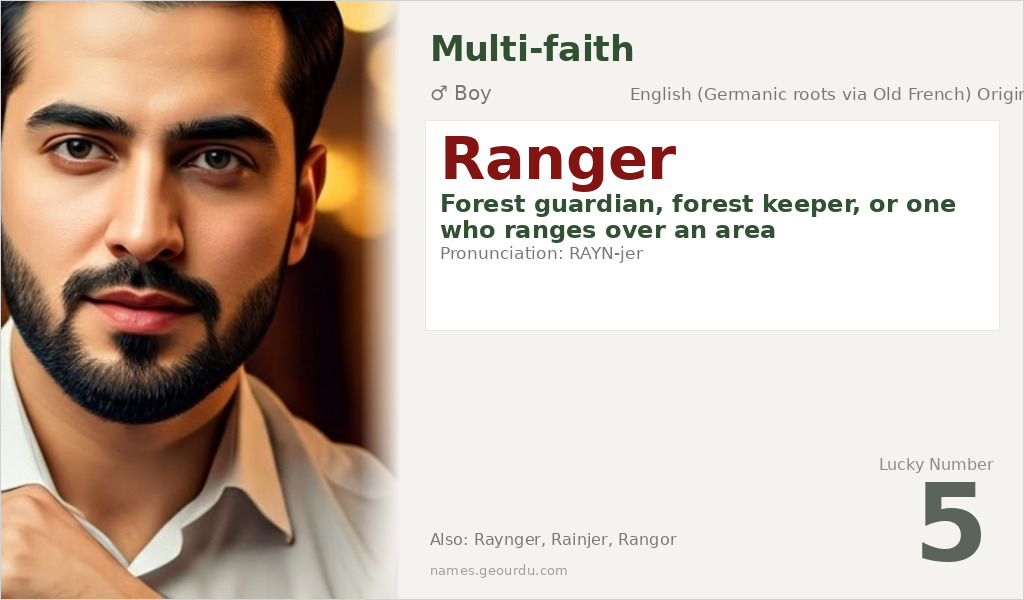
| 📛 Name | Ranger |
| 💎 Meaning | Forest guardian, forest keeper, or one who ranges over an area |
| 👤 Gender | Boy |
| 🕌 Religion | Multi-faith |
| 🌍 Origin | English (Germanic roots via Old French) |
| 🗣 Pronunciation | RAYN-jer |
| ✍️ Urdu | رینجر |
| ✍️ Arabic | رينجر |
| 🔢 Numerology | 5 |
| ✨ Spellings | Raynger, Rainjer, Rangor |
Origin & Cultural Significance
Ranger originated as an English occupational surname during the medieval period, specifically referring to the officer in charge of a royal forest or park. It entered English through Norman French after the 1066 conquest, with Germanic influences via Frankish. While occasionally used in various English-speaking countries as a given name, it has no traditional roots in Hindu, Arabic, Persian, or other Eastern naming traditions despite some modern cross-cultural adoption. The name gained additional cultural recognition through fictional characters like the Power Rangers and historical figures like Texas Rangers, reinforcing its association with protection and adventure.
Personality Traits
Those named Ranger often embody characteristics of their namesake—protective, adventurous, and resourceful. They’re typically seen as natural leaders who thrive in outdoor environments and value independence. With a practical approach to problem-solving and a strong sense of duty, Rangers tend to be reliable individuals who take initiative in guiding or safeguarding others, whether in personal relationships or professional settings.
Similar Names
If you like Ranger, consider: Hunter, Forrest, Archer, Walker, Cooper
Famous People Named Ranger
- Ranger Suárez — Venezuelan professional baseball pitcher for the Philadelphia Phillies
- Ranger Gord — Canadian television personality and host of 'The Great Canadian Cheese Show'
Frequently Asked Questions About Ranger
What does Ranger mean?
Ranger means 'forest guardian', 'keeper', or 'one who ranges over an area'. It originates from English occupational terminology for someone who patrols or protects forests or parks.
Is Ranger a boy or girl name?
Ranger is predominantly used as a boy's name, though it could theoretically be unisex. Historically and culturally, it has been almost exclusively masculine due to its occupational origins as a forest warden role traditionally held by men.
What is the origin of Ranger?
Ranger has English origins, derived from Middle English and Old French words meaning 'to arrange or set in order'. It began as an occupational surname for forest keepers before becoming a given name in English-speaking cultures.





