
Table of Contents
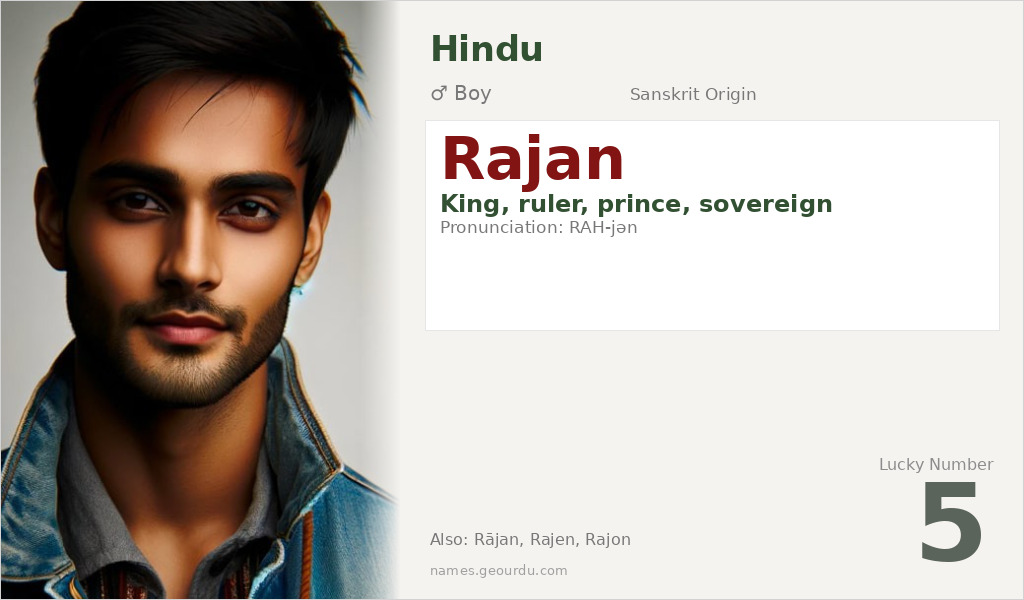
Rajan is a classic Hindu boy name with royal significance that has endured for millennia. Derived from ancient Sanskrit, this name carries the powerful meaning of ‘king’ or ‘ruler’ and has been borne by historical figures and modern achievers alike. With its strong phonetic presence and deep cultural roots, Rajan remains a popular choice for parents seeking a name with traditional weight and noble connotations. This comprehensive guide explores the name’s linguistic origins, cultural context, and contemporary relevance.
Meaning of Rajan
Rajan originates from the Sanskrit word ‘rājan’ (राजन्), which directly translates to ‘king’, ‘ruler’, ‘prince’, or ‘sovereign’. The term appears in the Rigveda, one of the oldest known texts in any Indo-European language, dating back to approximately 1500-1200 BCE. Linguistically, it belongs to the Indo-European language family and shares roots with other royal terms across ancient languages, including Latin ‘rex’ and Old Irish ‘rí’. The name has maintained its core meaning through centuries of linguistic evolution in Indian languages, appearing in classical literature, historical records, and modern usage with consistent royal associations.
| 📛 Name | Rajan |
| 💎 Meaning | King, ruler, prince, sovereign |
| 👤 Gender | Boy |
| 🕌 Religion | Hindu |
| 🌍 Origin | Sanskrit |
| 🗣 Pronunciation | RAH-jən |
| ✍️ Urdu | راجن |
| ✍️ Arabic | راجان |
| 🔢 Numerology | 5 |
| ✨ Spellings | Rājan, Rajen, Rajon, Razhan |
Origin & Cultural Significance
Rajan has its origins in ancient Sanskrit, the classical language of Hinduism, Buddhism, and Jainism. The name appears in numerous Hindu scriptures, including the Vedas, Puranas, and epics like the Mahabharata and Ramayana, where it was used for kings and rulers. Historically, the title ‘Rajan’ was used for tribal chiefs and monarchs in ancient India, particularly during the Vedic period. The name spread through Indian cultural influence to Southeast Asia and other regions where Sanskrit had linguistic impact. Today, it remains predominantly used in Hindu communities across India, Nepal, and the diaspora.
Personality Traits
Those named Rajan often embody leadership qualities and natural authority, reflecting their name’s royal meaning. They tend to be confident, ambitious individuals who approach challenges with strategic thinking and determination. The name’s historical weight may influence bearers to develop strong organizational skills and a sense of responsibility toward others. While personality varies by individual, the name’s cultural associations often create expectations of dignity, wisdom, and commanding presence.
Similar Names
If you like Rajan, consider: Raja, Rajendra, Rajiv, Rajesh, Raghav
Famous People Named Rajan
- Rajan Mahadevan — Indian mnemonist who holds the Guinness World Record for memorizing pi to 31,811 digits
- Rajan Sankaran — Indian homeopath and author known for his work in homeopathic medicine
Frequently Asked Questions About Rajan
What does Rajan mean?
Rajan means 'king', 'ruler', 'prince', or 'sovereign' in Sanskrit, the classical language of ancient India.
Is Rajan a boy or girl name?
Rajan is exclusively a masculine name in Hindu naming traditions, derived from the masculine Sanskrit noun 'rājan'.
What is the origin of Rajan?
Rajan originates from Sanskrit, an ancient Indo-European language that is the liturgical language of Hinduism and has influenced many South Asian languages.





