
Table of Contents
Padmaraj is a beautiful and meaningful Sanskrit name for boys that carries deep spiritual symbolism in Hindu culture. Literally translating to ‘king of the lotus’ or ‘lord of the lotus’, this name evokes images of purity, divine beauty, and enlightened leadership. Used as an epithet for Lord Vishnu and his avatars, Padmaraj connects the bearer to ancient Indian traditions and values. Parents choosing this name often seek to imbue their child with qualities of grace, resilience, and spiritual depth.
Meaning of Padmaraj
Padmaraj is a classical Sanskrit compound name with clear etymological roots. The first component, ‘Padma’ (पद्म), specifically refers to the sacred lotus flower (Nelumbo nucifera), which grows in muddy waters yet emerges pristine and beautiful—making it a powerful symbol of purity, spiritual awakening, and divine birth in Dharmic traditions. The second component, ‘Raj’ (राज्), derives from the Sanskrit root ‘rāj’ meaning ‘to rule, shine, or be illustrious’, giving us ‘king, ruler, or lord’. Thus, Padmaraj literally means ‘king of the lotus’ or ‘lord of the lotus’. This name appears in Hindu scriptures as a descriptive title for deities, particularly Lord Vishnu who is often called ‘Padmanabha’ (lotus-naveled) and his avatar Lord Venkateshwara, connecting the name directly to Vaishnavite traditions. The lotus symbolism extends to Buddhist and Jain contexts as well, representing enlightenment and non-attachment.
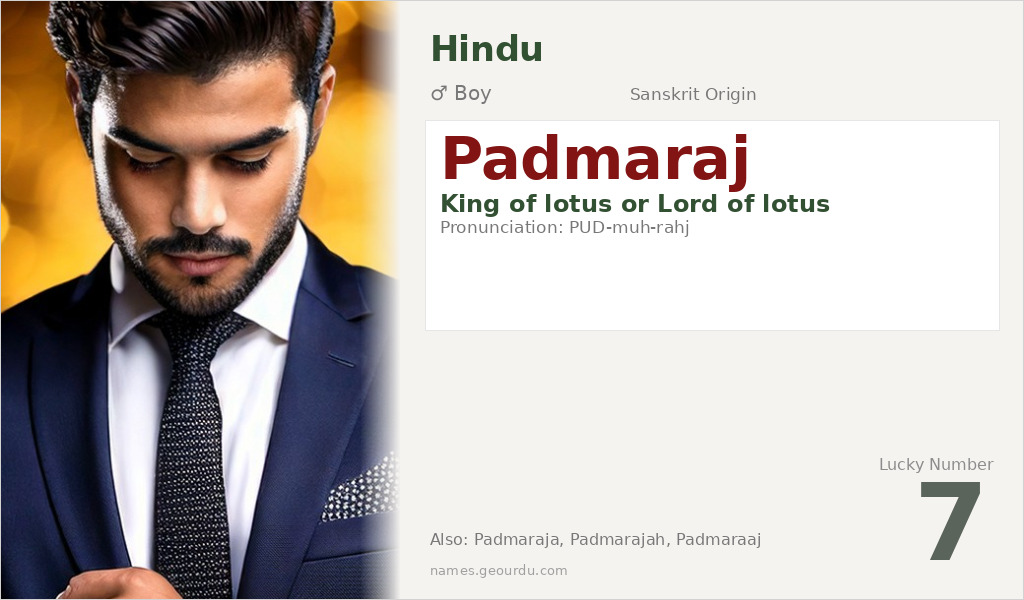
| 📛 Name | Padmaraj |
| 💎 Meaning | King of lotus or Lord of lotus |
| 👤 Gender | Boy |
| 🕌 Religion | Hindu |
| 🌍 Origin | Sanskrit |
| 🗣 Pronunciation | PUD-muh-rahj |
| ✍️ Urdu | پدمراج |
| ✍️ Arabic | بادماراج |
| 🔢 Numerology | 7 |
| ✨ Spellings | Padmaraja, Padmarajah, Padmaraaj |
Origin & Cultural Significance
Padmaraj originates from classical Sanskrit, the ancient liturgical language of Hinduism, Buddhism, and Jainism. As a compound name, it follows traditional Sanskrit naming patterns where meaningful elements are combined to create names with spiritual or aspirational significance. The name is deeply embedded in Hindu culture, particularly in South Indian traditions where Lord Venkateshwara (a form of Vishnu) is widely worshipped. Historically, names containing ‘Padma’ have been used for centuries in India, appearing in religious texts, literature, and royal inscriptions. While primarily a Hindu name, its components are understood across South Asian cultures where Sanskrit influence persists. The name remains popular in India, especially among Tamil, Telugu, Kannada, and Malayalam speaking communities, though it’s used across the country by those appreciating its spiritual connotations and melodic sound.
Personality Traits
Those named Padmaraj are often associated with the symbolic qualities of the lotus—purity, beauty, resilience, and spiritual growth. They may exhibit natural leadership abilities combined with a calm, thoughtful demeanor that inspires confidence in others. Their connection to this name suggests someone who values tradition, art, and spiritual pursuits, potentially showing wisdom beyond their years. Like the lotus that rises above muddy waters, they might demonstrate remarkable ability to maintain integrity and grace even in challenging circumstances.
Similar Names
If you like Padmaraj, consider: Padmanabha, Padmakar, Padmesh, Rajendra, Kamalraj, Padmalochan, Padmapati, Padmavati, Rajkumar, Indrajit
Famous People Named Padmaraj
- Padmaraj — Indian classical musician and veena player from Karnataka
- Padmaraj Ratnakar — Indian writer and poet in Kannada literature
Frequently Asked Questions About Padmaraj
What does Padmaraj mean?
Padmaraj means 'king of lotus' or 'lord of lotus' in Sanskrit. It's a compound name: 'Padma' (lotus) + 'Raj' (king/ruler).
Is Padmaraj a boy or girl name?
Padmaraj is exclusively a boy's name in Hindu naming traditions. The '-raj' ending is masculine in Sanskrit grammar.
What is the origin of Padmaraj?
Padmaraj originates from Sanskrit, the ancient classical language of India. It's primarily a Hindu name with strong connections to Vaishnavite traditions and deity epithets.





