
Table of Contents
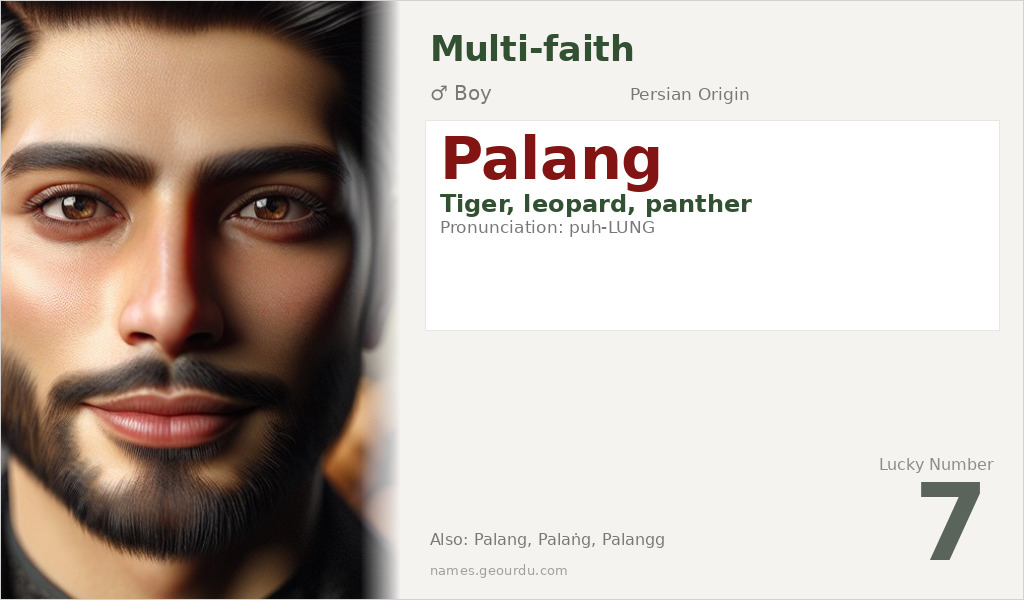
Palang is a powerful and evocative name with deep roots in Persian and South Asian cultures. Meaning ‘tiger’, ‘leopard’, or ‘panther’, it symbolizes strength, bravery, and nobility. Used primarily for boys, this name crosses religious and cultural boundaries, appearing in Muslim, Hindu, Sikh, and other communities. Discover the rich history and significance behind this majestic name.
Meaning of Palang
Palang derives from the Persian word ‘palang’ (پلنگ), which specifically refers to a leopard or panther. This term was adopted into numerous South Asian languages including Urdu, Punjabi, Sindhi, Pashto, and Hindi, where it broadly means ‘tiger’ or ‘big cat’. The root is firmly established in Persian zoological vocabulary and has been used for centuries. In these linguistic contexts, ‘palang’ denotes not just the animal but also the qualities associated with it: ferocity, power, and regal bearing. The name is thus a direct reference to these majestic creatures, embodying their symbolic attributes.
| 📛 Name | Palang |
| 💎 Meaning | Tiger, leopard, panther |
| 👤 Gender | Boy |
| 🕌 Religion | Multi-faith |
| 🌍 Origin | Persian |
| 🗣 Pronunciation | puh-LUNG |
| ✍️ Urdu | پلنگ |
| ✍️ Arabic | پلنگ (borrowed from Persian) |
| 🔢 Numerology | 7 |
| ✨ Spellings | Palang, Palaṅg, Palangg |
Origin & Cultural Significance
The name Palang originates from Persian, where it has been used for centuries to denote leopards or panthers. It spread across South and Central Asia through cultural exchange, particularly during periods of Persian influence in regions like modern-day Pakistan, Afghanistan, and India. In Pashto, Balochi, Sindhi, and Punjabi cultures, the name is valued for its connotations of bravery and strength, often given to boys to inspire these qualities. While it is used by Hindus, it is equally common among Muslims, Sikhs, and others, reflecting its cross-cultural appeal. Historically, names derived from animals, especially powerful ones like tigers, are prevalent in many Asian naming traditions.
Personality Traits
Those named Palang are often perceived as strong, courageous, and natural leaders. The name’s association with the tiger or leopard suggests a personality that is both protective and assertive. They may approach life with confidence and resilience, facing obstacles with determination. This name carries an expectation of bravery and a commanding presence, influencing how individuals and communities view the bearer.
Similar Names
If you like Palang, consider: Sher, Babbar, Singh, Nar, Arslan
Famous People Named Palang
- Palang — historical and regional figures in South Asia bearing this name, often symbolizing bravery
- Various individuals in Pakistan, Afghanistan, and India — particularly in Pashtun, Punjabi, and Sindhi communities where the name is used
Frequently Asked Questions About Palang
What does Palang mean?
Palang means 'tiger', 'leopard', or 'panther'. It originates from the Persian word 'palang' (پلنگ), which was adopted into many South Asian languages.
Is Palang a boy or girl name?
Palang is primarily a boy's name, reflecting the strong, masculine qualities associated with tigers and leopards in the cultures where it is used.
What is the origin of Palang?
Palang originates from Persian and is widely used in South Asian languages such as Urdu, Punjabi, Sindhi, and Pashto. It is a multi-faith name found in Muslim, Hindu, Sikh, and other communities.





