
Table of Contents
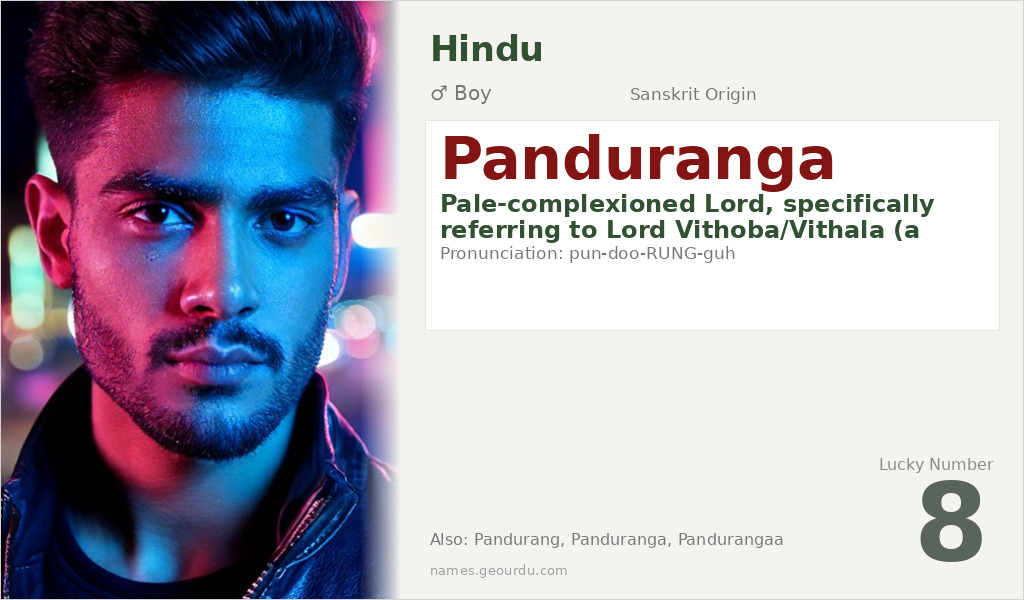
Panduranga is a profound Sanskrit name steeped in Hindu devotion, specifically referring to Lord Vithoba (Vithala), a beloved form of Vishnu worshipped in Maharashtra. Literally meaning ‘the pale-colored one’, this name evokes the iconic deity of Pandharpur. It carries centuries of bhakti tradition and cultural significance, making it a meaningful choice for parents seeking a spiritually resonant name.
Meaning of Panduranga
Panduranga is a Sanskrit compound derived from ‘pandu’ (पाण्डु), meaning ‘pale, white, or yellowish-white’, and ‘ranga’ (रङ्ग), meaning ‘color, form, or stage’. Thus, Panduranga translates to ‘the pale-complexioned one’ or ‘one with a pale hue’. This name is not a general descriptor but a specific epithet for Lord Vithoba (Vithala), the deity enshrined in Pandharpur, Maharashtra, whose murti (idol) is traditionally depicted with a fair complexion. In Marathi Vaishnavism, Panduranga is synonymous with Vithoba, representing a fusion of Vishnu and Krishna traditions. The name embodies divine beauty and purity, central to the Bhakti movement saints like Sant Dnyaneshwar and Sant Tukaram.
| 📛 Name | Panduranga |
| 💎 Meaning | Pale-complexioned Lord, specifically referring to Lord Vithoba/Vithala (a form of Vishnu/Krishna) |
| 👤 Gender | Boy |
| 🕌 Religion | Hindu |
| 🌍 Origin | Sanskrit |
| 🗣 Pronunciation | pun-doo-RUNG-guh |
| ✍️ Urdu | پنڈورنگ |
| ✍️ Arabic | باندورانغا |
| 🔢 Numerology | 8 |
| ✨ Spellings | Pandurang, Panduranga, Pandurangaa |
Origin & Cultural Significance
Panduranga originates from Sanskrit and is deeply embedded in Hindu religious and cultural history, particularly within the Marathi-speaking regions of India. It gained prominence through the worship of Lord Vithoba at the Vitthal-Rukmini Temple in Pandharpur, a major pilgrimage site since at least the 13th century. The name is celebrated in abhangas (devotional poetry) by saints of the Varkari tradition, such as Sant Eknath and Sant Namdev. Unlike names from Arabic or Persian traditions, Panduranga has no verified meanings in other language families like Germanic, Celtic, or African; its significance is uniquely tied to Sanskrit and Hindu theology. It remains a popular name in Maharashtra and among Hindu communities worldwide, symbolizing devotion and divine grace.
Personality Traits
Those named Panduranga are often perceived as serene, pious, and kind-hearted, mirroring the compassionate nature of Lord Vithoba. They may exhibit a strong spiritual inclination and a calm, steady demeanor, inspired by the deity’s association with bhakti (devotion) and peace. Their name suggests a person who values tradition, humility, and service, much like the Varkari saints who revered Panduranga.
Similar Names
If you like Panduranga, consider: Vithoba, Vithala, Vitthal, Krishna, Vishnu, Pandurang, Venkatesh, Govinda, Hari, Narayana
Famous People Named Panduranga
- Pandurang Shastri Athavale — Indian philosopher, spiritual leader, and founder of the Swadhyay Movement
- Pandurang Vaman Kane — renowned Indian Sanskrit scholar and Indologist, awarded the Bharat Ratna
Frequently Asked Questions About Panduranga
What does Panduranga mean?
Panduranga means 'Pale-complexioned Lord' in Sanskrit, specifically referring to Lord Vithoba (Vithala), a form of Vishnu/Krishna worshipped in Maharashtra.
Is Panduranga a boy or girl name?
Panduranga is exclusively a boy name in Hindu tradition, as it refers to a male deity, Lord Vithoba.
What is the origin of Panduranga?
Panduranga originates from Sanskrit and is deeply rooted in Hindu Vaishnavism, particularly associated with the Marathi Bhakti movement and the worship of Lord Vithoba in Pandharpur, India.





