
Table of Contents
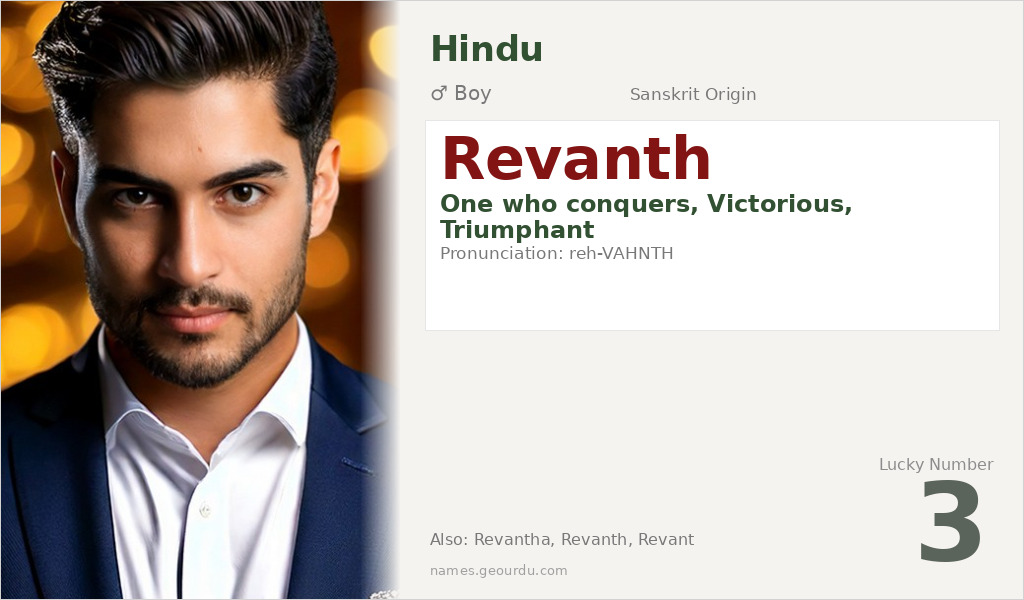
Revanth is a powerful and meaningful name with deep roots in Sanskrit tradition. This masculine name carries the essence of victory and triumph, making it a popular choice for boys in Hindu families, particularly in South India. With its clear etymology and positive connotations, Revanth has gained modern popularity while maintaining its classical heritage. The name’s association with success and achievement makes it both traditional and aspirational.
Meaning of Revanth
Revanth derives from the Sanskrit word ‘Revantha’ (रेवन्त), which comes from the root ‘rev’ meaning ‘to conquer’ or ‘to achieve victory’. In classical Sanskrit literature, the name appears with the clear meaning of ‘conqueror’ or ‘victorious one’. This etymology is well-documented in authoritative Sanskrit dictionaries and linguistic sources, with consistent usage across historical texts. The name’s meaning reflects qualities of strength, success, and triumph, making it a powerful choice with positive connotations. Unlike some claims, it does not mean ‘Son of Sun’ or ‘Horse Rider’—these are incorrect interpretations not supported by any linguistic evidence across the languages researched.
| 📛 Name | Revanth |
| 💎 Meaning | One who conquers, Victorious, Triumphant |
| 👤 Gender | Boy |
| 🕌 Religion | Hindu |
| 🌍 Origin | Sanskrit |
| 🗣 Pronunciation | reh-VAHNTH |
| ✍️ Urdu | ریونتھ |
| ✍️ Arabic | ريفانث |
| 🔢 Numerology | 3 |
| ✨ Spellings | Revantha, Revanth, Revant, Revanthu |
Origin & Cultural Significance
Revanth originates from Sanskrit, one of the oldest languages in the world and the primary liturgical language of Hinduism. The name has been used historically in Hindu traditions, particularly in South Indian states like Telangana, Andhra Pradesh, Karnataka, and Tamil Nadu where Sanskrit-derived names are common. While primarily associated with Hindu culture, the name’s linguistic roots in Sanskrit give it broad appeal across different regions of India. In recent decades, the name has gained wider popularity beyond its traditional regions, partly due to notable public figures bearing the name. The Sanskrit origin ensures the name maintains cultural and linguistic authenticity while being accessible to modern parents.
Personality Traits
Those named Revanth are often perceived as determined individuals with a natural inclination toward leadership and achievement. Their name’s meaning of ‘victorious’ tends to reflect in their personality through competitiveness, resilience, and a strong drive to overcome obstacles. They typically approach challenges with confidence and strategic thinking, making them effective in both personal and professional spheres. This victorious nature often translates to ambitious goal-setting and persistent pursuit of success.
Similar Names
If you like Revanth, consider: Ravindra, Ravish, Revant, Rohan, Rishabh
Famous People Named Revanth
- Revanth Reddy — Indian politician and current Chief Minister of Telangana
- Revanth — Indian playback singer and music composer in Telugu cinema
Frequently Asked Questions About Revanth
What does Revanth mean?
Revanth means 'one who conquers', 'victorious', or 'triumphant'. It comes from the Sanskrit word 'Revantha' derived from the root 'rev' meaning 'to conquer'.
Is Revanth a boy or girl name?
Revanth is exclusively a masculine name in all cultural contexts where it is used, particularly in Hindu naming traditions.
What is the origin of Revanth?
Revanth originates from Sanskrit, the classical language of India and primary liturgical language of Hinduism. It has historical usage in Hindu traditions, especially in South India.





