
Table of Contents
Qutuz is a distinctive name with deep historical roots in Turkic and Mongol cultures, most famously borne by a 13th century Mamluk sultan who played a crucial role in Islamic history. This powerful name carries connotations of strength, bravery, and leadership, reflecting the martial traditions of the steppe peoples. While not commonly used today, it remains an intriguing choice for parents interested in historical names with significant cultural heritage. The name’s association with pivotal historical events adds to its unique character and appeal.
Meaning of Qutuz
The name Qutuz originates from Turkic and Mongol languages, where it likely means ‘fierce,’ ‘strong,’ or ‘brave.’ Historical linguists trace it to Turkic roots possibly related to words denoting strength and power, or alternatively to the Mongol word ‘qutuq’ meaning ‘blessed’ or ‘fortunate.’ During the Mamluk period in Egypt and Syria, the name was adopted by rulers of Kipchak Turkic origin, most notably Sultan Saif ad-Din Qutuz. The name reflects the martial culture of the steppe peoples and was used as both a personal name and title among Turkic and Mongol groups. Its specific etymology remains somewhat debated among scholars, but its association with strength and leadership is consistent across historical records.
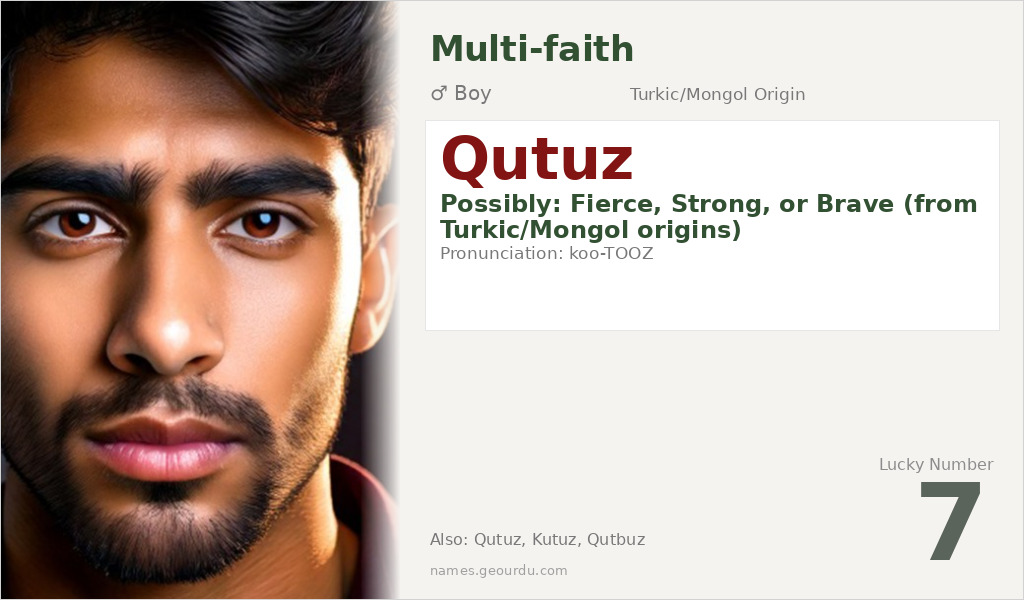
| 📛 Name | Qutuz |
| 💎 Meaning | Possibly: Fierce, Strong, or Brave (from Turkic/Mongol origins) |
| 👤 Gender | Boy |
| 🕌 Religion | Multi-faith |
| 🌍 Origin | Turkic/Mongol |
| 🗣 Pronunciation | koo-TOOZ |
| ✍️ Urdu | قطوز |
| ✍️ Arabic | قطز |
| 🔢 Numerology | 7 |
| ✨ Spellings | Qutuz, Kutuz, Qutbuz, Kutbuz |
Origin & Cultural Significance
Qutuz has its origins in the Turkic and Mongol cultures of Central Asia, particularly among the Kipchak Turks and Mongol tribes. The name gained historical prominence during the 13th century when Sultan Saif ad-Din Qutuz, a Mamluk of Kipchak origin, became the ruler of Egypt and led the Muslim forces to victory against the Mongols at the Battle of Ain Jalut in 1260. This pivotal battle halted the Mongol advance into the Middle East and cemented Qutuz’s place in Islamic history. The name was used within the Mamluk Sultanate, a military caste that ruled Egypt and Syria for centuries, where many rulers had Turkic or Mongol backgrounds. While the name is not commonly used in modern times, it remains historically significant in Islamic and Turkic cultural heritage.
Personality Traits
Those named Qutuz are often associated with qualities of strength, determination, and natural leadership. Drawing from the historical figure who bore this name, they may exhibit strategic thinking, courage in adversity, and a protective nature toward their community or family. The name suggests someone who can take charge in difficult situations and inspire others through their resilience and conviction. While these traits are culturally associated rather than scientifically proven, they reflect the historical legacy of the most famous bearer of this distinctive name.
Similar Names
If you like Qutuz, consider: Qutb, Qutaybah, Qasim, Tughril, Batu
Famous People Named Qutuz
- Sultan Saif ad-Din Qutuz — 13th century Mamluk Sultan of Egypt who defeated the Mongols at the Battle of Ain Jalut
- Qutuz al-Mu'azzami — Ayyubid emir and military commander
Frequently Asked Questions About Qutuz
What does Qutuz mean?
Qutuz likely means 'fierce,' 'strong,' or 'brave' and originates from Turkic/Mongol languages. It is historically associated with strength and leadership qualities.
Is Qutuz a boy or girl name?
Qutuz is exclusively a boy's name, with all historical bearers being male. It comes from cultures with strong martial traditions where such names were typically given to boys.
What is the origin of Qutuz?
Qutuz originates from Turkic and Mongol cultures, specifically among Kipchak Turks and Mongol tribes. It gained prominence through Sultan Saif ad-Din Qutuz, a 13th century Mamluk ruler of Egypt.





