
Table of Contents
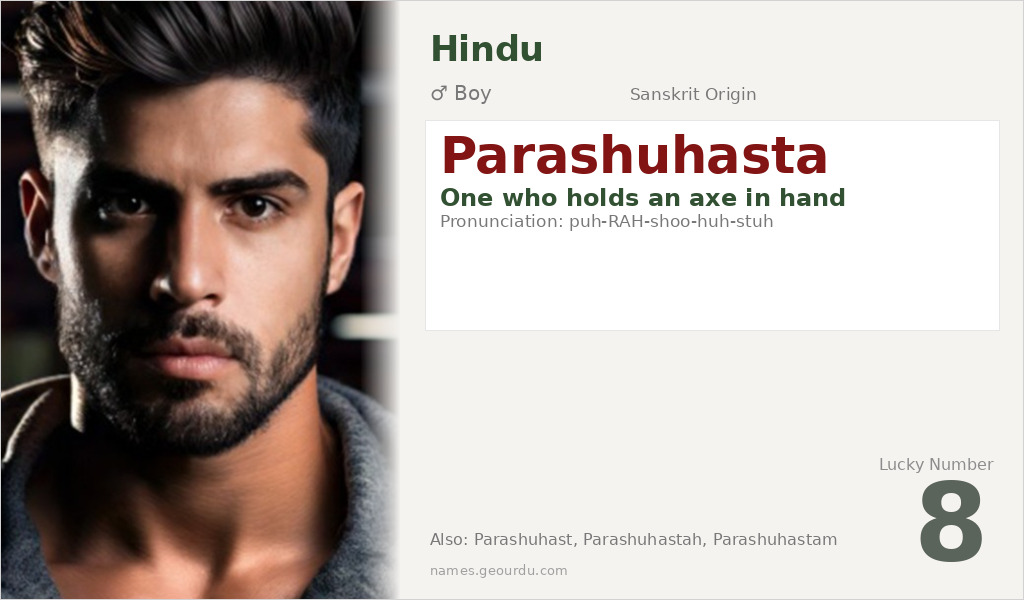
Parashuhasta is a powerful Sanskrit name with deep roots in Hindu tradition and mythology. Meaning ‘one who holds an axe’, this name carries warrior symbolism and represents strength, protection, and readiness for battle. While not among the most common Hindu names today, it appears in religious texts and carries significant cultural weight. Understanding its true meaning reveals why it has endured as a meaningful choice for parents seeking a name with historical and spiritual resonance.
Meaning of Parashuhasta
Parashuhasta is a compound Sanskrit name with a clear and specific meaning: ‘one who holds an axe’. The name breaks down into two components: ‘parashu’ meaning ‘axe’ or ‘hatchet’, and ‘hasta’ meaning ‘hand’. In Sanskrit linguistics, ‘parashu’ specifically denotes a battle-axe, often associated with warriors and deities in Hindu mythology. The combination creates a vivid image of someone armed and ready for combat or protection. This name appears in various Hindu texts as an epithet for figures known for their martial prowess, particularly those who wielded axes as their primary weapons. Unlike many names that have evolved or taken on metaphorical meanings, Parashuhasta maintains its literal weapon-related significance across historical usage.
| 📛 Name | Parashuhasta |
| 💎 Meaning | One who holds an axe in hand |
| 👤 Gender | Boy |
| 🕌 Religion | Hindu |
| 🌍 Origin | Sanskrit |
| 🗣 Pronunciation | puh-RAH-shoo-huh-stuh |
| ✍️ Urdu | پرشوہست |
| ✍️ Arabic | باراشوهستا |
| 🔢 Numerology | 8 |
| ✨ Spellings | Parashuhast, Parashuhastah, Parashuhastam |
Origin & Cultural Significance
Parashuhasta originates from classical Sanskrit, the ancient liturgical language of Hinduism. The name emerges from India’s rich warrior tradition, where weapons often became part of personal names and titles. In Hindu culture, axes (parashu) held symbolic importance—they represented not just physical weapons but also tools for clearing obstacles, both literal and metaphorical. The name appears in religious contexts, sometimes as an epithet for deities or legendary warriors known for their axe-wielding prowess. While not as common as names like Parashurama (the famous axe-wielding avatar of Vishnu), Parashuhasta belongs to the same linguistic and cultural family. Its usage reflects the historical practice of naming children after qualities or attributes parents hoped they would embody, in this case strength and protective capability.
Personality Traits
The name Parashuhasta suggests personality traits aligned with its warrior symbolism. Those bearing this name are often perceived as strong-willed, decisive, and protective individuals. The axe imagery implies practical problem-solving abilities—the capacity to ‘cut through’ difficulties with determination. In cultural context, such names were traditionally given with the hope that the child would develop courage, leadership qualities, and the strength to overcome life’s challenges. While modern naming practices may not literally expect axe-wielding, the symbolic attributes of strength, protection, and clear action remain associated with this meaningful name.
Similar Names
If you like Parashuhasta, consider: Parashurama, Parashu, Hastin, Ayudh, Shastra, Vajra, Gadadhara, Khadga, Dhanurdhara, Shulapani
Famous People Named Parashuhasta
- Parashuhasta — A name appearing in Hindu scriptures as an epithet for warriors and deities who wield axes
- Parashurama — The sixth avatar of Vishnu, known as 'Rama with the axe', shares the 'parashu' root and similar warrior symbolism
Frequently Asked Questions About Parashuhasta
What does Parashuhasta mean?
Parashuhasta means 'one who holds an axe' in Sanskrit. It is a compound name from 'parashu' (axe) and 'hasta' (hand), literally translating to 'axe-handed'.
Is Parashuhasta a boy or girl name?
Parashuhasta is exclusively a boy's name in Hindu naming tradition. Its warrior symbolism and historical usage are masculine in context.
What is the origin of Parashuhasta?
Parashuhasta originates from Sanskrit, the classical language of Hinduism. It comes from India's warrior naming traditions where weapons often formed part of names.





