
Table of Contents
Shabarish is a profound Sanskrit name with deep roots in Hindu mythology and South Indian devotional traditions. Primarily given to boys, this name carries the weight of divine association and spiritual significance. Unlike many modern names, Shabarish has a specific mythological reference that connects it directly to one of Hinduism’s most revered deities. Exploring this name reveals fascinating connections between Sanskrit linguistics, regional worship practices, and tribal influences in Indian spirituality.
Meaning of Shabarish
Shabarish derives from Sanskrit, combining ‘Shabari’ and ‘Isha’ to mean ‘Lord of Shabari’ or specifically ‘Lord Ayyappa’. The ‘Shabari’ component refers to the devoted tribal woman from the Ramayana who offered berries to Lord Rama after tasting each one to ensure sweetness, symbolizing pure devotion. ‘Isha’ means lord, master, or ruler in Sanskrit. Together, they reference Lord Ayyappa’s mythological upbringing among the Shabari tribe in the forests of South India. This name is not merely descriptive but carries specific theological significance in the Ayyappa worship tradition, particularly in Kerala and Tamil Nadu where the deity is venerated as the union of Shiva and Vishnu.
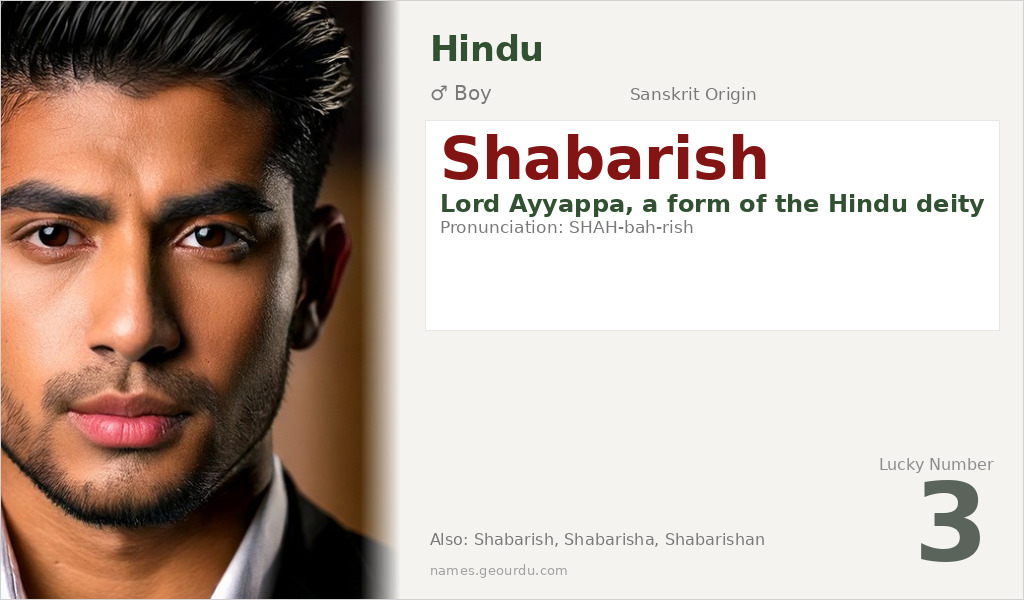
| 📛 Name | Shabarish |
| 💎 Meaning | Lord Ayyappa, a form of the Hindu deity |
| 👤 Gender | Boy |
| 🕌 Religion | Hindu |
| 🌍 Origin | Sanskrit |
| 🗣 Pronunciation | SHAH-bah-rish |
| ✍️ Urdu | شبرش |
| ✍️ Arabic | شاباريش |
| 🔢 Numerology | 3 |
| ✨ Spellings | Shabarish, Shabarisha, Shabarishan |
Origin & Cultural Significance
The name Shabarish originates from Sanskrit and Dravidian Hindu traditions, specifically associated with the Sabarimala temple complex in Kerala. It emerged from regional devotional literature and oral traditions that developed around Lord Ayyappa worship over centuries. The name reflects the syncretic nature of Ayyappa devotion, which incorporates elements of tribal (Shabari) traditions with mainstream Hindu mythology. Historically, the name gained prominence through temple rituals, devotional songs (bhajans), and regional naming practices in South Indian Hindu communities, particularly among those with strong connections to Ayyappa worship and pilgrimage traditions to Sabarimala.
Personality Traits
Those named Shabarish are often associated with qualities of discipline, spiritual focus, and protective instincts. Drawing from the mythological attributes of Lord Ayyappa, they may be perceived as individuals with strong moral compasses and commitment to righteous living. The name suggests someone who balances ascetic principles with worldly responsibilities, potentially exhibiting leadership qualities tempered with humility and devotion to higher principles.
Similar Names
If you like Shabarish, consider: Ayyappa, Dharma Shastha, Manikandan, Hariharaputra, Sastha
Famous People Named Shabarish
- No widely known contemporary famous people with this name found in verified sources
- The name is primarily associated with Lord Ayyappa/Ayyappan in Hindu mythology and temple traditions
Frequently Asked Questions About Shabarish
What does Shabarish mean?
Shabarish means 'Lord Ayyappa' in Sanskrit. It combines 'Shabari' (referring to the devoted tribal woman from Hindu mythology) and 'Isha' (meaning lord or ruler), specifically denoting the Hindu deity Ayyappa who was raised by the Shabari tribe.
Is Shabarish a boy or girl name?
Shabarish is exclusively a boy's name in Hindu naming traditions. It refers to Lord Ayyappa, a male deity, and is given to male children in families with devotion to this particular form of Hindu worship.
What is the origin of Shabarish?
Shabarish originates from Sanskrit and South Indian Hindu traditions, specifically associated with Ayyappa worship in Kerala and Tamil Nadu. The name emerged from regional devotional practices and mythological narratives surrounding Lord Ayyappa's connection to the Shabari tribe.





