Table of Contents
Shambho is a powerful, spiritually significant name with roots deep in Hindu tradition and Sanskrit literature. Primarily used as an epithet for Lord Shiva, this name carries profound theological meaning and cultural resonance. Parents choosing this name often seek to imbue their child with the auspicious qualities associated with one of Hinduism’s principal deities. The name’s rich history and spiritual connotations make it a meaningful choice within Hindu communities worldwide.
Meaning of Shambho
Shambho derives from the Sanskrit language, specifically from the root ‘śam’ meaning ‘auspiciousness, welfare, or happiness’ combined with ‘bhu’ meaning ‘being, source, or origin.’ Thus, Shambho literally translates to ‘source of auspiciousness’ or ‘origin of happiness.’ In Hindu theology, this name is particularly associated with Lord Shiva, emphasizing his benevolent, compassionate nature as the divine source of all that is good and prosperous in the universe. The name appears in numerous sacred texts including the Shiva Purana, where it highlights Shiva’s role as the ultimate benefactor and protector. Unlike general terms for compassion, Shambho carries specific theological weight within Shaivism, representing Shiva’s fundamental nature as the embodiment of divine grace and auspiciousness.
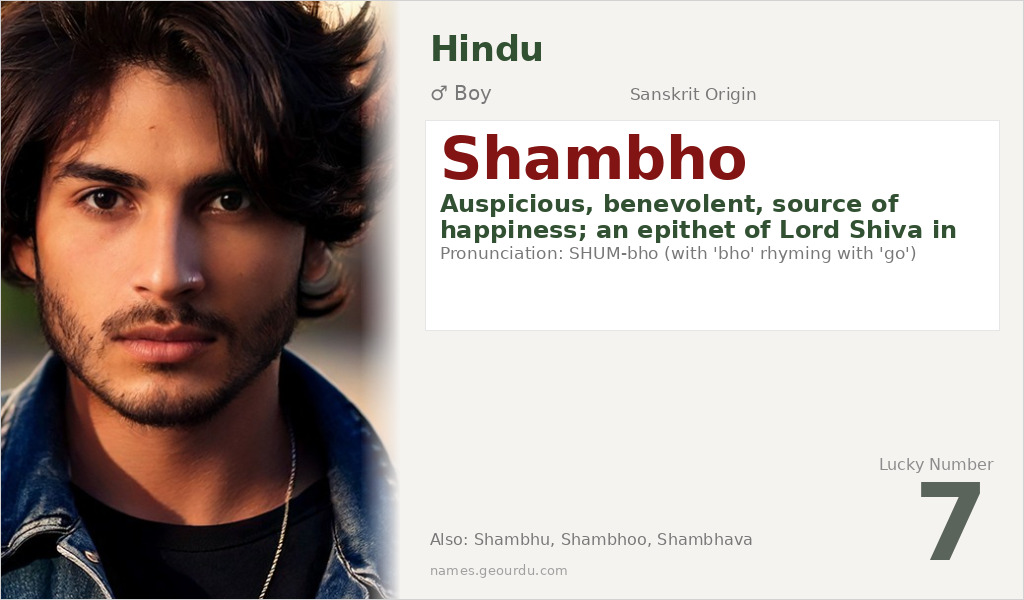
| 📛 Name | Shambho |
| 💎 Meaning | Auspicious, benevolent, source of happiness; an epithet of Lord Shiva in Hinduism |
| 👤 Gender | Boy |
| 🕌 Religion | Hindu |
| 🌍 Origin | Sanskrit |
| 🗣 Pronunciation | SHUM-bho (with 'bho' rhyming with 'go') |
| ✍️ Urdu | شمبھو |
| ✍️ Arabic | شامبو |
| 🔢 Numerology | 7 |
| ✨ Spellings | Shambhu, Shambhoo, Shambhava, Shambho |
Origin & Cultural Significance
Shambho originates from ancient Sanskrit, the classical language of Hindu scriptures and Indian philosophy. Its earliest documented usage appears in Vedic literature and later Puranic texts, where it functions as one of the 108 names of Lord Shiva. The name holds particular significance in Shaivism, one of Hinduism’s major traditions that reveres Shiva as the supreme being. Culturally, Shambho represents more than just a personal name—it embodies a theological concept of divine benevolence and auspicious protection. Throughout Indian history, the name has been used both as a devotional epithet for Shiva and as a given name for boys, particularly in Hindu families seeking spiritual blessings and connection to this aspect of the divine.
Personality Traits
Those named Shambho often inherit the name’s spiritual and benevolent connotations, typically displaying calm, thoughtful personalities with strong moral compasses. They tend to be natural protectors and caregivers in their communities, reflecting the name’s association with auspicious guardianship. Many develop interests in philosophy, spirituality, or creative arts, mirroring Shiva’s roles as both ascetic and patron of arts. Their leadership style often combines wisdom with compassion, making them respected figures in both personal and professional spheres.
Similar Names
If you like Shambho, consider: Shiva, Shankar, Mahesh, Rudra, Bholenath
Famous People Named Shambho
- Shambhu Maharaj — Renowned Kathak dancer and guru from the Lucknow gharana
- Shambhu Nath — Indian freedom fighter and revolutionary
Frequently Asked Questions About Shambho
What does Shambho mean?
Shambho means 'auspicious,' 'benevolent,' or 'source of happiness' in Sanskrit. It is specifically an epithet for Lord Shiva in Hinduism, representing his nature as the origin of all that is good and prosperous.
Is Shambho a boy or girl name?
Shambho is exclusively a boy's name in Hindu tradition. It is used as both a given name for boys and as a devotional name for Lord Shiva, with no feminine usage in historical or contemporary contexts.
What is the origin of Shambho?
Shambho originates from Sanskrit, the ancient language of Hindu scriptures. It comes from the roots 'śam' (auspiciousness) and 'bhu' (source/being), and has been used for millennia in Hindu religious texts as a name for Shiva.