
Table of Contents
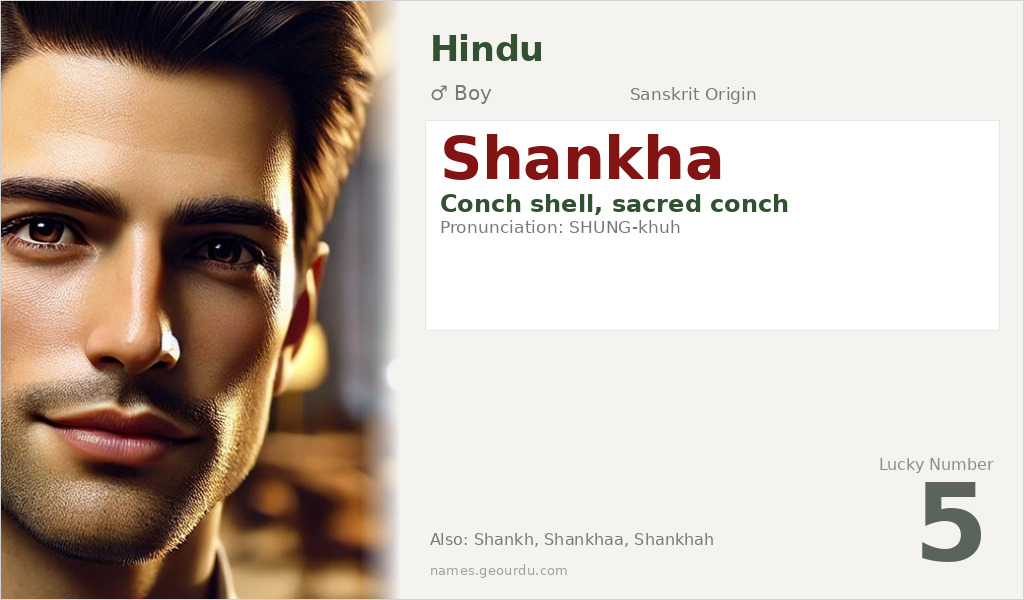
Shankha is a traditional Hindu boy’s name with deep spiritual significance. Derived from Sanskrit, it refers to the sacred conch shell used in religious ceremonies across India. This name carries centuries of cultural heritage and symbolizes purity, auspiciousness, and divine sound. Parents choosing this name often seek to connect their child with Hindu traditions and values.
Meaning of Shankha
Shankha originates from the Sanskrit word ‘शङ्ख’ (śaṅkha), which literally means ‘conch shell’. In Hindu tradition, it specifically denotes the sacred conch that is blown during religious rituals, particularly in Vishnu worship. The name comes from the Sanskrit root ‘śaṅkh’ meaning ‘to sound’ or ‘to resonate’, perfectly describing the conch’s function as a ritual instrument. Beyond its literal meaning, shankha represents the primordial sound of creation (nada) in Hindu philosophy and is considered one of the eight auspicious symbols (ashtamangala). The conch shell’s spiral form symbolizes the infinite expansion of the universe, making this name rich with cosmological significance.
| 📛 Name | Shankha |
| 💎 Meaning | Conch shell, sacred conch |
| 👤 Gender | Boy |
| 🕌 Religion | Hindu |
| 🌍 Origin | Sanskrit |
| 🗣 Pronunciation | SHUNG-khuh |
| ✍️ Urdu | شنکھ |
| ✍️ Arabic | شانكها |
| 🔢 Numerology | 5 |
| ✨ Spellings | Shankh, Shankhaa, Shankhah |
Origin & Cultural Significance
Shankha has its origins in ancient Sanskrit language and Hindu culture dating back thousands of years. The conch shell has been a sacred object in Hinduism since Vedic times, mentioned in texts like the Mahabharata and Puranas. In Hindu mythology, the shankha is associated with Lord Vishnu, who holds the Panchajanya conch, and with the goddess Lakshmi, who emerged from the ocean holding a conch during the churning of the milky ocean. The name is predominantly used in Hindu communities across India, particularly in Bengali, Odia, and other eastern Indian cultures where conch-related rituals are prominent. While primarily a Hindu name, the word ‘shankha’ appears in Buddhist and Jain contexts as well, though as a personal name it remains firmly within Hindu tradition.
Personality Traits
Those named Shankha are often perceived as having qualities associated with the sacred conch: purity, discipline, and spiritual resonance. They may exhibit traditional values, a strong sense of duty, and natural leadership abilities. The connection to ritual sound suggests they might be articulate, persuasive, or drawn to teaching roles. Their personality often reflects the conch’s symbolism of removing obstacles and spreading positive vibrations.
Similar Names
If you like Shankha, consider: Shankara, Shantanu, Shashank, Shivam, Shlok
Famous People Named Shankha
- Shankha Ghosh — Renowned Bengali poet and literary critic
- Shankha Subhra Chowdhury — Indian cricketer who played for Bengal
Frequently Asked Questions About Shankha
What does Shankha mean?
Shankha means 'sacred conch shell' in Sanskrit. It specifically refers to the ritual conch used in Hindu ceremonies, symbolizing purity, auspiciousness, and the primordial sound of creation.
Is Shankha a boy or girl name?
Shankha is traditionally a boy's name in Hindu culture. While names can sometimes be used across genders, Shankha has historically been masculine due to its association with Lord Vishnu and ritual practices typically performed by men.
What is the origin of Shankha?
Shankha originates from Sanskrit language and Hindu tradition. It comes from the Sanskrit word 'śaṅkha' meaning conch shell, with deep roots in Vedic texts and Hindu mythology dating back thousands of years.





