
Table of Contents
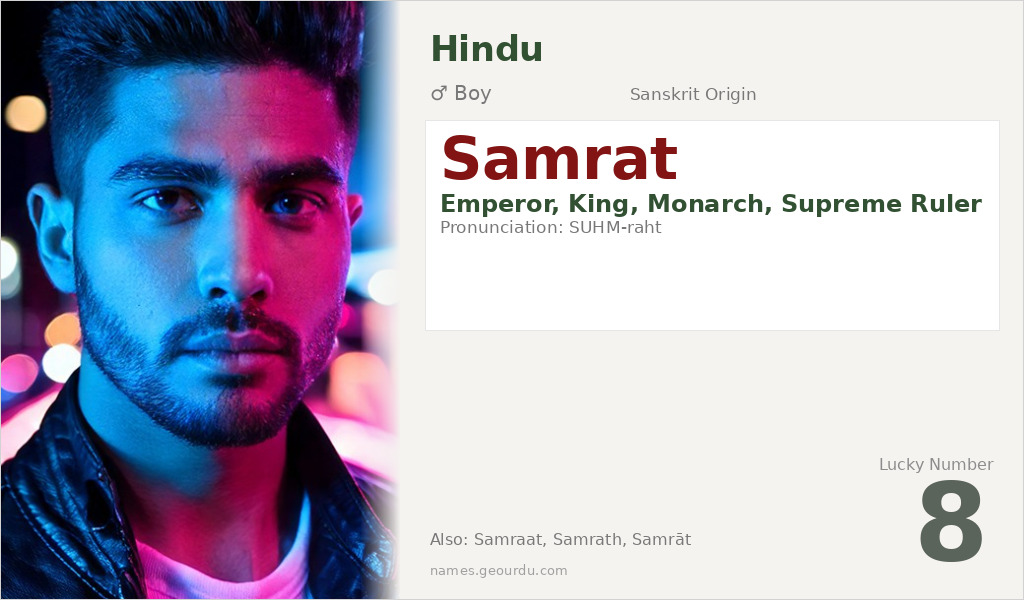
Samrat is a powerful and regal name of Sanskrit origin that carries centuries of imperial history. Meaning ’emperor’ or ‘supreme ruler’, this name evokes images of ancient monarchs and royal authority. Popular in Hindu communities, Samrat represents leadership, strength, and noble heritage. Choosing this name for your child connects them to a tradition of sovereignty and command.
Meaning of Samrat
Samrat originates from the Sanskrit word ‘samrāṭ’ (सम्राट्), which combines ‘sam’ (meaning ‘together’ or ‘complete’) with elements related to ‘rājan’ (king). This creates the meaning ’emperor’ or ‘supreme ruler’—one who rules over all other kings. The term appears in ancient Indian texts like the Mahabharata, where it describes monarchs with imperial authority. In historical context, Samrat was used as a title for rulers of extensive territories, particularly during the Mauryan and Gupta empires. The name carries connotations of sovereignty, power, and complete dominion, making it one of the most authoritative names in the Sanskrit naming tradition.
| 📛 Name | Samrat |
| 💎 Meaning | Emperor, King, Monarch, Supreme Ruler |
| 👤 Gender | Boy |
| 🕌 Religion | Hindu |
| 🌍 Origin | Sanskrit |
| 🗣 Pronunciation | SUHM-raht |
| ✍️ Urdu | سمرٹ |
| ✍️ Arabic | سمرات |
| 🔢 Numerology | 8 |
| ✨ Spellings | Samraat, Samrath, Samrāt |
Origin & Cultural Significance
Samrat has its roots in ancient Sanskrit, the classical language of India that dates back over 3,500 years. The name emerged from Hindu royal traditions where emperors were distinguished from regular kings (rajas) by this specific title. Historically, notable figures like Ashoka (Samrat Ashoka) used this title during their reigns in the 3rd century BCE. The name remains popular in modern Hindu communities across India, Nepal, and the diaspora, maintaining its association with leadership and nobility. While primarily Hindu in usage, the name’s appeal transcends religious boundaries due to its strong, positive meaning.
Personality Traits
Those named Samrat often embody the leadership qualities suggested by their name’s meaning. They tend to be confident, decisive individuals who naturally assume positions of responsibility. With an innate sense of authority and strategic thinking, Samrats often excel in fields requiring management and vision. Their regal name may inspire them to develop strong organizational skills and a commanding yet fair approach to leadership.
Similar Names
If you like Samrat, consider: Raj, Maharaj, Chakravartin, Kaiser, Shahanshah
Famous People Named Samrat
- Samrat Ashoka — 3rd century BCE Mauryan emperor who ruled most of the Indian subcontinent and promoted Buddhism
- Samrat Hem Chandra Vikramaditya — 16th century Hindu emperor who fought against the Mughal Empire
Frequently Asked Questions About Samrat
What does Samrat mean?
Samrat means 'emperor', 'king', or 'supreme ruler' in Sanskrit, the classical language of ancient India.
Is Samrat a boy or girl name?
Samrat is exclusively a boy's name in Hindu naming traditions, reflecting its masculine meaning of emperor or ruler.
What is the origin of Samrat?
Samrat originates from Sanskrit, specifically from the word 'samrāṭ' which was used as a title for emperors in ancient and medieval India.





