
Table of Contents
Sirjung is a powerful masculine name that resonates with strength and valor across South Asian cultures. Derived from ancient warrior traditions, this name carries the symbolic weight of the lion—the king of beasts—combined with martial spirit. Popular among Pashtun, Baloch, and Punjabi communities, Sirjung represents both physical courage and noble character. Its rich linguistic heritage makes it a meaningful choice for parents seeking a name with historical depth and cultural resonance.
Meaning of Sirjung
The name Sirjung has clear etymological roots in Persian and Pashto languages. The first component ‘Sir’ (alternatively spelled ‘Sher’ or ‘Shir’) comes from the Old Persian word ‘šer’ meaning lion, which entered Pashto as ‘سیر’ (sīr). This lion symbolism is deeply embedded in Persianate cultures, representing royalty, courage, and protection. The second component ‘Jung’ derives from the Persian ‘جنگ’ (jang), meaning war or battle, from the Middle Persian ‘wang’. When combined, Sirjung literally translates to ‘lion of battle’ or ‘warrior lion’, creating a compound that emphasizes both the ferocity and nobility associated with lion imagery in martial contexts. This naming pattern is common in regions influenced by Persian culture, where animal attributes are combined with human qualities.
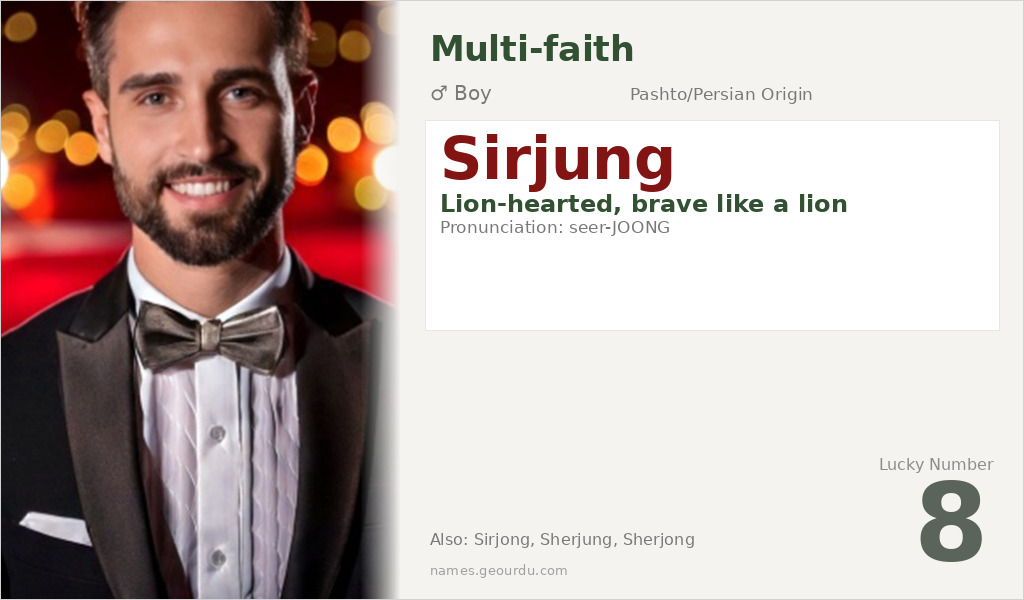
| 📛 Name | Sirjung |
| 💎 Meaning | Lion-hearted, brave like a lion |
| 👤 Gender | Boy |
| 🕌 Religion | Multi-faith |
| 🌍 Origin | Pashto/Persian |
| 🗣 Pronunciation | seer-JOONG |
| ✍️ Urdu | سِر جنگ |
| ✍️ Arabic | سير جونغ |
| 🔢 Numerology | 8 |
| ✨ Spellings | Sirjong, Sherjung, Sherjong, Syrjung |
Origin & Cultural Significance
Sirjung originates from the Persian cultural sphere that extended across modern-day Afghanistan, Pakistan, Iran, and parts of India. The name is particularly prevalent among Pashtun tribes in Afghanistan and Pakistan, where lion symbolism holds special significance in tribal identity and warrior traditions. During the Mughal era, Persian-influenced names became popular across the Indian subcontinent, leading to adoption by various communities including Sikhs, Hindus, and Muslims. In Baloch culture, similar compound names with ‘Sher’ (lion) are common, reflecting the region’s historical connections to Persian linguistic traditions. Today, Sirjung remains most common in Pashtun-majority regions but has spread through diaspora communities worldwide.
Personality Traits
Those named Sirjung are often perceived as natural leaders with courageous dispositions. The lion symbolism suggests they possess protective instincts and a strong sense of responsibility toward family and community. Historically, names containing ‘jung’ (battle) elements were given to inspire martial virtues, so Sirjung bearers may exhibit determination, strategic thinking, and resilience in facing life’s challenges. The combination of noble lion imagery with warrior connotations creates expectations of both strength and honor in character.
Similar Names
If you like Sirjung, consider: Sher Khan, Sher Ali, Jang Bahadur, Bahadur Shah, Sherdil
Famous People Named Sirjung
- Sir Jung Bahadur Rana — 19th century Prime Minister of Nepal who modernized the country's military and administration
- Sir Jung — Contemporary Pakistani Pashtun tribal leader and politician
Frequently Asked Questions About Sirjung
What does Sirjung mean?
Sirjung means 'lion-hearted' or 'lion of battle', derived from Pashto/Persian 'sir' (lion) and 'jung' (war/battle).
Is Sirjung a boy or girl name?
Sirjung is exclusively a masculine name in all cultures where it is used, reflecting traditional warrior naming conventions.
What is the origin of Sirjung?
Sirjung originates from Persian and Pashto languages, with strongest cultural roots among Pashtun and Baloch communities in Afghanistan and Pakistan.





