
Table of Contents
Vaikundavasan is a profound Sanskrit name steeped in Hindu spiritual tradition, carrying the weight of celestial imagery and divine connection. This name, typically given to boys, directly references the heavenly realm of Vaikuntha where Lord Vishnu resides eternally. More than just an identifier, Vaikundavasan represents an aspiration toward spiritual elevation and divine proximity. Understanding this name requires exploring its linguistic roots in ancient Sanskrit and its theological significance within Vaishnavism.
Meaning of Vaikundavasan
Vaikundavasan derives from two Sanskrit components that together create a meaningful spiritual identifier. The first element ‘Vaikuntha’ (वैकुण्ठ) refers specifically to the celestial abode of Lord Vishnu, described in Puranic literature as a realm of eternal bliss, beyond material existence. The second element ‘vāsan’ (वासन्) comes from the Sanskrit root ‘vas’ meaning ‘to dwell, reside, or inhabit’. When combined, the name literally translates to ‘one who dwells in Vaikuntha’ or ‘inhabitant of Vishnu’s paradise’. This construction follows common Sanskrit naming patterns where ‘-vasan’ indicates residence or belonging. The name thus symbolizes not just devotion to Vishnu but suggests the bearer has qualities or destiny associated with divine realms.
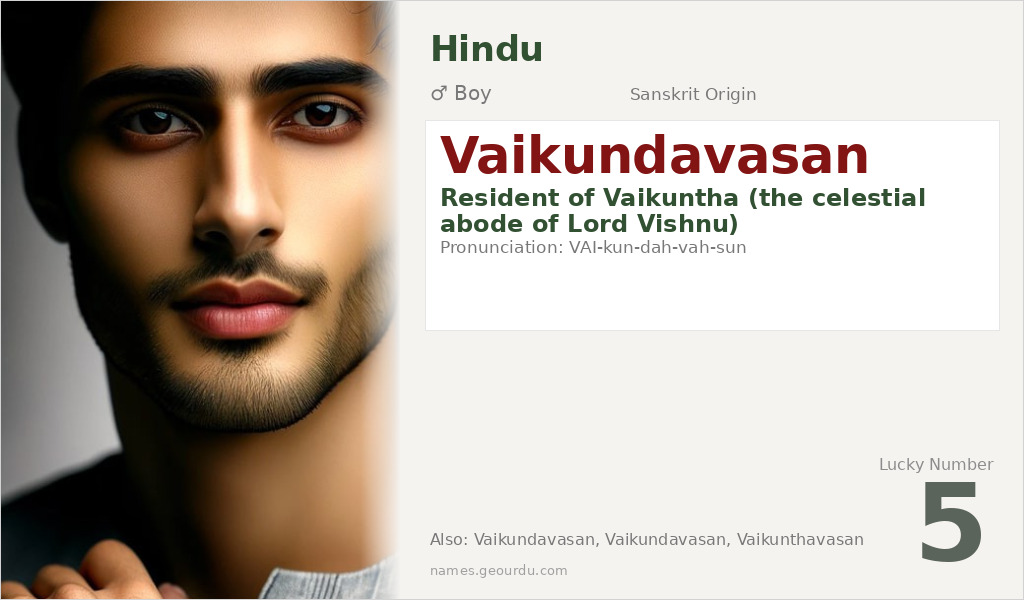
| 📛 Name | Vaikundavasan |
| 💎 Meaning | Resident of Vaikuntha (the celestial abode of Lord Vishnu) |
| 👤 Gender | Boy |
| 🕌 Religion | Hindu |
| 🌍 Origin | Sanskrit |
| 🗣 Pronunciation | VAI-kun-dah-vah-sun |
| ✍️ Urdu | ویکنتھ واسن |
| ✍️ Arabic | فيكوندافاسان |
| 🔢 Numerology | 5 |
| ✨ Spellings | Vaikundavasan, Vaikundavasan, Vaikunthavasan |
Origin & Cultural Significance
Vaikundavasan originates from classical Sanskrit, the liturgical language of Hinduism, and emerges from Vaishnava theological traditions that venerate Lord Vishnu as the supreme deity. The concept of Vaikuntha appears extensively in Hindu scriptures like the Vishnu Purana, Bhagavata Purana, and various Upanishads, where it’s described as the ultimate spiritual destination for devotees. As a given name, Vaikundavasan gained prominence in South Indian Hindu communities, particularly among Tamil and Telugu speakers, though it appears across Hindu populations. The name reflects the Hindu naming tradition of invoking divine qualities, places, or relationships, serving as both an identifier and a spiritual aspiration for the child’s life path.
Personality Traits
Those named Vaikundavasan are often associated with serene, contemplative personalities marked by spiritual depth and ethical consistency. The name’s connection to Vishnu’s abode suggests qualities of preservation, harmony, and divine protection. Such individuals may demonstrate natural leadership in religious or community contexts, with a tendency toward philosophical inquiry and traditional values. The celestial connotations imply someone who seeks higher purpose beyond material concerns, potentially exhibiting patience, wisdom, and a calming influence on others.
Similar Names
If you like Vaikundavasan, consider: Vaikunthanathan, Vaikunthapathi, Vaikuntharaj, Vaikunthadhipa, Vaikunthapriya
Famous People Named Vaikundavasan
- No widely known contemporary public figures with this name found in records – it remains a traditional religious name used primarily in Hindu communities
Frequently Asked Questions About Vaikundavasan
What does Vaikundavasan mean?
Vaikundavasan means 'resident of Vaikuntha' or 'inhabitant of Lord Vishnu's celestial abode'. It's a Sanskrit compound name combining 'Vaikuntha' (Vishnu's paradise) and 'vasan' (dweller).
Is Vaikundavasan a boy or girl name?
Vaikundavasan is exclusively a boy's name in Hindu naming tradition. Sanskrit names ending with '-vasan' typically denote masculine gender in classical naming conventions.
What is the origin of Vaikundavasan?
Vaikundavasan originates from Sanskrit, the ancient liturgical language of Hinduism. It specifically emerges from Vaishnava traditions within Hindu theology that focus on devotion to Lord Vishnu.





