
Table of Contents
Turang is a distinctive boy’s name with deep roots in Persian language and culture, symbolizing strength, speed, and nobility. Often associated with horses, it evokes images of valor and freedom, making it a popular choice in regions like Iran, Afghanistan, Pakistan, and among diaspora communities. This name carries historical significance and is used across various faiths, reflecting its broad cultural appeal. Discover the rich etymology and modern relevance of Turang in this comprehensive guide.
Meaning of Turang
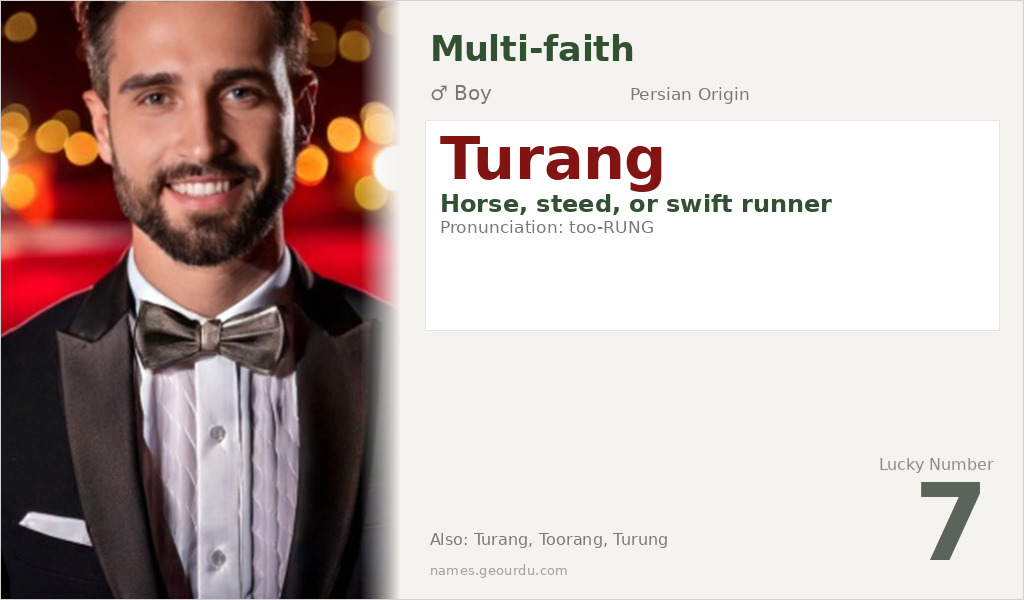
Turang originates from the Persian word ‘تورنگ’ (turang), which unequivocally means ‘horse’ or ‘steed.’ This term is well-documented in Persian lexicons and has been adopted into related languages such as Pashto, Balochi, and Urdu, where it retains similar meanings. In these cultures, horses are emblematic of agility, power, and prestige, often used in poetry and literature to describe heroic figures. The name is not found in Sanskrit or Hindu texts with the meaning ‘a thought,’ which is a common misconception; instead, its etymology is firmly anchored in Persian linguistic heritage. Historically, names derived from animals like Turang were given to denote desired traits, such as bravery or swiftness. This linguistic clarity places Turang among names with a verifiable and rich semantic background.
| 📛 Name | Turang |
| 💎 Meaning | Horse, steed, or swift runner |
| 👤 Gender | Boy |
| 🕌 Religion | Multi-faith |
| 🌍 Origin | Persian |
| 🗣 Pronunciation | too-RUNG |
| ✍️ Urdu | تورنگ |
| ✍️ Arabic | تورانغ |
| 🔢 Numerology | 7 |
| ✨ Spellings | Turang, Toorang, Turung, Torang |
Origin & Cultural Significance
The name Turang has its origins in Persian culture, dating back to ancient and medieval periods when Persian influence spread across South Asia and Central Asia through trade, conquest, and migration. It is prevalent among Persian-speaking communities in Iran, as well as in regions like Afghanistan and Pakistan, where Pashto, Balochi, and Urdu speakers have integrated it into their naming traditions. Turang is used by Muslims, Sikhs, and others, reflecting its multi-faith adoption rather than being exclusive to Hinduism. Historical records mention figures such as Turang Khan in Baloch and Pashtun histories, underscoring its association with leadership and warrior ethos. In modern times, the name continues to be chosen for its strong, evocative meaning and cultural resonance, transcending religious boundaries.
Personality Traits
People named Turang are often seen as dynamic and resilient, with a natural inclination toward action and independence. Their personality may mirror the qualities of a horse—being both graceful under pressure and fiercely determined. They tend to be adventurous and quick-thinking, making them effective in roles that require initiative and courage. This name inspires a sense of nobility and a free-spirited approach to life.
Similar Names
If you like Turang, consider: Asv (Sanskrit for horse), Farhad (Persian name meaning happiness), Rakhsh (Persian for lightning, also a horse's name in mythology), Sawar (Urdu/Persian for horseman), Asp (Persian/Turkic for horse)
Famous People Named Turang
- Turang Khan — historical figure in Baloch and Pashtun tribal histories, known as a leader or warrior
- Turangzai — a Pashtun freedom fighter from the British colonial era in the North-West Frontier region
Frequently Asked Questions About Turang
What does Turang mean?
Turang means 'horse' or 'steed' in Persian, symbolizing speed, strength, and nobility.
Is Turang a boy or girl name?
Turang is traditionally a boy's name, used in Persian, Pashto, Balochi, and Urdu-speaking cultures.
What is the origin of Turang?
Turang originates from the Persian language, with historical usage in Iran, Afghanistan, Pakistan, and among Central Asian communities.





