
Table of Contents
Vakul is a distinctive Sanskrit name with deep botanical and cultural significance. Derived from the fragrant Vakula tree, this name evokes images of ceremonial garlands and royal adornments. With its roots in ancient Hindu traditions, Vakul carries meanings of beauty, honor, and spiritual fragrance. This name offers a unique connection to India’s rich botanical heritage and religious symbolism.
Meaning of Vakul
Vakul originates from the Sanskrit word ‘vakula,’ which refers specifically to the Mimusops elengi tree, prized for its intensely fragrant white flowers. In classical Indian tradition, these flowers were woven into garlands (malas) and crowns for religious ceremonies, royal occasions, and temple offerings. The name therefore carries the direct meaning of ‘crown,’ ‘garland,’ or ‘wreath’ – objects of honor and beauty. This botanical etymology connects the name to natural beauty, fragrance, and ceremonial significance. The Vakula tree itself holds importance in Ayurveda and Hindu mythology, mentioned in texts like the Bhagavata Purana. Thus, the name embodies both natural and spiritual elegance.
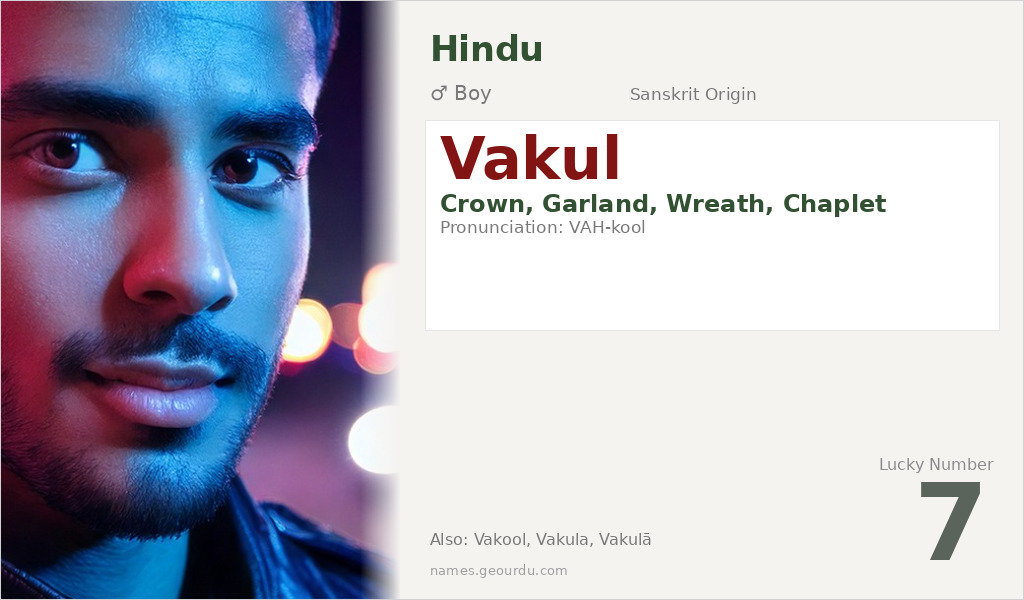
| 📛 Name | Vakul |
| 💎 Meaning | Crown, Garland, Wreath, Chaplet |
| 👤 Gender | Boy |
| 🕌 Religion | Hindu |
| 🌍 Origin | Sanskrit |
| 🗣 Pronunciation | VAH-kool |
| ✍️ Urdu | وکل |
| ✍️ Arabic | فاكل |
| 🔢 Numerology | 7 |
| ✨ Spellings | Vakool, Vakula, Vakulā |
Origin & Cultural Significance
Vakul has its origins in classical Sanskrit language and Hindu culture, dating back to ancient Indian civilization. The name emerges from India’s rich botanical vocabulary, where specific trees held cultural and religious importance. In Hindu tradition, the Vakula tree is associated with purity and is often mentioned in connection with Krishna and Vishnu worship. The name appears in historical texts and continues in use primarily among Hindu communities, particularly in regions of India where Sanskrit-derived names are valued. While not among the most common names, it maintains a presence in traditional naming practices, especially for boys, reflecting the enduring appeal of nature-based names in Indian culture.
Personality Traits
Those named Vakul often exhibit qualities of refinement, tradition, and aesthetic sensitivity. Their connection to the ceremonial ‘crown’ meaning suggests natural leadership qualities combined with grace. They tend to appreciate beauty in both natural and cultural forms, often showing interest in arts, spirituality, or preservation of traditions. The fragrant association of the name hints at someone who leaves a positive, memorable impression on others.
Similar Names
If you like Vakul, consider: Vakula, Vaksh, Vakil, Vakpati, Vaktr
Famous People Named Vakul
- Vakul Sharma — Indian classical vocalist known for Dhrupad style
- Vakul Sain — Character in Hindu mythology, sometimes associated with Krishna's companions
Frequently Asked Questions About Vakul
What does Vakul mean?
Vakul means 'crown,' 'garland,' or 'wreath' in Sanskrit, derived from the Vakula tree whose fragrant flowers were used in ceremonial adornments.
Is Vakul a boy or girl name?
Vakul is traditionally a masculine name in Hindu naming conventions, though names can sometimes be adapted across genders in modern usage.
What is the origin of Vakul?
Vakul originates from Sanskrit language and Hindu culture, specifically from the word 'vakula' referring to the Mimusops elengi tree and its fragrant flowers used in religious and royal ceremonies.





