
Table of Contents
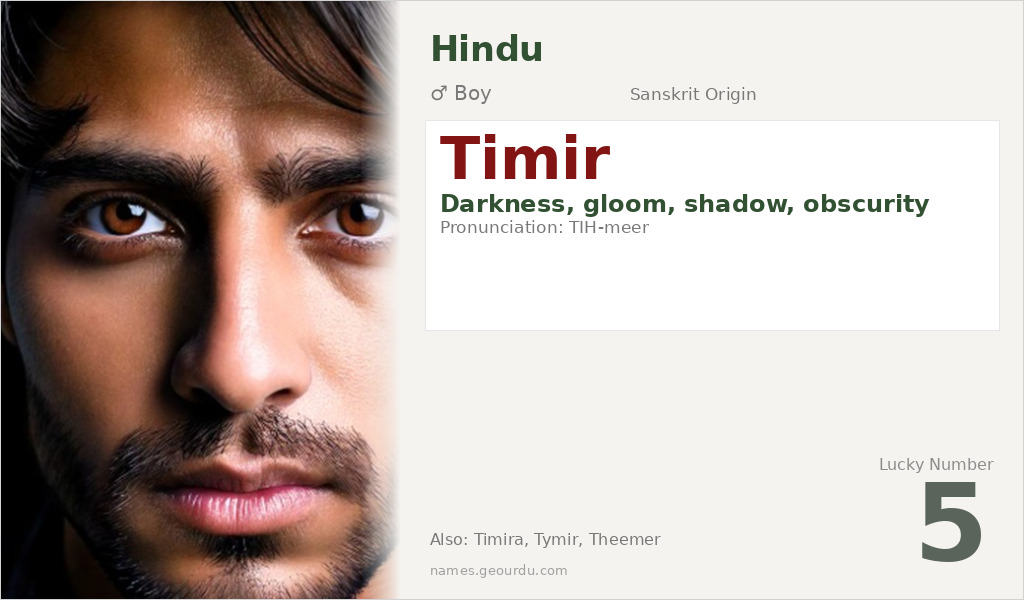
Timir is a distinctive Sanskrit name that carries profound philosophical weight in Hindu tradition. Meaning ‘darkness’ or ‘gloom,’ this name represents more than just absence of light—it symbolizes the journey from ignorance to enlightenment. While it might seem unconventional to name a child after darkness, in Hindu philosophy, acknowledging darkness is the first step toward seeking light. This name has been used for centuries in Indian literature and continues to be chosen by parents seeking a name with deep cultural roots.
Meaning of Timir
The name Timir originates from the Sanskrit word ‘तिमिर’ (timira), which literally translates to ‘darkness,’ ‘gloom,’ ‘shadow,’ or ‘obscurity.’ In Sanskrit literature, this term appears in epic texts like the Mahabharata and works by classical poets such as Kalidasa, where it describes both physical darkness and metaphorical ignorance. Etymologically, Timir comes from the Proto-Indo-European root *temH- meaning ‘dark,’ connecting it to related words across Indo-European languages. In Hindu philosophical contexts, timir represents the spiritual ignorance that veils truth, making the name symbolically rich as it implies the potential for enlightenment through dispelling this darkness.
| 📛 Name | Timir |
| 💎 Meaning | Darkness, gloom, shadow, obscurity |
| 👤 Gender | Boy |
| 🕌 Religion | Hindu |
| 🌍 Origin | Sanskrit |
| 🗣 Pronunciation | TIH-meer |
| ✍️ Urdu | تیمِر |
| ✍️ Arabic | تيمير |
| 🔢 Numerology | 5 |
| ✨ Spellings | Timira, Tymir, Theemer |
Origin & Cultural Significance
Timir has its roots firmly in ancient Sanskrit, the classical language of India that has influenced numerous modern South Asian languages. As a Sanskrit word meaning ‘darkness,’ it entered Hindu naming traditions through religious and philosophical texts where darkness metaphorically represents ignorance or illusion (maya). The name appears in classical Indian literature dating back over two millennia, particularly in poetic works describing night, emotional states, or spiritual conditions. While primarily used within Hindu communities, the name’s Sanskrit origin gives it cultural significance across India and among diaspora communities worldwide who value traditional Sanskrit names with philosophical depth.
Personality Traits
Those named Timir are often perceived as contemplative individuals with a natural inclination toward introspection and depth. The name’s meaning of ‘darkness’ doesn’t necessarily imply negativity but rather suggests someone who explores life’s shadows and mysteries. Such individuals may display strong intuitive abilities and a philosophical approach to challenges. Their personal growth often mirrors the name’s symbolic journey—moving from uncertainty toward clarity and enlightenment through accumulated wisdom.
Similar Names
If you like Timir, consider: Tamir, Tamas, Andhakar, Krishna, Shyam
Famous People Named Timir
- Timir Biswas — Indian Bengali film director known for 'Natun Yahudi' (1933)
- Timir Baran Bhattacharya — Indian classical musician and sarod player
Frequently Asked Questions About Timir
What does Timir mean?
Timir means 'darkness,' 'gloom,' or 'shadow' in Sanskrit, the classical language of India.
Is Timir a boy or girl name?
Timir is traditionally a masculine name in Hindu naming conventions, though Sanskrit words themselves are gender-neutral grammatically.
What is the origin of Timir?
Timir originates from Sanskrit, an ancient Indo-European language that is the liturgical language of Hinduism and has influenced many South Asian languages.





