Table of Contents
Tanya is a charming feminine name with deep roots in Russian culture and classical literature. Often described as meaning ‘fairy queen’ or ‘fairy-like,’ this name carries an air of enchantment and grace. From its origins as a diminutive of Tatiana to its global popularity today, Tanya has captivated parents worldwide with its melodic sound and romantic associations. This name’s journey from ancient Rome to modern nurseries reveals a rich tapestry of cultural exchange.
Meaning of Tanya
The name Tanya derives from the Russian diminutive of Tatiana, which itself originates from the Latin name Tatius. Tatius was a Sabine king in Roman mythology who ruled jointly with Romulus after the abduction of the Sabine women. In Russian, the affectionate form Tanya developed to mean ‘fairy queen’ or ‘fairy-like,’ capturing a sense of magical elegance. This meaning reflects the name’s association with ethereal beauty and grace in Slavic naming traditions. The name gained literary prominence through Alexander Pushkin’s character Tatyana Larina in ‘Eugene Onegin,’ cementing its romantic connotations. Today, Tanya maintains its connection to these fairy-like qualities while being adapted across various cultures.
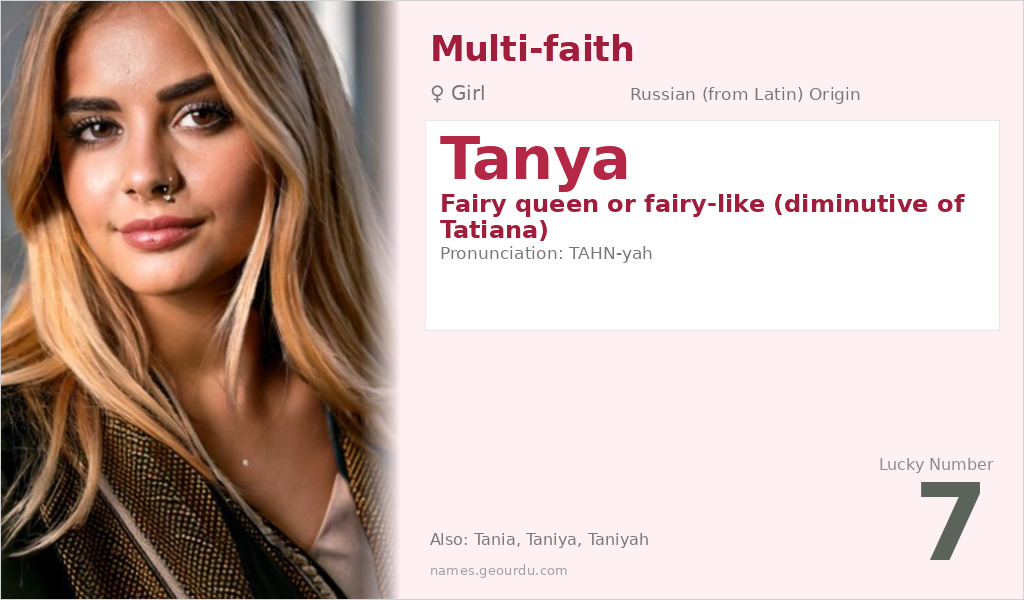
| 📛 Name | Tanya |
| 💎 Meaning | Fairy queen or fairy-like (diminutive of Tatiana) |
| 👤 Gender | Girl |
| 🕌 Religion | Multi-faith |
| 🌍 Origin | Russian (from Latin) |
| 🗣 Pronunciation | TAHN-yah |
| ✍️ Urdu | تانیا |
| ✍️ Arabic | تانيا |
| 🔢 Numerology | 7 |
| ✨ Spellings | Tania, Taniya, Taniyah, Tatiana |
Origin & Cultural Significance
Tanya’s origins trace back to ancient Rome through the name Tatius, but it truly flourished in Russian culture as a diminutive of Tatiana. The name spread throughout Eastern Europe and the Slavic world before gaining international recognition in the 20th century. Russian immigration to Western countries, particularly after the Russian Revolution and World War II, helped popularize Tanya globally. While predominantly used in Christian Orthodox communities initially, the name has become multi-faith through cultural diffusion. Notable historical figures and literary characters named Tanya/Tatiana have contributed to its enduring appeal across different societies and religious backgrounds.
Personality Traits
Those named Tanya often embody the fairy-like qualities suggested by their name’s meaning. They tend to possess a creative imagination, intuitive understanding, and graceful presence that draws others to them. With their analytical minds and spiritual depth, Tanyas frequently pursue artistic or intellectual paths where they can express their unique perspective. Their combination of whimsy and inner strength makes them both enchanting and resilient individuals who navigate life with both fantasy and practicality.
Similar Names
If you like Tanya, consider: Tatiana, Tania, Tatianna, Tatyana, Tanechka
Famous People Named Tanya
- Tanya Tucker — American country music singer
- Tanya Roberts — American actress known for 'Charlie's Angels' and James Bond films
- Tanya Donelly — American alternative rock musician
- Tanya Chutkan — American federal judge
Frequently Asked Questions About Tanya
What does Tanya mean?
Tanya means 'fairy queen' or 'fairy-like.' It is a Russian diminutive of the Latin name Tatiana, which derives from the Roman family name Tatius.
Is Tanya a boy or girl name?
Tanya is exclusively a feminine name. While some names have gender variations across cultures, Tanya is consistently used for girls in all regions where it appears.
What is the origin of Tanya?
Tanya originates from Russian as a diminutive of Tatiana, which has Latin roots from the Roman name Tatius. It is fundamentally a Slavic name with classical Roman ancestry.