
Table of Contents
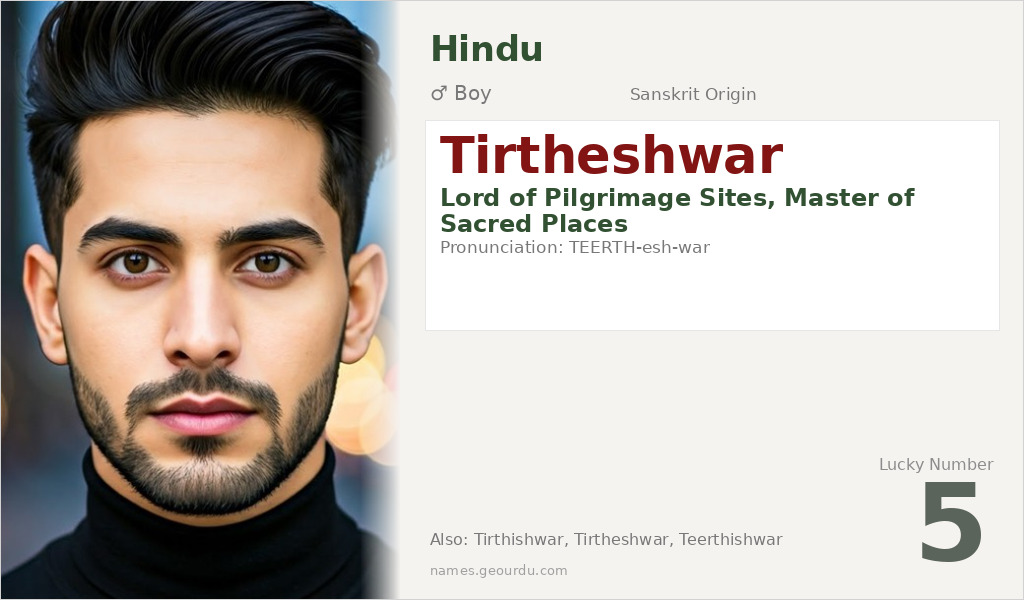
Tirtheshwar is a profound Sanskrit name that carries deep spiritual significance in Hindu tradition. Meaning ‘Lord of Pilgrimage Sites’ or ‘Master of Sacred Places’, this name reflects the importance of tirthas (holy locations) in Hindu cosmology. Parents choosing this name often seek to imbue their child with a connection to spiritual authority and sacred geography. With its rich linguistic heritage, Tirtheshwar represents both divine rulership and earthly sanctity.
Meaning of Tirtheshwar
Tirtheshwar derives from classical Sanskrit, combining ‘tirtha’ (तीर्थ) and ‘ishwar’ (ईश्वर). ‘Tirtha’ specifically refers to pilgrimage sites, sacred fords, or holy places where crossing between mundane and spiritual realms occurs—often associated with rivers like the Ganges or temples like Varanasi. ‘Ishwar’ denotes lordship, mastery, or divine rulership. Thus, the complete meaning is ‘Lord of Sacred Places’ or ‘Master of Pilgrimage Sites’. This name appears in Hindu texts referencing deities who preside over tirthas, and linguistically demonstrates the compound structure common in Sanskrit names where two meaningful elements create a new conceptual whole.
| 📛 Name | Tirtheshwar |
| 💎 Meaning | Lord of Pilgrimage Sites, Master of Sacred Places |
| 👤 Gender | Boy |
| 🕌 Religion | Hindu |
| 🌍 Origin | Sanskrit |
| 🗣 Pronunciation | TEERTH-esh-war |
| ✍️ Urdu | ترتھیشور |
| ✍️ Arabic | تيرثيشوار |
| 🔢 Numerology | 5 |
| ✨ Spellings | Tirthishwar, Tirtheshwar, Teerthishwar |
Origin & Cultural Significance
Originating from Sanskrit, the liturgical and classical language of Hinduism, Tirtheshwar has been used for centuries in Indian subcontinent cultures. The name reflects the central Hindu concept of tirtha-yatra (pilgrimage) to sacred sites believed to facilitate spiritual purification and divine connection. Historically, names ending in ‘-ishwar’ often denoted connection to specific deities or divine aspects. While primarily used in Hindu communities, the name’s linguistic roots connect to broader Indo-European language family through Sanskrit’s historical development. Regional variations exist across India, particularly in areas with strong pilgrimage traditions like Uttar Pradesh, Gujarat, and Maharashtra.
Personality Traits
Those named Tirtheshwar are often perceived as spiritually grounded individuals with natural leadership qualities. They tend to value tradition, discipline, and philosophical depth, while maintaining practical organizational skills. The name’s association with sacred geography suggests someone who may serve as a guide or anchor in spiritual matters, combining reverence for the past with vision for the future.
Similar Names
If you like Tirtheshwar, consider: Tirthankar, Tirthapati, Ishwar, Tirtharaj, Tirthanath
Famous People Named Tirtheshwar
- Tirtheshwar Singh — Indian classical musician and sarod player
- Tirtheshwar Mishra — Scholar of Hindu philosophy and Sanskrit literature
Frequently Asked Questions About Tirtheshwar
What does Tirtheshwar mean?
Tirtheshwar means 'Lord of Pilgrimage Sites' or 'Master of Sacred Places' in Sanskrit, combining 'tirtha' (holy place) and 'ishwar' (lord).
Is Tirtheshwar a boy or girl name?
Tirtheshwar is exclusively a masculine name in Hindu naming tradition, following the grammatical gender patterns of Sanskrit compound names ending in '-ishwar'.
What is the origin of Tirtheshwar?
Tirtheshwar originates from Sanskrit, the classical language of Hinduism, and reflects the importance of pilgrimage sites (tirthas) in Hindu spiritual practice.





