
Table of Contents
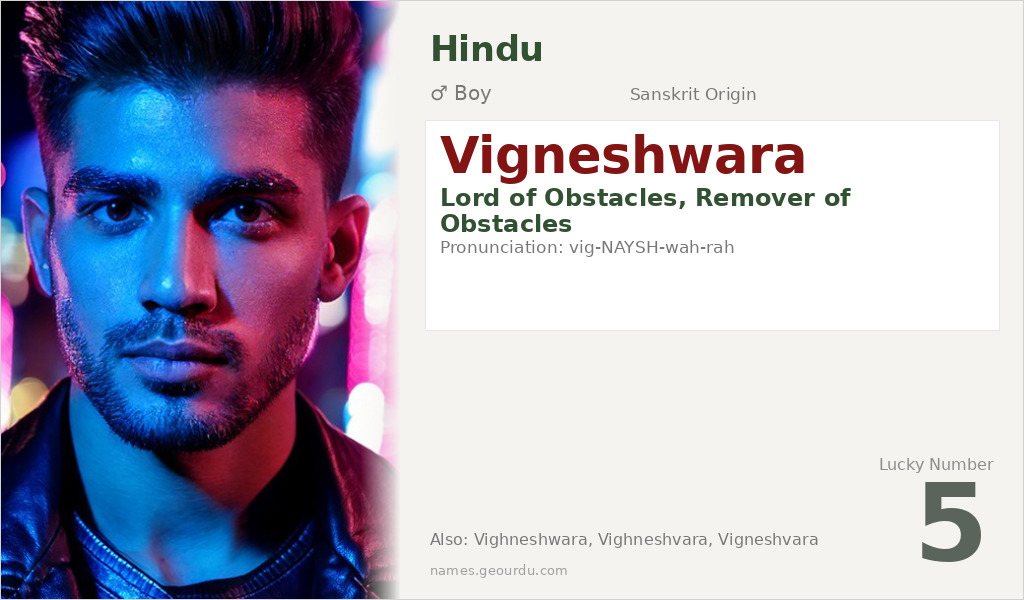
Vigneshwara is a profound Sanskrit name deeply rooted in Hindu tradition and mythology. As one of the primary names for Lord Ganesha, the beloved elephant-headed deity, this name carries centuries of spiritual significance. Parents choosing Vigneshwara for their son invoke the blessings of the remover of obstacles and patron of wisdom. This name represents both divine protection and intellectual prowess in Hindu culture.
Meaning of Vigneshwara
Vigneshwara derives from classical Sanskrit, combining ‘Vighna’ (obstacle, impediment) with ‘Ishwara’ (lord, master, ruler). The complete meaning is ‘Lord of Obstacles,’ referring specifically to Lord Ganesha’s dual role in Hindu theology as both the creator and remover of obstacles on one’s spiritual path. In Sanskrit linguistics, ‘Vighna’ comes from the root ‘vigh’ meaning ‘to obstruct,’ while ‘Ishwara’ originates from ‘īś’ meaning ‘to own, rule, be master of.’ This compound name appears in numerous Hindu scriptures including the Ganesha Purana and Mudgala Purana, where Vigneshwara is celebrated as one of Ganesha’s 32 primary forms. The name’s theological significance extends beyond literal translation to represent divine intervention in human affairs.
| 📛 Name | Vigneshwara |
| 💎 Meaning | Lord of Obstacles, Remover of Obstacles |
| 👤 Gender | Boy |
| 🕌 Religion | Hindu |
| 🌍 Origin | Sanskrit |
| 🗣 Pronunciation | vig-NAYSH-wah-rah |
| ✍️ Urdu | وگنیشور |
| ✍️ Arabic | فيغنشوارا |
| 🔢 Numerology | 5 |
| ✨ Spellings | Vighneshwara, Vighneshvara, Vigneshvara, Vigneshwar |
Origin & Cultural Significance
Vigneshwara originates from ancient Sanskrit texts and Hindu religious traditions dating back to the early centuries CE. The name gained particular prominence in South Indian Hindu communities, especially among Tamil, Telugu, and Kannada speakers, where compound names ending in ‘-eshwara’ are common. As an epithet of Lord Ganesha, Vigneshwara appears in temple inscriptions across India, most notably in the 7th-8th century Chalukya and Pallava period artifacts. The name reflects the syncretic nature of Hindu devotion, combining the concept of divine lordship (Ishwara) with specific functional attributes (obstacle management). While primarily used in Hindu contexts, the name’s Sanskrit roots connect it to broader Indo-European linguistic traditions.
Personality Traits
Those named Vigneshwara often embody qualities associated with Lord Ganesha: intelligence, perseverance, and protective wisdom. They tend to be natural problem-solvers who approach challenges with both creativity and practicality. The name suggests a personality that balances spiritual depth with worldly effectiveness, often making them trusted advisors and reliable friends. Their inherent connection to the remover of obstacles gives them a unique perspective on overcoming life’s difficulties.
Similar Names
If you like Vigneshwara, consider: Ganesha, Vinayaka, Ganapati, Vighnaharta, Ekadanta
Famous People Named Vigneshwara
- Vigneshwara — Character in Hindu mythology, another name for Lord Ganesha
- Vigneshwara Bhat — Contemporary Indian classical musician and composer
Frequently Asked Questions About Vigneshwara
What does Vigneshwara mean?
Vigneshwara means 'Lord of Obstacles' or 'Remover of Obstacles' in Sanskrit. It is a compound name combining 'Vighna' (obstacle) and 'Ishwara' (lord), specifically referring to Lord Ganesha in Hindu tradition.
Is Vigneshwara a boy or girl name?
Vigneshwara is exclusively a boy's name in Hindu naming traditions. It is never used for girls as it refers to the male deity Lord Ganesha and follows masculine Sanskrit grammatical structure.
What is the origin of Vigneshwara?
Vigneshwara originates from classical Sanskrit and Hindu religious texts. It has been used for centuries as an epithet for Lord Ganesha, particularly in South Indian Hindu communities where Sanskrit-derived compound names are common.





